
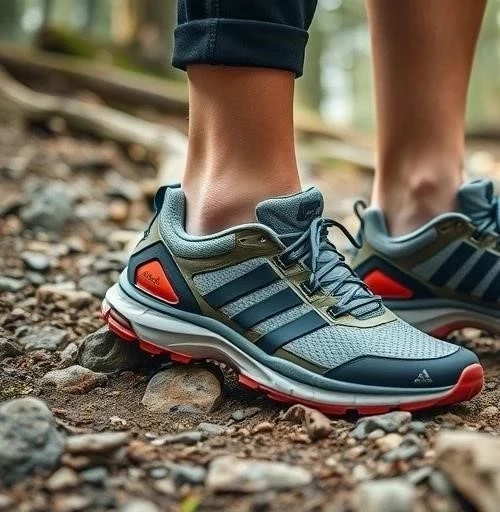
The best Adidas trail shoe for a teenager is the one that fits securely, suits the trails they actually run, and feels comfortable from the first outing. There is no single model that is best for every young runner. A teen who runs on smooth park paths has different needs from someone tackling muddy hills, rocky routes, or long-distance training. Adidas Terrex shoes are designed for outdoor use, but the range includes different levels of cushioning, grip, protection, and support.
For many teenagers, a versatile Terrex model is a sensible starting point: it can handle mixed paths without feeling excessively specialized. A more aggressive trail shoe may be preferable for steep, loose, or muddy terrain, while a lighter, more flexible option can suit short runs and everyday outdoor activity. Product names, versions, and youth availability change, so check the exact shoe’s current specifications rather than assuming that every shoe in the same range is identical.
Start with the running environment
“Trail” can mean anything from a well-maintained gravel path to a wet, root-covered hillside. Think about the surfaces the teenager encounters most often, not just the most exciting route they might run occasionally.
- Park paths, gravel, and packed dirt: Look for a comfortable, relatively versatile shoe with dependable grip. Deep lugs are not always necessary on firm, smooth surfaces, where an aggressive outsole can feel less natural.
- Wet grass, mud, and soft ground: More pronounced lugs can help the outsole bite into loose surfaces. The space and pattern between lugs also matter: mud that packs into the tread can reduce traction.
- Rocky or root-filled trails: Prioritize a stable-feeling platform, secure fit, and enough underfoot protection for the route. A shoe cannot make technical terrain risk-free, so beginners should build skills gradually.
- Mixed road and trail: A moderate outsole and balanced cushioning are often more comfortable than a shoe built solely for deep mud. Consider how much pavement is included in each run.
- Cold, rainy conditions: A water-resistant or waterproof version may be useful for some outings, but it can feel warmer and less breathable. Wet shoes can still happen through the opening, and waterproofing does not replace appropriate socks or clothing.
Which type of Adidas Terrex shoe makes sense?
Adidas Terrex is a family of outdoor products, not one particular shoe. Depending on the season and market, shoppers may find youth or smaller-size options alongside adult models such as trail-focused Agravic or more comfort-oriented Soulstride designs. Names alone do not guarantee a specific ride or feature: different generations can have different midsoles, uppers, and outsoles. Read the details for the exact version being considered.
For everyday trails and a first pair
A balanced, versatile trail shoe is often the most practical choice for a teenager who runs on a mixture of compact dirt, gravel, and park trails. Look for comfortable cushioning, a secure heel, and tread that provides grip without being excessively aggressive. This kind of shoe can work for easy training runs and outdoor activities, although it may not be the best option for consistently deep mud or highly technical terrain;
For muddy, steep, or technical routes
A more trail-specific model with deeper, well-spaced lugs may offer better purchase on soft ground. A protective upper and a stable fit can also be helpful when the route includes rocks and roots. The trade-off is that a rugged outsole may feel firm or clumsy on pavement, and a more protective shoe may be heavier. Choose this direction when the terrain justifies it, not simply because the shoe looks more adventurous.
For short runs and mixed outdoor use
A lighter, more flexible option can feel natural for short outings, school-age runners who are still developing their preferences, and routes that are not especially rough. It may be less protective or less secure on demanding trails, so assess the actual outsole and fit instead of relying on a “lightweight” label. If the teenager regularly runs long or technical routes, comfort and stability should take priority over saving a little weight.
What matters most when choosing
Fit and comfort
Fit is more important than a model’s reputation. The heel should feel held in place without painful pressure, and the middle of the shoe should feel secure without squeezing. There should be enough room at the front for the toes to spread and avoid hitting the end on descents. A very loose shoe can allow the foot to slide; a shoe that is too short or narrow can cause discomfort, blisters, or bruised toes.
Try shoes on with the socks the teenager is likely to wear for running. Check both feet while standing, since feet can differ slightly in size. Have the runner walk, jog, and try a few gentle turns in a safe place. Ask them to describe any pressure, rubbing, numbness, or heel movement. Do not assume that an uncomfortable shoe will “break in” enough to become suitable.
Growth and sizing
Teenagers’ feet can change quickly, so measure both feet and recheck the fit regularly. Do not buy a shoe several sizes too large just to extend its useful life: excessive space can make the foot slide and reduce control on uneven ground. At the same time, toes should not be cramped. If shopping online, consult the specific model’s size guide and confirm the retailer’s return policy. Adidas sizing can feel different across models, so a familiar size is only a starting point.
Grip appropriate to the route
The outsole’s tread pattern should match the surfaces. Deeper lugs can be an advantage in soft soil, while a less aggressive pattern may feel smoother on hard-packed paths. There is no tread that performs equally well on dry rock, wet roots, loose gravel, mud, and asphalt. Even a well-designed outsole has limits: slippery conditions call for cautious steps, and no shoe guarantees traction on every surface.
Cushioning and ground feel
More cushioning can feel comfortable, particularly on longer runs or firm paths, but cushioning is not automatically better for every young runner. Some prefer a more direct feel underfoot, while others value a softer ride. The shoe should feel stable and natural at the teenager’s usual pace. Avoid choosing solely by how soft it feels when pressed by hand; walking or jogging in it provides a more useful impression.
Support and protection
Trail shoes may include reinforced areas, protective toe coverage, or design features intended to help manage uneven terrain. These details can be useful, but they do not replace good technique, suitable route choices, or a shoe that fits. A teenager with recurring pain, a significant difference in foot shape, or a medical concern should get advice from a qualified health professional rather than relying on marketing claims about support.
Breathability and weather
A breathable upper can be more comfortable in warm weather and during hard efforts. A waterproof membrane may help in cold rain or persistently wet conditions, but can retain heat and may not dry as quickly once water gets inside. For most runners, the better choice depends on climate, season, and the length of typical outings. Also consider how easy the shoe is to clean and dry after muddy runs.
Quick comparison
| Runner or route | Look for | Possible compromise |
|---|---|---|
| Beginner on parks and packed trails | Versatile grip, comfortable cushioning, secure fit | May not be ideal in deep mud |
| Regular runner on rocky or uneven paths | Stable feel, protective details, reliable trail outsole | Can feel less smooth on roads |
| Runner on muddy or steep routes | More prominent lugs and a locked-in fit | Potentially heavier or less comfortable on hard surfaces |
| Teen who mixes running with everyday wear | Comfort, easy fit, and a tread suited to common surfaces | May lack specialist features for demanding trails |
Are adult Adidas Terrex shoes suitable for teens?
Sometimes, if the size is available and the shoe fits properly. A teenager with adult-sized feet can compare adult models with youth options, but should judge the actual fit and intended use rather than choosing by age label. Youth and adult versions may differ in sizing, construction, or available features; check the product description for the specific pair. A shoe marketed for adults is not automatically a better choice, and a youth model is not automatically less capable for ordinary recreational running.
Also consider the teenager’s experience and the route. Technical trail running requires balance and attention as well as appropriate footwear. For a newer runner, comfortable shoes and manageable routes are generally a better starting point than the most aggressive shoe in the shop.
How to make the final decision
- Describe the usual route. Note the proportions of pavement, gravel, packed dirt, mud, and rocky ground, and whether the routes are commonly wet.
- Set a realistic budget. Compare current models and previous-season pairs, but verify condition, sizing, and return options. A lower price is not a bargain if the shoe fits poorly.
- Try at least two suitable options. Compare comfort and security, not just color, appearance, or the number of technical features.
- Test the fit safely. Walk and jog briefly on a clean, level surface if permitted. Check the toes, heel, and sides of the foot, and stop if anything hurts.
- Reassess after purchase. Start with a short, easy outing. Notice rubbing, slipping, or discomfort, and use the return policy if the shoe proves unsuitable and remains eligible for return.
Common mistakes to avoid
- Choosing by looks alone. Bright colors and rugged styling do not reveal whether the shoe fits or suits the route.
- Assuming the most expensive model is best. Extra features are useful only when they solve a real problem for that runner.
- Buying a size to “grow into.” A shoe that is much too large can undermine comfort and control.
- Using one pair for every surface without checking. A mud-focused outsole can be awkward on pavement; a road-oriented shoe may lack grip on loose trails.
- Ignoring discomfort. Persistent pain, numbness, or repeated blisters are reasons to stop and reassess fit, socks, lacing, and training—not to push through.
Verdict: what is better?
For most teenagers who run recreationally on a mix of park paths, gravel, and ordinary dirt trails, a comfortable, versatile Adidas Terrex shoe is usually the best place to start. Choose a more aggressive, protective option if the teenager regularly runs on muddy, steep, or rocky terrain and it still feels secure and comfortable. For short, easy outings on relatively smooth paths, a lighter model may be enough.
In practice, the best choice is not a particular product name: it is the Adidas model that fits the teenager’s current feet, matches their most common terrain, and feels good while running. Check the specifications of the exact version, try it on whenever possible, and let comfort and suitability—not age, hype, or appearance—make the final decision.
5 Comments. Оставить новый
The explanation of lug depth is clear and balanced. It helps readers understand why more aggressive tread is not automatically better for every route.
Good advice for families choosing a first trail shoe. Matching the shoe to familiar routes and building skills gradually are sensible points.
This is a helpful reminder that the best trail shoe depends on where a teenager actually runs. The distinction between firm paths, mud, and rocky terrain makes the advice easy to apply.
This guide is easy to follow and avoids treating all trails as the same. I would find a fit-checking checklist useful alongside these recommendations.
I appreciate the practical focus on fit and comfort rather than choosing a shoe based only on its name. Checking the specifications of the exact version is especially useful.