
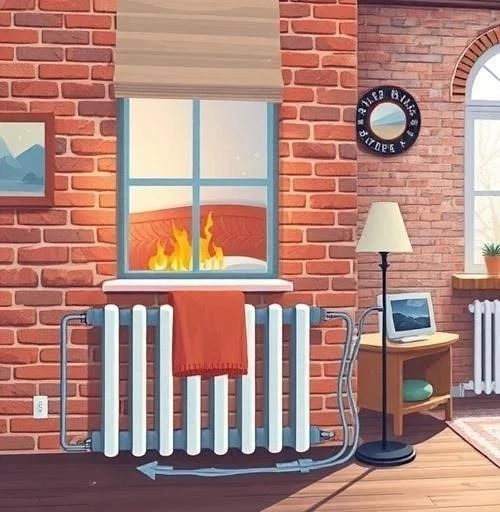
A brick house can feel cold despite a powerful boiler. The cause is often not insufficient heat, but poor design, installation or control. A reliable cottage heating system starts with a heat-loss assessment, not guesswork.
Skipping the heat-loss calculation
Brick alone does not guarantee good insulation. Heat escapes through walls, windows, the roof, floors and air leaks. Assess each part of the building before choosing equipment. Proper wall insulation and sealed joints can reduce demand and help rooms warm evenly. Do not compensate for heat loss by simply buying an oversized boiler: it may cycle frequently, waste fuel and wear out faster.
Choosing equipment without a project
Boiler selection should follow a calculated heating load and account for local climate, hot-water demand and the building’s insulation. An undersized unit struggles in cold weather; an oversized one is inefficient in mild conditions. A heating-system design should also define the pipe layout, radiator sizes, underfloor heating zones and safe operating temperatures.
Ignoring water flow and controls
Radiators that are hot near the boiler but cool at the far end may indicate poor hydraulic balancing, incorrect pipe sizing or an unsuitable circulation pump. Have a specialist check flow rates and pump settings. Use compatible heating fluid, insulate pipes in unheated spaces and install thermostats or automatic controls. These measures help maintain a comfortable indoor temperature without overheating unused rooms.
Forgetting ventilation and maintenance
Sealing a cottage without planning ventilation can cause stale air, excess humidity and a poor indoor microclimate. Provide adequate air exchange while avoiding unnecessary heat loss. Arrange regular boiler maintenance, check controls and inspect the system before each heating season. Professional installation matters: common mistakes include air trapped in pipes, leaks, incorrectly placed sensors and unbalanced circuits.
Comfort comes from the whole system working together—not from maximum boiler output. A sound design, suitable insulation, balanced emitters and regular servicing improve efficiency and can lower heating bills. For a brick cottage, plan the system around the building and the way each room is used.
Key terms
отопление кирпичного дома; система отопления коттеджа; теплопотери кирпичного дома; утепление стен; расчет тепловой нагрузки; подбор отопительного котла; радиаторы отопления; теплый пол; схема отопления; гидравлическая балансировка; циркуляционный насос; теплоноситель; температурный режим; автоматическая регулировка отопления; термостат; теплоизоляция труб; вентиляция коттеджа; микроклимат в доме; энергоэффективность; равномерный прогрев помещений; ошибки монтажа отопления; проектирование отопительной системы; обслуживание котла; снижение расходов на отопление; комфортная температура в доме; отопление загородного дома.

8 Comments. Оставить новый
I appreciate the balanced focus on design, installation and maintenance. A well-planned system seems far more reliable than trying to fix uneven heating after installation.
This article explains clearly why insulation, ventilation and heating equipment need to be considered together. Sealing a home without planning fresh-air exchange can create new problems.
The points about pipe insulation, pump settings and thermostats are easy to overlook. Addressing these details can improve comfort without simply turning up the heat.
A useful reminder that heating problems often begin with poor planning rather than inadequate equipment. The emphasis on calculating heat loss before choosing a boiler is especially important.
A helpful overview of common heating mistakes, especially the advice not to rely on boiler size alone. Heat-loss calculations should come first.
The section on oversized boilers stood out to me. Buying a larger unit may seem like a safe choice, but proper sizing can improve efficiency and reduce unnecessary wear.
Good practical advice for homeowners. I would add that getting a qualified specialist to balance the system can make a noticeable difference between rooms.
Clear and informative. The reminder to inspect the system before each heating season is particularly useful for avoiding small issues becoming costly repairs.