
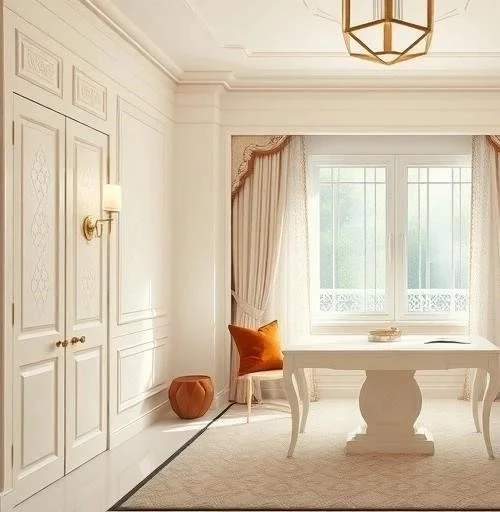
A study can feel like a private observatory: a place to think, plan and watch ideas take shape. Decorative plaster in a study helps create that atmosphere while making the room feel lighter. In an Art Deco style interior, walls are not merely a backdrop; they catch light, frame furniture and lend quiet drama to the working day.
Begin with light, then add texture
For a bright study interior, choose light wall shades such as pale beige, cream or pearl. These hues soften the room’s edges and support the visual expansion of space, especially when daylight is limited. Yet a pale wall need not be plain. Textured plaster gives it depth: a fine, matte wall texture feels calm and tactile, while Venetian plaster offers a polished, cloudlike surface. Mother-of-pearl-effect plaster adds a subtle glow that changes as you move, rather than shouting for attention.
Think of the reflection of light in the interior as another design material. Glossy surfaces can bounce daylight across the room, but use them selectively: a satin plaster finish, a mirror or a lacquered cabinet is often enough. Too much shine competes with screens and books. Pair a softly reflective accent wall with matte walls elsewhere, so the eye has places to rest.
Let Art Deco geometry guide the eye
Art Deco geometric patterns—rays, stepped arches and fan shapes—bring energy to a study without clutter. A restrained motif pressed into plaster, or painted over a smooth finish, can turn one wall into an accent wall. Balance it with symmetry in the interior: matching sconces, a centered desk or paired shelves make the geometry feel intentional. Gold accents and brass decor warm the pale palette; use them as fine lines, handles or frames rather than covering every surface.
Mirrors in the study can amplify daylight and echo the period’s glamour. Place one opposite a window or where it reflects a beautiful plaster detail, not a busy storage area. Art Deco furniture—with curved edges, dark wood and a streamlined silhouette—creates a pleasing contrast against light, tactile walls. The result is an elegant interior built from noble materials, not a theatrical set.
Layer the room for work and atmosphere
Study lighting deserves a plan of its own. A crystal chandelier can provide a sculptural focal point, while wall sconces wash plaster with gentle side light and reveal its texture after sunset. Add a focused desk lamp for practical tasks. This layered glow keeps the room welcoming without sacrificing concentration.
A combination of plaster and panels is especially useful for zoning a study. Use plaster around the desk for a quiet, seamless background; introduce slim wood or upholstered panels near a reading chair to suggest a separate retreat. This home office finish gives each activity its own character while keeping the scheme coherent. For a cozy workspace, repeat one metal tone and two or three colors from the Art Deco color palette throughout.
The best study interior with decorative plaster is not simply bright; it feels composed and alive. Let light tones open the room, texture add intimacy, and a few precise Deco details lend sparkle. The walls will do more than surround your work: they will help ideas find their shape.



6 Comments. Оставить новый
I like the idea of treating light as a design material rather than an afterthought. The advice to balance shimmer with matte surfaces makes this feel practical, not just glamorous.
A lovely reminder that a mirror should reflect something worth seeing. That small detail turns decorating advice into a way of composing the room like a moving picture.
The restrained approach to gold and shine is refreshing. Art Deco can easily become a parade of ornament, but this suggests a study where every glint has a reason.
The most useful thought here is that texture can give pale walls a pulse. I can imagine the plaster changing subtly through the day, like a quiet clock made of light.
This study sounds like it could belong to a sunbeam with a secret desk. The Art Deco details add character without losing sight of the room’s real purpose: helping a person think.
I came away picturing a workspace that feels both focused and a little theatrical. It’s a clever balance: the walls can tell a story while leaving the desk free for new ones.