
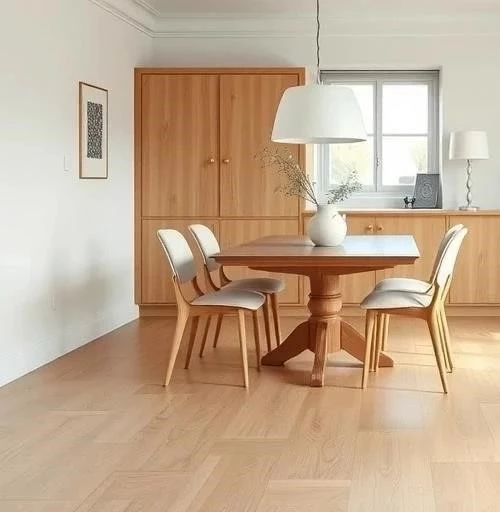
Engineered wood flooring can bring warmth and natural wood grain to a dining room, while supporting a light interior and Scandinavian style. Yet its success depends on more than appearance. Poor installation or badly planned storage can shorten the floor’s life and make the room less practical. A thoughtful design balances durability, comfort and visual simplicity.
Prepare the floor before furnishing
Common installation mistakes begin before the boards are laid; The subfloor must be clean, dry, level and stable; otherwise, movement can cause gaps, noise or damage. Check room humidity and temperature, follow the manufacturer’s limits, and allow board acclimatization before installation. Leave the specified expansion gaps at walls and fixed units. These details let the floor respond naturally to seasonal changes and protect its durability.
Choose a suitable protective finish for dining-room use, where spills and chair movement are routine. A wooden floor is not maintenance-free: wipe up liquids promptly, use felt pads, and follow a regular floor-care routine. Avoid dragging heavy cabinets across the surface. Practical materials and careful maintenance are more reliable than assuming that natural wood will withstand every condition.
Plan storage around the dining area
Storage organization should preserve clear routes and comfortable seating. Measure the dining area before adding built-in wardrobes, a china cabinet or open shelves. Deep units can obstruct chairs, while crowded shelves undermine minimalism. Wall-mounted or carefully positioned storage systems keep frequently used dishes accessible without overwhelming the room. Secure tall furniture properly, and avoid fixing heavy units in a way that blocks the floor’s expansion gaps.
For a functional design, use zoning to distinguish dining, serving and storage areas without building visual barriers. The combination of wood and white can make the interior feel calm: pair a pale floor with white fronts, then repeat the wood tone in a tabletop or shelf. This creates a coherent dining-room interior and supports spatial ergonomics, rather than making every surface compete for attention.
Make the design last
Successful dining-room finishing joins sound laying technique with realistic storage planning. Select furniture feet that protect the boards, leave room for movement, and keep heavy pieces away from vulnerable edges. When installation, room conditions and daily use are considered together, engineered flooring becomes a durable foundation for Scandinavian simplicity—not a costly detail undermined by avoidable mistakes.


8 Comments. Оставить новый
I found the safety point about securing tall furniture worthwhile. Good design should address stability as well as appearance, particularly when storage units are placed near a busy dining area.
This offers a balanced view of engineered wood: attractive and suitable for a calm interior, but still dependent on careful installation and maintenance. That realistic framing makes the guidance more trustworthy.
I appreciate the practical focus on dining-room wear. Spills and moving chairs are everyday issues, so prompt cleanup and felt pads are sensible habits rather than optional extras.
The reminder to preserve expansion gaps around fixed units is especially valuable. It connects installation details with the later furniture layout, which is often overlooked when planning a room.
The article links visual simplicity with practical choices rather than treating minimalism as decoration alone. Thoughtful zoning and restrained storage can make the room feel calm while keeping everyday items within reach.
The emphasis on clear routes is helpful. A dining room needs enough space for chairs to move comfortably, so accessible storage is more useful than simply adding as many cabinets as possible.
The storage advice is well reasoned because it considers how furniture affects both movement and seating. Measuring the room first can help prevent cabinets from making a dining area feel cramped.
The article makes a useful point that a wood floor’s durability starts with proper preparation. Checking moisture, levelness and acclimatization before installation can prevent problems that are difficult to fix later.