
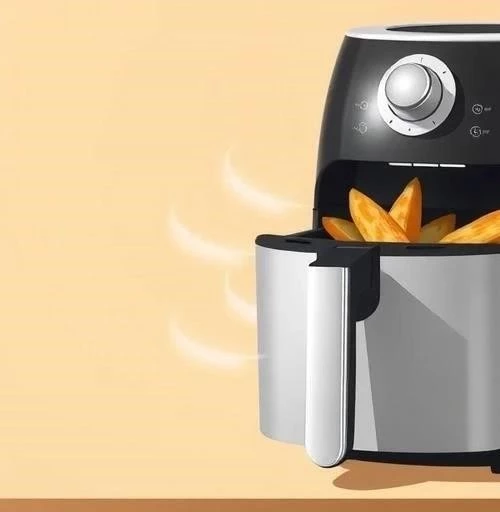
An air fryer is less a tiny fryer than a small, enthusiastic wind tunnel. Its secret is not magic oil, but hot air in a hurry: a heating element warms the air, and a fan drives it rapidly around the food. Instead of waiting for heat to creep slowly through a crowded oven, dinner gets surrounded by moving warmth from nearly every direction.
The little storm inside the basket
Moving air transfers heat to a food’s surface more efficiently than still air. In a conventional oven, warm air can linger in pockets; in an air fryer, the fan keeps replacing cooler air near the food with hotter air. That lively circulation helps the exterior heat up quickly, encouraging browning and crispness. It is the same broad principle as convection cooking, packed into a compact space.
The basket’s design helps the breeze do its work. Perforations let air pass beneath and around the food, while the relatively small chamber needs less air to warm than a full-size oven. Less space to heat means less waiting before cooking gets underway. A thin layer of food also gives the hot air plenty of exposed surface to reach.
Why the outside turns crisp
As the surface warms, moisture evaporates. The drier exterior can brown and become crisp while the inside continues cooking. A light coating of oil may help browning, but the machine does not need to submerge food in oil. The crunch comes chiefly from heat, airflow, and a surface that can dry—not from a miniature deep fryer hiding in the kitchen.
Fast, but not a shortcut through physics
“Fast” is relative. Small portions, thinner pieces, and space between them usually cook sooner. A piled-up basket blocks the airflow, so the fan has to fight a traffic jam of potatoes. Shaking or turning food partway through can expose new surfaces to the moving heat. Large, dense foods still need time for warmth to reach their centers, and a thermometer is the safest judge of doneness.
For best results, avoid overcrowding and follow the recipe’s temperature guidance. Preheating can help some dishes start evenly, though not every model or recipe requires it. Think of the air fryer as a focused gust: it speeds cooking by delivering heat efficiently, not by breaking the rules of cooking. A compact chamber, a circulating fan, and a well-spaced basket turn that gust into a surprisingly quick supper.

6 Comments. Оставить новый
The best part is the gentle reminder that hot air can’t negotiate with a crowded basket. Practical without being preachy—and now I’ll picture my fries asking for personal space.
I came for crisp food and left thinking about tiny weather systems. The article makes convection feel almost theatrical, with the fan as its backstage stagehand and every basket a miniature climate.
Clear, memorable, and grounded in real kitchen behavior. The article doesn’t promise that a fan can defeat a thick piece of food—it gives useful reasons to turn, space, and check instead.
A refreshing explanation that separates the air fryer’s name from its actual trick. It gives the reader a handy mental model: less “tiny deep fryer,” more “compact wind tunnel with excellent timing.”
The “traffic jam of potatoes” is a wonderfully useful image: suddenly airflow sounds less like abstract physics and more like kitchen etiquette. A clear, lively explanation that makes the machine feel much less mysterious.
This turns everyday cooking into a neat little science experiment. I especially appreciate the point about the surface drying before it browns; that detail explains the crunch better than a dozen appliance slogans.