
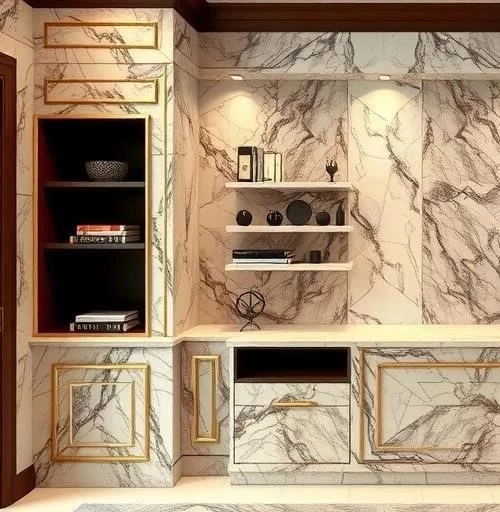
Natural stone in interiors can give a private office the richness and permanence associated with Art Deco. Yet stone should support office functionality‚ not compete with it. When planning office finishing‚ begin with storage organization: decide what must be hidden‚ what deserves display‚ and how often each item is used. Only then choose stone and furniture.
Plan materials and proportions
A marble finish‚ granite in interiors‚ or onyx in design can each become a focal point. Marble suits elegant wall panels and desktops; granite offers practical durability; translucent onyx can glow when carefully lit. Decorative stone and stone cladding also add character‚ but covering every surface creates an overcrowded interior. A restrained feature wall or cabinet surround usually has more impact.
Stone selection should consider the interior color palette‚ stone texture‚ and the room’s natural light. Polished stone reflects light and looks formal‚ but fingerprints and glare may be distracting. Pair it with wood‚ leather‚ or metal for balanced material combinations. An unsuccessful texture pairing—such as highly veined stone beside busy upholstery—can make the room feel restless. Art Deco furniture‚ brass details‚ and geometric ornaments provide a coherent framework without requiring more pattern.
Make storage work
Storage systems should be designed around documents‚ equipment‚ and display objects. Aligning cabinet fronts with stone panels creates a calm composition‚ while discreet handles preserve clean geometry. Good storage ergonomics mean frequently used files stay within easy reach and heavy items are stored low. Avoid deep shelves that turn into clutter traps. Interior design mistakes often begin when appearance is prioritized over access‚ circulation‚ and desk comfort.
Check construction and care
Before natural stone installation‚ assess the load on floor slabs‚ especially for thick cladding or a large stone desk. Use qualified installers‚ suitable supports‚ and precise joints. Seal porous surfaces where needed and provide moisture protection near sinks or drinks stations. Ask about scratch resistance: no stone is completely immune to damage‚ so use desk mats and coasters. Regular care for stone surfaces should follow the supplier’s advice; acidic cleaners can etch marble.
Finally‚ plan lighting for stone cladding before installation. Grazing light reveals texture‚ while backlighting can enrich onyx; poorly positioned spots exaggerate seams and glare. Successful interior design balances beauty‚ durability‚ and function: use stone deliberately‚ preserve clear storage zones‚ and let a few refined Art Deco details complete the office.


8 Comments. Оставить новый
A thoughtful guide that balances the visual appeal of natural stone with the practical needs of a working office.
A strong, practical article. The advice about balancing stone with wood, leather, and metal is especially helpful.
I appreciate the emphasis on planning storage before choosing materials. It is a useful reminder that function should shape the design.
The article makes a convincing case for restraint. One well-chosen stone feature can have more impact than covering every surface.
A clear overview of both design and practical considerations. The reminders about lighting and texture are easy to apply.
Useful guidance for anyone planning an office renovation, especially the point about checking structural loads before installation.
I found the storage ergonomics section particularly valuable. Good-looking offices still need to work comfortably every day.
The comparisons between marble, granite, and onyx make the material choices easy to understand without overcomplicating the topic.