
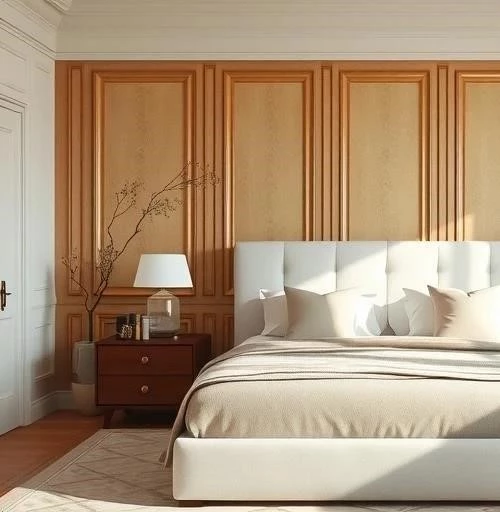
A bedroom can feel newly designed without the noise‚ dust‚ and expense of a major renovation. Wooden slats bring rhythm‚ warmth‚ and architectural character to a room while leaving the floor plan untouched. In a modern classic interior‚ they make a graceful bridge between traditional symmetry and contemporary simplicity: familiar wood‚ used in a fresh way.
Make the Wall Behind the Bed the Star
A slatted headboard can become an accent wall without overwhelming the room. Run decorative slats from the floor to just above the bed‚ or frame the bed with a panel that echoes the width of the mattress. Slats behind the bed create a natural focal point and give the wall above it a considered finish. For a softer look‚ use pale oak; walnut brings a richer‚ more classic mood.
Try vertical slats to draw the eye upward and make a low ceiling feel taller. Horizontal slats create a calmer‚ wider impression and can support the visual expansion of a compact bedroom. Neither direction is merely decorative: the lines quietly change how the proportions of the room are perceived.
Use Panels to Shape the Space
Slatted panels can do more than dress a wall. A short screen beside the bed can separate a sleeping area from a reading nook‚ creating subtle space zoning without closing off daylight. In a larger bedroom‚ a panel behind a dressing table gives that corner its own identity. These interior solutions work especially well when the slats repeat elsewhere‚ perhaps on a bedside cabinet or a simple shelf.
For an elegant modern classic bedroom‚ pair the wood with framed furniture‚ crisp bedding‚ and restrained metal details; This mix keeps the classic bedroom interior from feeling formal or heavy; The key is balance: let wood add texture‚ while fabrics and painted surfaces provide visual quiet.
Choose Color and Light with Care
Color combinations set the mood. Honey-toned timber with warm white feels inviting; smoked oak beside soft grey looks composed; dark wood against muted green adds depth. Natural materials bring gentle variation‚ so samples should be viewed in the bedroom’s actual daylight before choosing a finish. A matte surface usually feels calm and timeless.
Lighting can turn a practical wall finish into an atmospheric feature. A discreet LED strip behind a panel washes light across the grooves‚ while small wall lamps add useful reading light. Conceal wires during installation and avoid overly bright LEDs: the aim is a cozy bedroom‚ not a showroom.
A Refresh‚ Not a Rebuild
Careful installation matters. Measure the wall‚ mark the layout‚ and check that the first slat is level; small errors become obvious across a repeated pattern. Depending on the product and wall condition‚ panels may be fixed over the existing finish‚ making this a budget-friendly bedroom update rather than a full renovation. Ask about ventilation and cleaning‚ particularly if the slats sit close to the bed.
As bedroom interior trends move toward tactile surfaces and thoughtful details‚ wood remains reassuringly adaptable. Whether you choose a complete wood bedroom finish or a narrow decorative feature‚ slats can refresh the room with modest effort. The result is a harmonious interior: classic in its warmth‚ modern in its lines‚ and personal in the details.

5 Comments. Оставить новый
This makes a strong case for using texture instead of adding more color. A slatted panel can bring depth and warmth while letting the bedding, art, and light remain the main storytellers.
A useful reminder that direction matters: vertical lines can lift the gaze, while horizontal ones can make a room feel more settled. It’s a small design choice with the kind of effect you notice before you can explain it.
I love the thought of repeating the slat detail in a small shelf or bedside piece. That kind of quiet echo makes a room feel designed rather than decorated, like the wood has found its way through the space naturally.
The best idea here is that slats can change a room’s sense of scale without changing its footprint. They’re almost like visual punctuation: a few well-placed lines can make the whole bedroom feel more composed.
The space-zoning suggestion is especially clever. A screen that separates a reading corner without blocking daylight feels less like a divider and more like a gentle architectural hint.