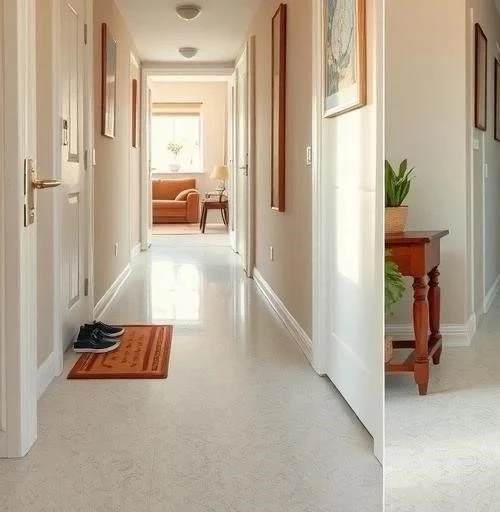
A hallway is exposed to grit, wet shoes, frequent foot traffic and furniture being moved. Choosing linoleum for a hallway therefore requires more than selecting an attractive pattern: the floor covering must balance durability, safety, cost and appearance. Linoleum can be a practical choice, provided its grade and installation suit the conditions.
Advantages
Durability: A protective layer helps resist abrasion, stains and everyday dirt. A higher wear-resistance class and a thicker wear layer generally improve resistance to scratches and other mechanical damage. For a busy household, semi-commercial linoleum is often a better investment than domestic linoleum; the latter may be adequate for a quiet entrance but can show wear sooner. Check the product’s stated class rather than judging durability by thickness alone.
Moisture protection: Many products are water-resistant, and sheet linoleum can be waterproof across its surface when correctly installed. However, water may enter at seams and edges, so prompt cleaning and well-sealed joints matter. A slip-resistant surface is another useful feature, especially where rain or snow is tracked indoors.
Comfort and convenience: Linoleum is relatively warm underfoot and can provide some thermal and sound insulation. An underlay may add comfort, but it must be compatible with the flooring. Installation is straightforward compared with many alternatives, and routine floor cleaning usually needs only sweeping and a damp mop. Its resistance to dirt makes upkeep manageable.
Design and price: Colors and patterns range from subtle stone effects to convincing wood imitation. The cost of linoleum is often lower than that of wood or tile, while still offering a neat, continuous look. A skirting board can conceal the perimeter edge and give the finish a tidy appearance.
Limitations to consider
Linoleum is not immune to damage. Heavy furniture can leave dents, sharp grit can cause scratches, and dragging objects may damage the protective layer. Thin or low-grade flooring is particularly vulnerable. Repairs are possible, but matching a pattern or replacing a damaged section can be difficult; prevention is easier than repair.
Preparation is essential: an uneven subfloor may show through, wear faster or cause seams to lift. The floor must be clean, dry and level before installation. Carefully fitted joints and seams, together with correct adhesive and a suitable underlay, help extend service life. Poor fitting can undermine even a durable product.
Finally, check environmental information and allow ventilation after installation. Some products may have a noticeable new-flooring odor, which should fade; persistent odor warrants checking the manufacturer’s guidance. The pros and cons of linoleum ultimately depend on quality, traffic and installation. For a busy corridor, choose a suitable wear class, slip-resistant finish and protective layer, then weigh their cost against the expected service life.