
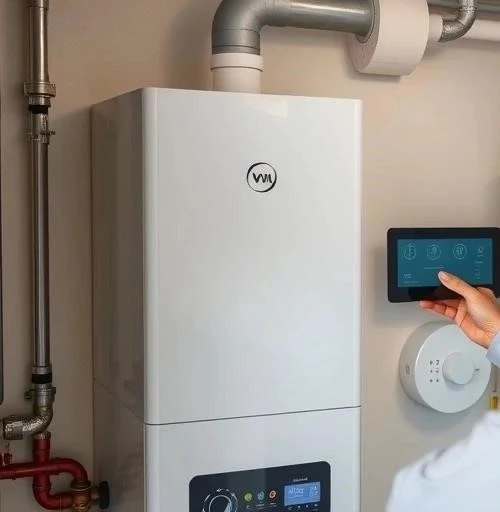
For a home occupied throughout the year‚ reliable heat is not a luxury: it protects comfort‚ the building and the household budget. A pellet boiler can provide efficient heating‚ but its standard controls may not respond well to changing weather or daily routines. Modernising the heating system with smart control is therefore a practical upgrade‚ not simply a gadget purchase. It helps match heat production to real demand and keeps the home at a stable temperature.
What smart control changes
A boiler controller coordinates the boiler automation‚ pellet feed and circulation pump. With an outdoor temperature sensor and indoor temperature sensors‚ weather-compensated control can anticipate heat loss instead of waiting for rooms to cool. A room thermostat provides a useful reference‚ while climate control can set different schedules for daytime‚ night and absence. This combination is more precise than relying on a fixed boiler setting alone.
Power adjustment and burner modulation let the boiler reduce output when demand is low‚ rather than repeatedly switching on and off. Automatic ignition makes operation more convenient‚ while a correctly calibrated auger mechanism delivers pellets at a controlled rate from the pellet hopper. These functions can reduce fuel consumption and pellet use‚ especially in mild weather. Savings are not automatic‚ however: poor settings‚ damp fuel or an oversized boiler can undermine efficiency and lower the seasonal coefficient of performance.
Remote access and safety
Remote monitoring gives owners a way to check operating status‚ temperatures and alarms while away. A Wi-Fi module is convenient where the home internet is reliable; a GSM module can send alerts over the mobile network. Smartphone control can adjust schedules or set a lower temperature before a return‚ which is particularly useful for year-round living. Remote access should complement‚ not replace‚ local safeguards and regular inspection.
Safety remains essential. Install backup power where outages could stop circulation or controls‚ and ensure the system has emergency shutdown and overheat protection. Sensors and alarms must be placed and tested correctly. A smart controller cannot compensate for an unsafe hydraulic layout‚ blocked flue or neglected boiler.
Integrating the heating system
Before installation‚ assess the hydraulic connection‚ radiators or underfloor circuits‚ and domestic hot water demand. A buffer tank can reduce short cycling and separate boiler operation from changing household demand‚ although its size and controls must suit the system. The circulation pump should be coordinated with boiler output and zone valves; otherwise‚ efficient modulation may still produce uneven rooms or unnecessary cycling.
Commissioning for lasting results
Good boiler adjustment is as important as the equipment itself. A qualified installer should configure feed rates‚ modulation limits‚ pump operation‚ thermostat schedules and weather curves‚ then verify them under real conditions. Routine maintenance—including cleaning‚ checking the burner and inspecting the auger—preserves efficiency and dependable ignition. Keep fuel dry and follow the boiler manufacturer’s specifications.
The strongest case for modernisation is control: the system can respond to weather‚ occupancy and hot water needs instead of running at one setting. When smart management is properly designed‚ installed and maintained‚ it improves comfort‚ supports energy efficiency and makes pellet heating easier to oversee without promising unrealistic savings.



9 Comments. Оставить новый
The explanation of modulation is especially relevant because reducing unnecessary cycling can improve comfort as well as operation. The actual benefit will still depend on professional setup and the characteristics of the heating system.
The article offers sensible guidance without implying that technology can compensate for every underlying problem. Its emphasis on inspection and appropriate settings is a good reminder that efficient heating depends on the whole system.
The distinction between weather compensation and a basic thermostat is useful. One practical detail worth adding would be that sensor placement and calibration can affect how well either approach performs.
This is a clear overview for homeowners considering an upgrade. I would also encourage readers to check whether a proposed controller is compatible with their particular boiler before purchasing additional sensors or modules.
The article makes a convincing case for treating smart controls as part of a properly designed heating system rather than as a stand-alone gadget. I especially appreciate the reminder that real savings depend on correct settings and suitable equipment.
The coverage of Wi-Fi and GSM options gives readers a useful starting point. It would be worth considering mobile coverage, internet reliability and what happens to the controls if remote connectivity is lost.
It is helpful that the article does not promise guaranteed fuel savings. Pellet quality, boiler sizing and system configuration all influence efficiency, so readers should assess those factors before investing in new controls.
I like that the article connects convenience with practical energy management. Setting temperatures around daily routines can make sense, although a stable schedule may be more effective than frequent manual adjustments.
The section on remote access is balanced: checking alerts while away can be convenient, but it should not replace local safety measures or maintenance. That distinction is important for anyone relying on app-based control.