
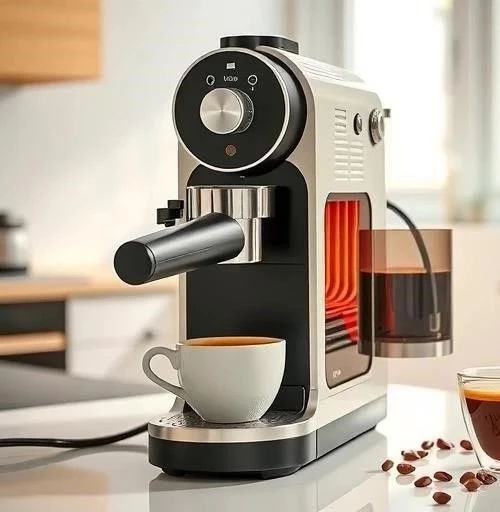
A Philips thermoblock suits home use because its water-heating system warms on demand, reducing wait time; this compact approach makes daily coffee preparation practical each morning.
Temperature and Extraction: How Brewing Temperature Stability and Pump Pressure Influence Espresso Preparation and Coffee Strength
In a Philips coffee machine, the thermoblock matters at extraction because espresso responds to heat and pressure. A system that brings water to a controlled brewing temperature helps limit swings between shots; this supports repeatable extraction, though it cannot compensate for stale beans or an unsuitable grind. Temperature is therefore a practical advantage, not a promise of identical flavor in every cup. Pump pressure also affects how evenly water passes through the coffee bed. When pressure is appropriate and consistent, extraction is more balanced, allowing users to adjust coffee strength through dose and grind rather than relying on heat alone. For home espresso, this combination makes cups easier to reproduce: the thermoblock supplies a steady thermal basis, while the pump provides the force needed for extraction. The outcome depends on recipe choices, but the design gives everyday users useful control over taste.
Beyond Espresso: Whether the Automatic Coffee Machine Delivers Consistent Milk Foam Through Its Cappuccinatore
Philips’s cappuccinatore can make milk foam convenient, but texture depends on chilled milk and clean parts; thus, regular rinsing matters more than automation alone for most homes.
Ownership Costs and Care: How Water Consumption, Descaling, Machine Maintenance, Thermoblock Lifespan, and Energy Use Shape Long-Term Value
Long-term value depends less on the thermoblock label than on how carefully the Philips machine is used; Water use includes brewing and automatic rinses, so catch rinse water where practical and avoid needless cycles. Hard water makes descaling essential; follow alerts and use a suitable product, since delay may allow deposits to build. Regular maintenance, including emptying the tray, cleaning key parts, and changing filters when due, helps limit common faults. A thermoblock has no fixed lifespan: water quality, usage, and prompt care all affect service life. Energy consumption is usually modest when water is heated on demand, but standby settings and frequent use still matter. Thus, careful upkeep can protect value, whereas ignored scale or wasteful rinsing may increase ownership costs. Check the manual for model-specific service intervals, filter needs, and descaling expenses before purchase. Routine care can help preserve value.
A Balanced Verdict: Weighing User Reviews, Pros and Cons, and Philips Model Comparisons Before Choosing a Home Coffee Machine
User reviews are most useful when read as patterns, not promises: repeated praise for dependable operation carries more weight than a single glowing rating, while recurring complaints deserve checking against the exact model and retailer. Philips ranges differ in controls, drink presets, footprint, and price, so comparison should begin with the features a household will actually use. A higher-priced model is not automatically better value if its extra options remain untouched; equally, the cheapest choice may feel limiting when several people want quick customization. The main advantage is broad choice across the range, while the drawback is that similar names can obscure meaningful differences. Check current specifications, warranty terms, and recent owner feedback before deciding. On balance, choose the model whose verified features fit your routine and budget, rather than relying on brand reputation alone. Choose based on facts, not hype.


7 Comments. Оставить новый
The article usefully explains that a thermoblock can bring water to brewing temperature quickly, while correctly noting that temperature stability alone cannot guarantee good espresso. Grind, dose, and bean freshness remain important variables.
The discussion of pump pressure is sensible because pressure contributes to extraction but does not work independently of the coffee bed. I appreciate the emphasis on adjusting grind and dose rather than treating pressure as a simple measure of cup quality.
The article makes a helpful distinction between convenient automation and consistent results. Its point that milk temperature and clean cappuccinatore parts affect foam texture gives readers practical guidance beyond the machine’s advertised features.
The maintenance section raises an important ownership issue: water hardness affects how often descaling may be needed. Following the manufacturer’s instructions is a reasonable recommendation, though actual maintenance needs will vary with local water and usage.
I like that the article avoids presenting the thermoblock as a guarantee of identical cups. That balanced framing helps readers understand that the heating system supports repeatability, while preparation choices still shape the final flavor.
Overall, the article gives a practical overview of brewing, milk preparation, and care. Its strongest point is showing how several factors work together, rather than implying that a single component determines taste or long-term value.
The comments about rinse water and energy use are relevant to long-term ownership, but they would be stronger with model-specific figures. Without those details, readers can take the advice as general guidance rather than a precise estimate of running costs.