
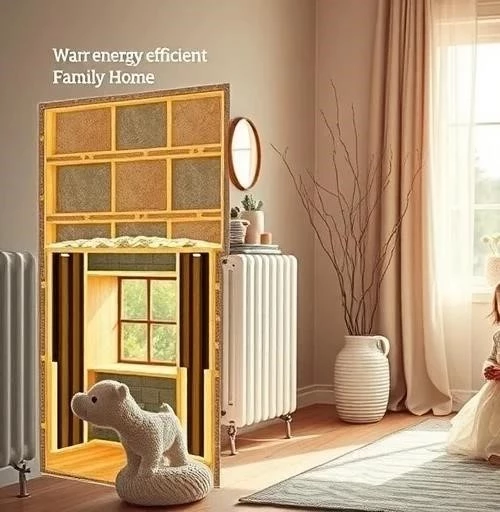
For a family with children, a warm house is about more than comfort: it should be healthy, safe and affordable to run. Good home insulation and home heating work together. First reduce heat loss; then choose a heating system that provides a comfortable microclimate and even heating in every room.
Start with the building envelope
Check the roof, walls, floors, windows and doors for drafts and damp. Wall insulation, floor insulation, ceiling insulation, roof insulation and facade insulation can all improve energy efficiency. The best order depends on the home’s condition, climate and budget, so ask a qualified specialist to assess the property before buying insulation materials.
Mineral wool can help with sound insulation and is commonly used in walls and roofs. Expanded polystyrene is lightweight and often chosen for facade insulation, but it must be installed as part of a suitable, fire-safe system. Eco-friendly insulation is another option. Compare thermal performance, moisture resistance, fire rating, installation requirements and cost—not just the label. Correct installation matters as much as the material.
Choose heating for comfort and safety
For autonomous heating, compare a gas boiler with an electric boiler, taking account of local utility connections, running costs and maintenance. A gas appliance needs proper ventilation and regular professional servicing. An electric boiler may be simpler to install, but its cost depends on electricity prices and the home’s heat loss. These are key factors in heating system selection and in heating a country home.
Underfloor heating gives gentle warmth and can be useful in play areas; heating radiators and convectors can respond quickly to changing room needs. A thermostat helps maintain a steady setting and avoid overheating. A well-designed system should provide even heating without hot surfaces or exposed cables where children can reach them. Follow manufacturer guidance and have installation checked by a professional.
Plan for children and household costs
Set a comfortable temperature in the child’s room and use a room thermometer rather than guessing. Keep beds and play spaces away from heaters, secure radiators where needed, and keep controls, hot pipes and electrical connections out of children’s reach. Child safety also means working smoke alarms, carbon-monoxide alarms where appropriate, and clear escape routes. Safe heating is a combination of suitable equipment, correct installation and attentive use.
Private home insulation can reduce heating costs and improve energy savings, but avoid sealing a home without providing adequate ventilation. Ask an installer how the system will manage fresh air and moisture. For a family home, compare the total cost over time: equipment, installation, maintenance and expected energy use. A simple control schedule and sensible room settings can help prevent waste while keeping shared spaces warm.
In short, insulate the weakest parts first, then size the heating system for the improved home. Choose durable materials and equipment, use a thermostat, and arrange regular checks. This practical approach supports comfort, child safety and lower energy use through the cold season.
1 Comment. Оставить новый
A practical, family-focused guide that clearly explains why insulation and heating should be considered together. I especially appreciate the reminders to prioritize safe installation, professional assessment, and running costs when comparing options.