
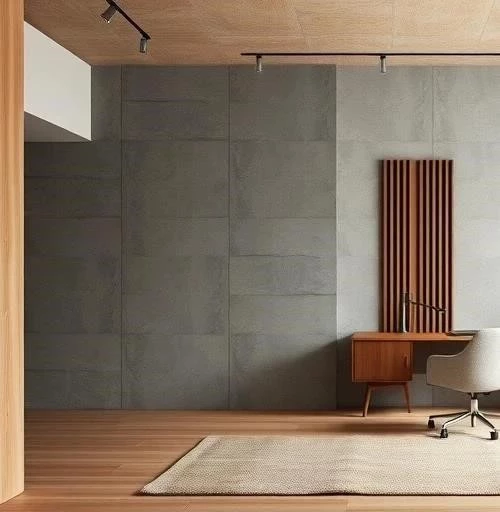
A study should feel like a quiet thought made visible. In a modern study, porcelain stoneware brings sculptural calm: its cool planes reflect light, while carefully chosen soft finishes keep the room from sounding like a gallery. The secret is not to make every surface silent, but to choreograph sound.
Build a room that listens
Use large-format porcelain for a restrained backdrop, or introduce porcelain stoneware on walls behind shelves as a durable visual anchor. A matte porcelain surface and varied porcelain texture soften glare and add depth. For a livelier accent, decorative tile can frame a niche or mark the work zone. The porcelain stoneware floor is practical and easy to clean, but hard surfaces alone can sharpen footsteps and speech.
That is why acoustics in the home office begin with balance. Combine wall and floor finishes with a rug, curtains, upholstered seating, and books. These sound-absorbing materials create sound absorption without hiding the stone. A timber desk or slatted screen makes a warm counterpoint: the pairing of porcelain stoneware and wood gives a modernist interior both precision and human warmth.
Design for quiet, not just appearance
The acoustic properties of finishing materials matter as much as color. Porcelain reflects sound, so place acoustic panels on the wall opposite the desk, or suspend a fabric-covered canopy above it. A thoughtful sound-absorbing finish helps with reducing room echo; targeted study soundproofing—door seals, dense curtains, and sealed gaps—limits noise from beyond the room. Together, these choices improve acoustic comfort.
- Study design: keep the work zone away from the door and use shelves as a diffusing, book-filled backdrop.
- Office lighting: wash a stone wall with warm, indirect light to reveal its texture without glare.
- Meeting room acoustics: add ceiling baffles and soft chairs to tame voices around a shared table.
This modernist study finish turns home study interior planning into a sensory craft. For office-space design, the same principles scale into adaptable acoustic solutions for offices. Choose modern finishing materials for durability, but let softness do the quiet work. The result is a practical study finish: a composed room where stone gives ideas a stage, and silence gives them room to unfold.


1 Comment. Оставить новый
I like the idea that a study should not merely look quiet, but listen well. The contrast between porcelain and soft materials feels like a small architectural duet: one holds the light, the other catches the echoes. It is a thoughtful reminder that concentration has a texture—and sometimes the best design decision is giving silence somewhere soft to land.