
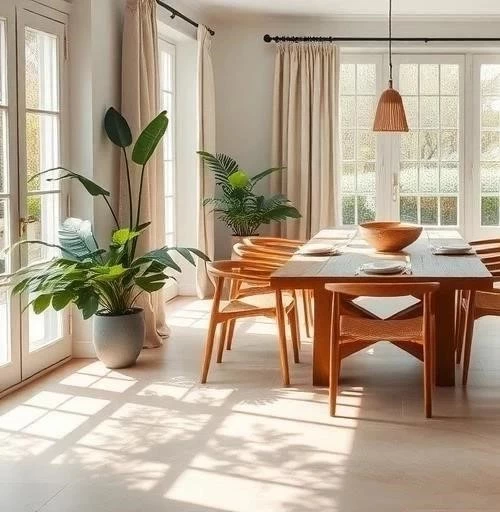
A dining room can feel entirely new without a major renovation. A focused interior refresh—using porcelain tile on one wall, around the table, or beneath the dining area—is a renovation without reconfiguration. Choose natural textures and a calm natural color palette to create an eco-friendly interior that feels welcoming, not overly styled.
Choose a nature-inspired surface
Wood-look porcelain brings gentle wood tones into the room while offering a durable alternative to timber. Stone-look porcelain can introduce a slate texture or travertine imitation, while concrete-look porcelain suits a quieter, contemporary scheme. These finishes support eco-style and a nature-inspired interior, especially when paired with wood, natural textiles, and houseplants. Look for eco-friendly materials and understated patterns that complement what you already own.
Refresh walls and floors selectively
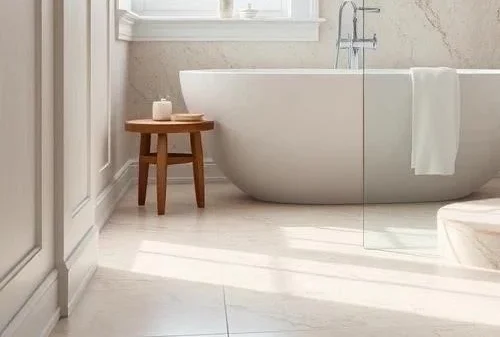
A feature wall is an effective way to update a dining room without replacing every finish. Use wall cladding behind a sideboard, or add decorative panels with tile details for a composed focal point. A dining-room backsplash can protect the wall beside a serving counter or sink. For a broader change, choose flooring that visually connects the dining area to the adjoining room. Large-format tile creates fewer grout lines, while a matte surface keeps reflections soft.
Plan for comfort and everyday use
Use a shift in tile color or pattern for zoning space and defining the dining area, even in an open-plan home. Keep the table, chairs, and lighting as the visual center; tile should support the room rather than compete with it. A practical finish matters in a busy household: wear-resistant tile stands up to chair movement, and moisture-resistant materials are useful near drinks and serving areas. Simple cleaning makes porcelain a sensible choice for everyday meals.
- For warmth, combine wood-look tile with a wooden table and woven natural textiles.
- For a lighter mood, pair pale stone effects with green houseplants and soft lighting.
- For a graphic accent, use a small area of slate or concrete effect against neutral walls.
A small change with a lasting effect
Start with a localized finish update: replace a tired backsplash, tile one wall, or renew the floor beneath the table. These interior ideas keep disruption and waste low while giving the room a clear new identity. With thoughtful choices, dining-room finishes can balance durability, comfort, and a modern dining room design. The result is a cozy dining room with natural textures, practical surfaces, and a relaxed connection to nature.


9 Comments. Оставить новый
Pairing tile with natural textiles and houseplants is a lovely way to keep the room warm and welcoming.
I appreciate the focus on everyday use, especially choosing finishes that can handle chair movement and spills.
A helpful reminder that tile should complement the dining table and lighting rather than compete with them.
I like the idea of refreshing just one wall or the floor instead of taking on a full renovation. The suggestions feel practical and achievable.
The comparison between wood-, stone-, and concrete-look porcelain makes it easier to picture different styles in a dining room.
The advice to choose understated patterns makes sense. A calm tile finish can add texture while letting the furniture remain the focal point.
This offers useful ideas for making a dining room feel refreshed without changing its layout or replacing everything.
The zoning tip is useful for open-plan homes. A subtle change in tile can define the dining area without adding a physical divider.
Large-format tile and fewer grout lines sound like a great combination for a clean, low-maintenance look.