
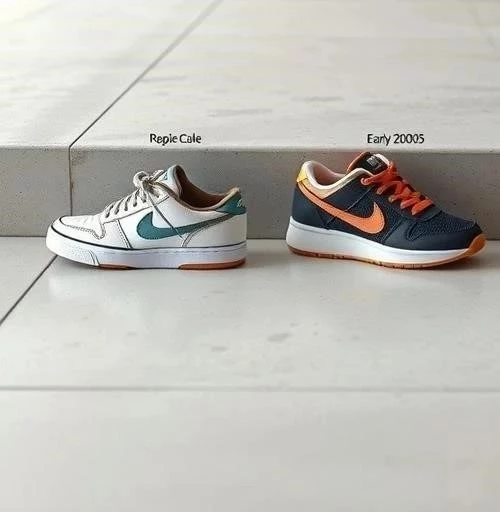
ASICS children’s urban sneakers developed at the intersection of athletic footwear, changing city life and the needs of growing feet. Their history is not a separate story from the company’s adult running shoes: many children’s designs draw on technologies and silhouettes first created for sport, then adapted for school, streets and everyday wear. Over time, the emphasis broadened from performance and durability to include lighter construction, easier fastening and styles that could be worn beyond the sports field.
From a Kobe sports company to ASICS
The company’s origins date to 1949, when Kihachiro Onitsuka established a sports shoe business in Kobe, Japan. It became known as Onitsuka Co., and its early work focused on footwear for athletes. The company’s first basketball shoes were designed for the demands of the game, while later products served runners and other sportspeople. This practical background shaped the approach that would eventually inform ASICS footwear for adults and children alike: a shoe was expected to support movement, fit securely and withstand regular use.
In 1977, Onitsuka Co. merged with two other Japanese sports businesses to form ASICS Corporation. The name is an acronym of the Latin expression Anima Sana In Corpore Sano, commonly translated as “a sound mind in a sound body.” The new company continued to develop athletic shoes and related equipment. Running research became an important part of its identity, and technologies created for performance models later influenced shoes intended for more general use.
Sport technology enters everyday footwear
During the late twentieth century, running shoes increasingly appeared outside training and competition. Their cushioning, flexible soles and lightweight materials appealed to people who spent long hours walking around town. The broader sneaker trend also made athletic design a familiar part of casual clothing. ASICS benefited from this change because its running heritage provided recognizable shapes and construction ideas that could be adapted for daily wear.
One influential development was the use of GEL cushioning in selected ASICS running shoes from the 1980s onward. The technology was designed to absorb impact, and its visible or documented association with performance helped define the brand’s technical image. Not every children’s urban shoe contains the same cushioning system, however, and features vary by model and production year. A child-sized version of a familiar adult silhouette may also differ in materials, structure and components.
As older running designs gained renewed interest, some ASICS models moved between sport and lifestyle categories. The GEL-LYTE family, including the GEL-LYTE III introduced in 1990, is one example of a running-inspired line that later became familiar in casual sneaker culture. Adult designs and archive releases helped establish a visual language—layered panels, mesh, curved overlays and a prominent sole—that could also influence youth footwear. Children’s editions are not necessarily direct replicas; they are usually adjusted for smaller sizes and everyday use.
Why children’s urban sneakers took a different path
Children use shoes in settings that overlap: school corridors, pavements, playgrounds, family outings and sometimes organized sport. An urban sneaker therefore needs to be practical as well as attractive. Compared with an adult lifestyle shoe, a children’s model may place greater emphasis on a secure fit, easy entry and a sole suited to frequent walking. These priorities vary by age. A preschooler may benefit from a simple fastening system, while an older child may prefer a lace-up design resembling adult sneakers.
Hook-and-loop straps have been a common feature in children’s footwear because they can be faster to manage than laces. Elastic laces, pull tabs and wider openings also appear on some models. These are design choices rather than universal characteristics of ASICS products. The exact construction depends on the intended age group, region and season. Parents and caregivers generally need to check the individual shoe’s fit and fastening rather than assume that a particular brand or model will suit every child.
Materials have changed alongside manufacturing and fashion. Mesh can help reduce weight and improve ventilation; synthetic overlays can add structure; and rubber outsoles provide contact with the ground. In urban children’s shoes, designers must balance these elements with durability and comfort. Color has also become part of the appeal: some models use bright accents or contrasts, while others adopt subdued shades closer to adult lifestyle ranges. The look may echo a performance shoe even when the product is intended mainly for everyday wear.
From junior versions to dedicated youth ranges
ASICS has offered footwear across children’s size categories, although product names and availability have varied over time and between markets. Some youth shoes are adaptations of adult or running models; others are designed specifically for younger wearers. This distinction matters historically. Children’s urban sneakers were not simply adult shoes made smaller: their proportions, fastening and construction could be changed to address the requirements of growing users.
In more recent collections, familiar ASICS design cues have appeared in a wide range of junior footwear. Running-oriented families such as GEL-KAYANO and GT-series models are associated primarily with performance, while selected designs may also be worn casually. Simple court-inspired shapes, including models influenced by classic tennis footwear, offer another route into urban style. The range changes regularly, so a model name alone does not establish its intended use, technical specification or suitability for a particular child.
The rise of sneaker culture in the 2000s and 2010s made archival athletic designs more visible as fashion. Collaborations, retro releases and online sneaker communities encouraged adults to revisit older silhouettes. Children’s ranges existed within the same cultural setting, but they followed practical considerations too: a colorway could mirror a popular adult model, while a junior version might use a different fastening or simplified construction. This mixture of shared style and age-specific design became characteristic of the category.
How to understand the history today
ASICS children’s urban sneakers can be understood in three broad stages. First came the company’s foundation in sports footwear and its later development as a performance brand. Next, running technologies and athletic silhouettes gained a place in everyday clothing. Finally, children’s products combined those recognizable influences with features intended for smaller feet and daily routines. These stages overlapped rather than replacing one another: a shoe could retain a sporting appearance while being marketed for school or casual use.
When evaluating a current pair, the historical name or appearance is only one consideration. Families can check the product description for its intended activity, cushioning and materials, then assess whether the shoe fits securely with room for natural toe movement. Fastening should be manageable for the child, and the sole should suit the surfaces where it will be worn. Children’s feet grow, so fit should be reassessed over time. These practical checks are more informative than assuming that every ASICS sneaker offers the same support or purpose.
The history of ASICS urban sneakers for children reflects the wider journey of athletic footwear into everyday life. A company founded around sports shoes developed running technologies and recognizable designs; the popularity of casual sneakers then brought those influences into city settings. Children’s models adapted the visual language of adult footwear while responding to different sizes, routines and fastening needs. The category continues to change with fashion and product development, but its central idea remains consistent: combining the legacy of sports design with footwear intended for ordinary daily movement.
7 Comments. Оставить новый
The overview provides useful context on the company’s origins and the 1977 merger that established ASICS Corporation.
The article connects the development of children’s sneakers with ASICS’ broader history in athletic footwear.
The discussion highlights how features associated with running shoes became relevant to everyday footwear.
The article outlines a shift from sports-focused design toward practical considerations such as lighter construction and easier fastening.
The piece presents ASICS’ development in a clear sequence, from its beginnings in Kobe to the wider adoption of sneakers.
The article gives a concise account of the links between sports footwear technology and changing everyday wear.
The historical framing helps explain how athletic design influenced shoes intended for school and city use.