Choosing heating for a small house is not simply a matter of buying the most powerful boiler․ In a cold climate, the best heating system balances reliable warmth, fuel availability, installation cost and energy efficiency․ First reduce heat loss: insulate walls and the roof, improve floor insulation, seal draughts and check windows․ A well-insulated home needs less heat, so equipment can be smaller and running costs lower․
Ranked heating options
- Gas boiler with water heating․ Where a gas connection is available, this is often the most practical all-season solution․ A boiler supplies radiators or underfloor heating and can maintain an even temperature during long frosts․ Its rating should follow a heat-loss calculation, not floor area alone; oversizing wastes fuel and may cause inefficient cycling․
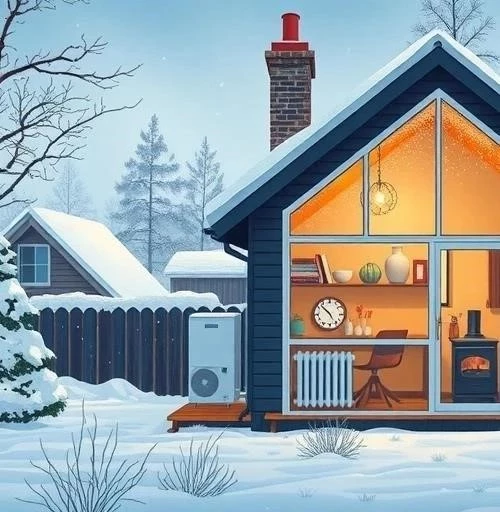
- Heat pump․ An air-source or ground-source heat pump can be highly efficient, especially in a well-insulated home․ However, output and efficiency may fall in extreme cold․ Check the model’s performance at local winter temperatures and budget for a backup heat source if uninterrupted warmth is essential․
- Pellet or other solid-fuel boiler․ A pellet boiler offers automatic feeding and steady water heating, but needs storage, maintenance and dependable fuel delivery․ A conventional solid-fuel boiler can cost less, yet requires regular loading and supervision․ Both can suit homes without gas․
- Electric boiler, convectors or infrared heaters․ These are easy to install and useful for small spaces or as backup․ Direct electric heating can be expensive during prolonged cold spells, so compare local tariffs before relying on it as the main system․ Infrared units heat people and surfaces directly; convectors warm room air․
- Stove or fireplace․ Wood-stove heating can provide resilience during outages and supplement another system․ Heat distribution is uneven, however, and fuel handling, safe flues and fire precautions matter․ It is rarely a complete answer for a multi-room cottage․
Making the right choice
For a small cottage, water heating with radiators or a warm floor is comfortable, while a stove or electric heater can serve as backup․ In a country home used only occasionally, choose controls that prevent freezing without heating every room to full comfort․ Protect pipes with insulation, keep vulnerable areas warm, and arrange safe drainage where appropriate․
Estimate total ownership cost—not just equipment price—including installation, maintenance and fuel consumption․ For severe-climate heating, reliability matters as much as efficiency: a correctly sized primary system, good insulation and a tested reserve source usually outperform one oversized appliance․ The right solution depends on heat loss, winter design temperature, available fuel and how often the home is occupied․