
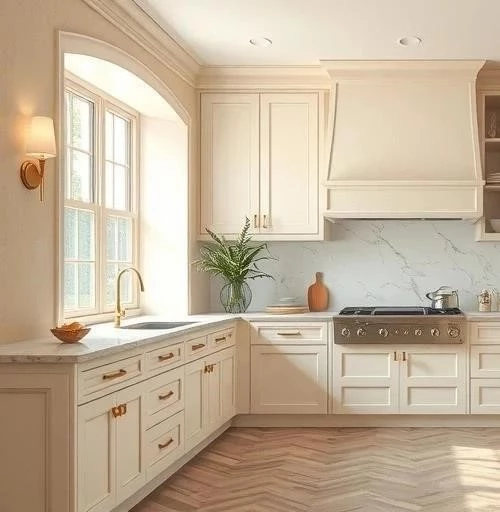
Decorative wall finishes can give a kitchen the poise of a living room while standing up to everyday use․ In a modern classic interior, plaster brings subtle depth, soft sheen and a hand-finished quality that pairs beautifully with cabinetry, stone and metal․ The result is an elegant kitchen with a premium feel, not a room that looks overly formal․
Choose a finish to suit the mood
Venetian plaster in the kitchen creates a polished, marble-like surface with delicate tonal movement․ It works especially well in cream, warm beige and other noble shades, reflecting light without competing with classic mouldings․ For a more understated look, smooth decorative plaster offers a calm backdrop for detailed doors and hardware․ A pearlescent coating or silk-effect plaster adds a gentle glow; use it sparingly where daylight or carefully placed lamps can reveal its texture․
Textured plaster for kitchens offers a different character․ A stone-like texture adds natural warmth, while concrete-effect plaster gives the room a clean, contemporary edge․ Relief finishes can make a feature wall feel tactile and individual․ Keep the surrounding surfaces simpler so the texture remains the focus․
Plan zones and practical surfaces
Use finishes to define the dining area, cooking zone or a quiet corner without adding partitions․ An accent wall behind a table can carry a richer colour or stronger texture, while the rest of the walls stay light․ This kind of zoning through finishes helps an open-plan kitchen feel organised and inviting․
Practicality matters as much as appearance․ Choose moisture-resistant plaster with a suitable protective sealer, and confirm that the specified finish is washable before using it near cooking areas․ Plaster is not automatically the right surface for a splash zone: for the backsplash, consider tile, glass or another approved washable material․ The combination of plaster and tile lets each finish do its job, and makes cleaning easier․ Always follow the manufacturer’s care instructions․
Coordinate the complete design
Consider how the plaster will sit beside the kitchen cabinets․ Warm plaster tones can soften dark cabinetry; a pale marble effect can lift timber fronts or classic painted units․ Natural materials—wood, stone and brushed metal—reinforce the refined, lasting character of the scheme․ Decorative panels and classic mouldings can frame a plastered wall, but restrained detailing usually feels more luxurious than excessive ornament․
Lighting is essential: grazing light highlights relief, while diffused illumination flatters smooth and pearlescent surfaces․ Test samples on the actual wall at different times of day before choosing a colour or sheen․ With a durable kitchen coating, balanced textures and thoughtful lighting, plaster becomes more than decoration: it creates a sophisticated modern classic interior with a distinctive, premium finish;
3 Comments. Оставить новый
The article does a lovely job of balancing the aesthetic appeal of decorative plaster with practical kitchen considerations. The guidance on using tile or glass in splash zones is especially useful.
I appreciate the clear comparison of Venetian, smooth and textured finishes. The suggestions for using finishes to define zones are inspiring without making the design feel complicated.
A helpful overview for anyone planning a modern classic kitchen. The reminder to check washability and use a suitable protective sealer makes the design advice feel grounded and practical.