
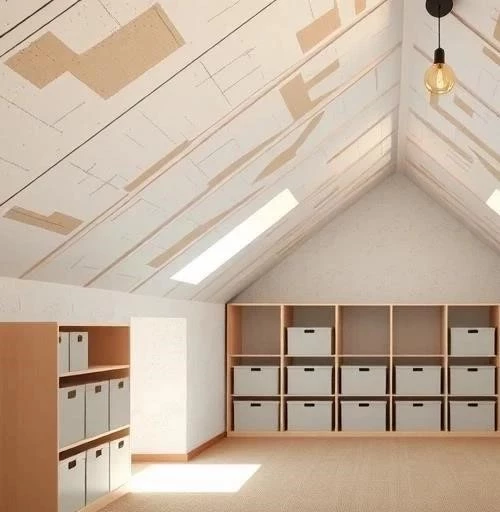
Decorative plaster can create a durable, distinctive finish in an attic, but sloping surfaces, limited headroom and changing temperatures require careful planning․ Successful attic finishing starts with the features of attic rooms: inspect the roof structure, identify sources of moisture and decide how the space will be used before choosing materials․
Planning the finish and layout
A modern attic interior benefits from a clear relationship between finishes, lighting and storage․ Attic storage organization should preserve access and circulation rather than fill every available corner․ Built-in attic wardrobes and storage systems beneath the roof slopes make use of low areas while keeping frequently used items within reach․ Good attic-space ergonomics also depend on zoning: allow adequate clearance around doors, stairs and work areas․
When choosing plaster texture, consider the room’s scale and natural light․ Types of decorative plaster range from fine, even coatings to pronounced textures; heavy relief can make a compact room feel busier and may collect dust․ Color choices in the interior affect how spacious the attic appears․ Pale, restrained shades can brighten low areas, while accents should be used selectively․ Combining plaster with wood can link the finish to exposed beams or cabinetry․
Preparation and application
Wall preparation for plaster is essential․ Remove loose paint and dust, repair defects, and allow damp areas to dry․ Wall leveling may be needed where unevenness would disrupt the final texture․ Apply a compatible primer to the surface and follow the product instructions for drying time․ Plastering walls and ceiling, especially finishing sloped walls, calls for stable access and consistent layer thickness․
Follow the application technology specified by the manufacturer, including mixing, application and finishing times․ Estimate plaster-mix consumption from the surface area, substrate condition and recommended coat thickness; a test patch can improve the estimate․ Observe the required humidity and temperature during finishing․ Rushing work, skipping primer, applying an overly thick layer or using incompatible products are common plaster application errors․
Inspection and maintenance
Once dry, inspect the finish for cracks in the plaster or coating separation․ These problems may result from movement, poor preparation, excess moisture or unsuitable application conditions; identify the cause before making repairs․ Follow care instructions for decorative plaster, using suitable cleaning methods and avoiding abrasive tools․ With sound preparation, thoughtful storage and regular inspection, decorative plaster can contribute to a durable attic finish․

7 Comments. Оставить новый
The article presents a balanced introduction to both the design considerations and the technical steps of attic plastering.
The comparison of plaster textures and their effect on a compact room adds practical context to the design advice.
The discussion of storage and circulation is useful because attic layouts can have limited usable space.
The points about lighting, color and exposed wood help connect material choices with the overall attic interior.
The guidance on following product instructions and estimating material use makes the application section practical.
The article appropriately emphasizes checking for moisture and preparing the surface before applying a finish.
The article gives a clear overview of the planning and preparation involved in applying decorative plaster in an attic.