
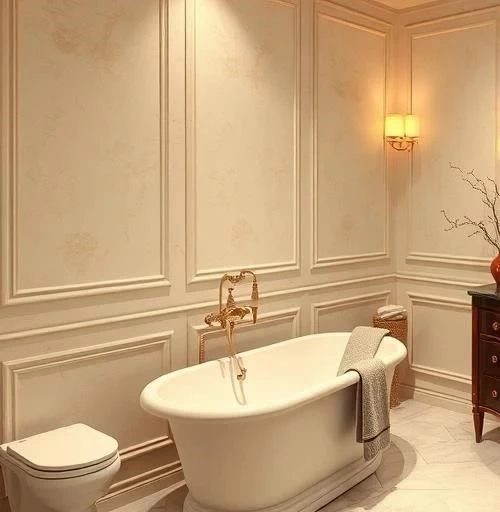
Decorative plaster in the bathroom can bring depth, texture and visual warmth to a room while supporting an Art Deco bathroom interior. The style combines elegant decor with clear geometry, rich materials and carefully chosen details. A suitable moisture-resistant wall finish helps create a cozy atmosphere without making the space feel overly ornate. The result depends on selecting products designed for damp areas and planning moisture protection before installation.
Choosing the finish
Venetian plaster is a popular option for a luxurious interior. Its layered application can create a polished marble imitation, with a marble texture that changes subtly as light moves across the wall. Microcement offers a more restrained look: its continuous surface works well in compact rooms and can visually simplify the bathroom wall finish. Both materials require appropriate preparation, sealing and maintenance. Check manufacturer guidance on exposure to water, ventilation and cleaning before choosing a product.
Textured coatings add another dimension to bathroom design. A fine, softly irregular surface can balance glossy surfaces such as mirrors, polished stone or lacquered furniture. For a more graphic effect, use geometric patterns in a limited area rather than across every wall. Deep colors, including emerald, navy or charcoal, can be paired with contrasting shades to give the room definition. Lighter plaster may help a small bathroom feel more open.
Art Deco details and layout
Gold accents and brass fixtures complement plaster with a smooth or stone-like appearance. They can appear in taps, mirror frames, handles or lighting, but repeating a few finishes is usually more cohesive than mixing many metals. Decorative panels can introduce symmetry or frame a basin wall. Their placement should respect practical needs, leaving access to plumbing and keeping vulnerable edges away from direct splashes.
Bathroom zoning can be achieved by changing the wall treatment around the shower, vanity and bathing area. A combination of plaster and tile is often practical: tile can protect surfaces in direct contact with water, while sealed plaster provides a softer visual transition elsewhere. This approach gives bathroom decorating ideas a functional basis as well as a decorative one. Good ventilation and regular inspection of joints remain important.
Lighting and a balanced result
Art Deco lighting can emphasize texture and establish a comfortable evening mood. Sconces beside a mirror, a diffused ceiling light and carefully directed illumination help reveal the finish without creating harsh glare. Select fixtures rated for their intended location in a bathroom. Before installation, consider how natural light affects the plaster’s color and sheen at different times of day.
For a balanced design, combine one dominant surface with a small number of supporting details. For example, marble-effect plaster may work with simple tile, a geometric mirror and restrained gold accents. Alternatively, microcement can provide a quiet background for patterned flooring and brass hardware. These choices allow decorative plaster to contribute to a refined, practical bathroom rather than compete with its fittings. The most suitable finish is one that meets the room’s technical requirements, supports the chosen palette and remains easy to care for.

1 Comment. Оставить новый
The article clearly outlines the main considerations for using decorative plaster in an Art Deco bathroom, including material selection, moisture protection and the use of metallic accents. Its practical reminders about product guidance and careful placement are particularly useful.