
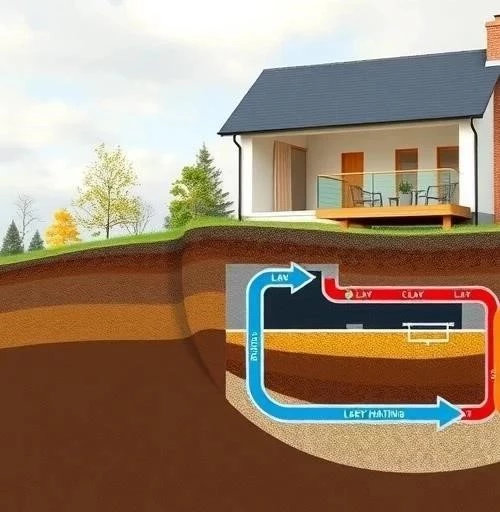
On difficult ground‚ a heating system has an unexpected neighbour: the earth beneath the house. It can shift‚ swell‚ settle or carry water toward buried pipes. Long service life depends not only on the boiler‚ but on how well the entire design responds to the site.
Start below the surface
Soil type matters. Frost-susceptible soil expands as it freezes; collapsible soil may settle when wet‚ while a high groundwater level can threaten buried connections. Soil freezing and frost heave place repeated stress on foundations and pipe routes. Geological surveys and engineering-geological investigations reveal these risks before construction‚ helping engineers choose a safe pipe burial depth and route.
A house foundation needs coordinated insulation and waterproofing. Site drainage can redirect water‚ while pipe insulation slows heat loss and helps prevent freezing. Corrosion protection matters too: moisture and aggressive soil can quietly shorten the life of metal components. These measures are not decorative extras; they help protect the system’s most difficult-to-reach parts.
Design for movement‚ not just warmth
Buried pipes should allow for ground movement‚ avoid unnecessary joints and be installed with suitable flexible connections where needed. The heating load calculation must account for the home’s heat losses‚ insulation‚ windows and local climate. Oversizing the boiler is no substitute for sound calculations: it can waste energy and cause frequent cycling.
A reliable autonomous heating system brings together a boiler‚ heating circuit‚ circulation pump‚ expansion tank and compatible heat-transfer fluid. Radiator heating and underfloor heating can work well in combination‚ provided the design balances temperatures and flow. Professional installation turns that plan into dependable operation; commissioning checks reveal leaks‚ trapped air and pressure problems before winter does.
Long life is maintained
Regular heating-system maintenance is a quiet form of disaster prevention. Inspect pressure‚ filters‚ pumps‚ pipe insulation and visible joints; test controls and arrange boiler servicing. After unusual settlement or flooding‚ check buried routes and drainage rather than waiting for a cold room to announce a failure. Smart monitoring can also flag temperature or pressure changes early.
The goal is not simply a warm room today. It is home energy efficiency and reliable engineering utilities through many seasons of thaw and freeze. On challenging ground‚ durability is designed twice: first on the drawing board‚ then through attentive care.
Key terms used
These English equivalents correspond to the supplied phrases: difficult soils (сложные грунты); home heating (отопление частного дома); heating-system durability (долговечность системы отопления); soil type (тип грунта); frost-susceptible soil (пучинистый грунт); collapsible soil (просадочный грунт); high groundwater level (высокий уровень грунтовых вод); soil freezing (промерзание грунта); frost heave (морозное пучение); geological surveys (геологические изыскания); engineering-geological investigations (инженерно-геологические исследования); house foundation (фундамент дома); foundation insulation (утепление фундамента); pipe insulation (теплоизоляция труб); pipeline installation (прокладка трубопровода); pipe burial depth (глубина заложения труб); corrosion protection (защита от коррозии); site drainage (дренаж участка); waterproofing (гидроизоляция); home heat losses (теплопотери дома); heating boiler (отопительный котёл); heating circuit (отопительный контур); circulation pump (циркуляционный насос); expansion tank (расширительный бак); heat-transfer fluid (теплоноситель); radiator heating (радиаторное отопление); underfloor heating (тёплый пол); autonomous heating system (автономная система отопления); heating installation (монтаж отопления); heating-system maintenance (обслуживание отопительной системы); disaster prevention (профилактика аварий); home energy efficiency (энергоэффективность дома); heating-load calculation (расчёт тепловой нагрузки); reliable engineering utilities (надёжность инженерных коммуникаций).


5 Comments. Оставить новый
The ground beneath a house is usually treated like a silent stage, but this article gives it a starring role. Its strongest reminder is that reliable heating begins long before the boiler is switched on: it begins with understanding what the soil might do.
A thoughtful guide to building warmth on uncertain ground. I would have loved a small real-world example of how different soils change a design, but the article clearly explains why investigation and commissioning deserve attention before the first frost arrives.
This article makes underground pipes feel less like invisible plumbing and more like a hidden expedition through shifting terrain. The emphasis on drainage, insulation and corrosion protection is a welcome reminder that prevention often happens where nobody can see it.
A useful, grounded read—quite literally. I especially appreciate the distinction between calculating a system properly and simply buying a larger boiler. More heat on paper does not necessarily mean more comfort at home.
The most reassuring idea here is coordination: foundation, heating circuit and site conditions should be planned as one system, not as separate checkboxes. That practical perspective could save homeowners from discovering expensive surprises in the middle of winter.