
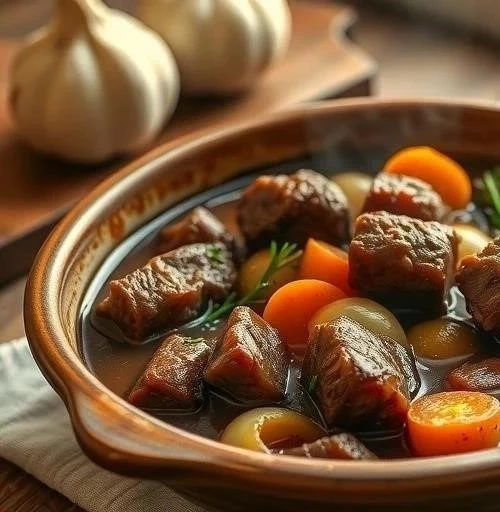
This comforting French-inspired beef stew proves that a few patient hours can turn an affordable cut into a memorable meal. Slow cooking is not merely convenient: it gives connective tissue time to soften, while wine, stock and vegetables build a deep, balanced sauce. The result is tender beef, fragrant garlic and a rich gravy worthy of a special dinner.
Ingredients
- 1 kg beef chuck or another well-marbled beef cut, trimmed and cut into large cubes
- 5 garlic cloves, finely chopped
- 2 tbsp olive oil and 1 tbsp butter
- 1 large onion, diced, and 2 carrots, sliced
- 2 tbsp tomato paste
- 300 ml dry red wine and 400 ml beef stock
- 1 bay leaf, 2 thyme sprigs, 1 rosemary sprig, black pepper and salt
- 1 tbsp flour, optional, for a thicker sauce
Method
- Pat the beef dry and season it with salt and black pepper. Drying helps it brown instead of steam, an important first step for building flavor.
- Warm the olive oil and butter in a heavy pot over medium-high heat. Brown the beef in batches, leaving space between pieces. Transfer it to a plate; crowding the pot would reduce the flavorful crust.
- Add the onion and carrots and cook until softened. Stir in the garlic and tomato paste for about a minute. Return the beef, then pour in the red wine and scrape the browned bits from the pot. Those bits enrich the eventual meat sauce.
- Add beef stock, bay leaf, thyme and rosemary. The liquid should come roughly halfway up the meat; the beef will release juices as it cooks. Bring the pot to a gentle simmer, cover it and lower the heat.
- Let the stew cook slowly for 2½–3 hours, stirring occasionally, until a fork easily separates the beef; Keep the simmer gentle: boiling hard can make meat tough rather than tender.
- For thicker gravy, mix the optional flour with a little cold water, stir it in, and simmer uncovered for 5–10 minutes. Taste and adjust the seasoning; remove the woody herbs and bay leaf before serving.
Why this recipe works
Garlic gives the dish warmth without overpowering the beef, while red wine adds acidity that balances the buttery, savory stock. Tomato paste contributes depth, and carrots bring natural sweetness. Together, these ingredients create a rounded sauce rather than a thin cooking liquid. This is the logic behind a classic French recipe: careful browning, restrained seasoning and time do more than a long list of ingredients.
Serve the stew with mashed potatoes, an ideal side dish because they catch the thick gravy, or with crusty bread, buttered noodles or simple vegetables. This homemade recipe makes a satisfying supper on a cold evening and a festive dish for guests. Although it is inspired by French cuisine, it is practical enough for an ordinary home kitchen. Make it a day ahead if convenient: resting lets the flavors mingle, and gentle reheating keeps the beef succulent. Refrigerate leftovers promptly and reheat them thoroughly.
A note on “beef à la française”
This is a garlic-forward French-style braise, not the cheese-topped dish often called French beef in some places. Its character comes from beef pulp (the boneless meat), wine, herbs and slow pot braising. Choose a cut suited to long cooking, keep the liquid at a quiet simmer, and resist rushing the process: patience is what turns simple ingredients into soft meat and a glossy, full-bodied sauce.



5 Comments. Оставить новый
The practical explanations make the method easy to follow, especially the reminder not to crowd the pot while browning. That small step helps develop the savory base that makes a slow-cooked stew taste rich.
This recipe offers a clear, sensible approach to a classic beef stew. The slow cooking, modest amount of liquid and final seasoning check all help produce tender meat and a flavorful sauce without complicating the process.
I like that thickening the gravy is optional rather than built into the recipe. The stew can be served as it is for a lighter sauce, or simmered with the flour mixture when a thicker consistency is preferred.
The recipe explains why browning the beef in batches matters, which is a useful detail for building a deeper flavor. I also appreciate the gentle-simmering advice, since cooking at too high a heat can leave the meat tough.
This sounds like a dependable, comforting stew. The combination of red wine, stock, tomato paste and herbs should create a balanced sauce, while the long cooking time gives the beef chuck a chance to become tender.