
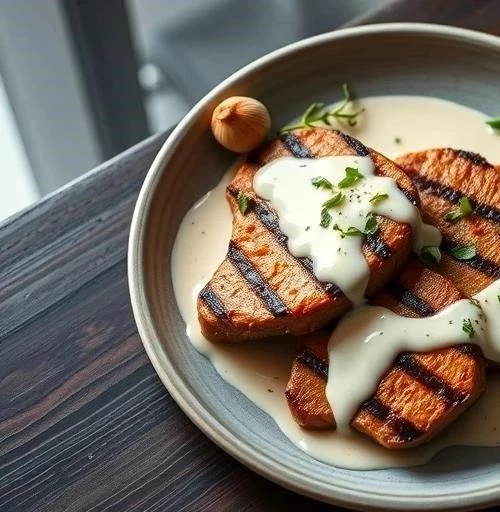
A good grilled steak needs little more than quality beef, intense heat and careful timing. A garlic cream sauce adds richness, but it should complement the meat rather than conceal its flavor. This recipe balances a browned, smoky crust with a tender center and a smooth, gently aromatic sauce. Beef tenderloin is especially soft; ribeye or top blade also work well, provided the steaks are evenly thick.
Ingredients
- 2 beef steaks, about 250–300 g (9–10 oz) each and 3–4 cm (1¼–1½ in) thick
- 1 tablespoon neutral oil
- Salt and freshly ground black pepper
- 1 tablespoon butter
- 3 garlic cloves, finely minced
- 180 ml (¾ cup) heavy cream
- 1 teaspoon Dijon mustard (optional)
- 1 small sprig of thyme or rosemary
- 1 teaspoon lemon juice, or to taste
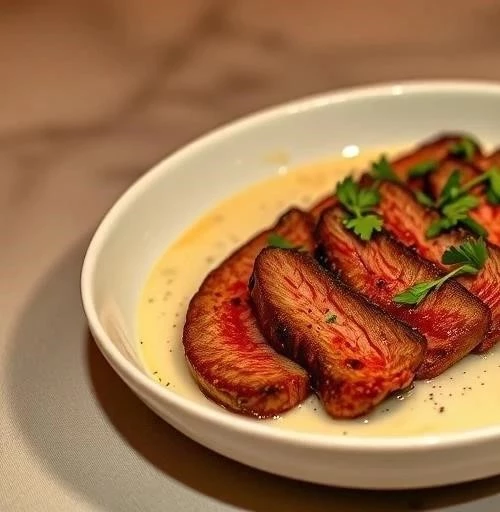
Prepare and grill the beef
- Take the steaks out of the refrigerator 25–30 minutes before cooking. Pat them thoroughly dry: surface moisture prevents browning, while a dry surface helps the grill create a flavorful crust. Rub lightly with oil, then season generously with salt and pepper.
- Heat the grill until very hot and clean the grates. Place the steaks over direct heat. For a steak around 3 cm thick, grill for roughly 3–4 minutes per side for medium-rare, turning once. Thickness and grill temperature vary, so use time as a guide, not a guarantee.
- For the most reliable result, check the center with an instant-read thermometer. Remove the beef at about 52–54°C (126–129°F) for medium-rare; it will rise slightly as it rests. Cook longer if you prefer a more done steak. Avoid pressing the meat, which squeezes out its juices.
- Transfer the steaks to a warm plate and rest for 5–8 minutes. Resting matters: it gives the juices time to redistribute, making each bite more succulent. Do not cover tightly, or the crust may soften.
Make the garlic cream sauce
While the steaks rest, melt the butter in a small pan over medium-low heat. Add the garlic and thyme and cook for about 30 seconds, stirring constantly. Garlic burns quickly, so keep it pale; browned garlic can make the sauce bitter. Pour in the cream and whisk in the mustard, if using. Simmer gently for 3–5 minutes, until the sauce lightly coats a spoon. Do not boil hard, since high heat can cause cream to separate. Remove the herb, season with salt and pepper, then add a little lemon juice to balance the richness.
Serve with confidence
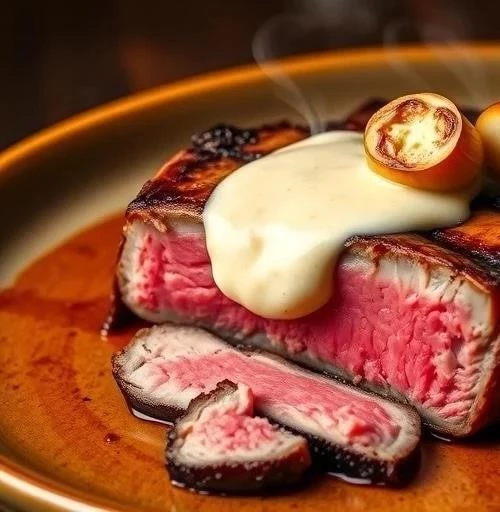
Spoon the sauce beside or over the rested steaks, rather than soaking the entire crust. This preserves the contrast between the grilled exterior and tender center. Serve with grilled vegetables, potatoes or a crisp green salad. For a stronger garlic aroma, roast a clove on the grill and mash it into the finished sauce. The key is restraint: a hot grill develops flavor, a thermometer prevents overcooking, and a short rest keeps the beef tender. Together, these simple steps make a luxurious dish without complicated technique.


9 Comments. Оставить новый
I like that the recipe explains why the steaks should rest instead of presenting resting as an unexplained rule. The warning against covering them tightly is useful too, since trapped steam can soften a well-browned crust.
This is a well-organized approach to steak and sauce, with the resting period used efficiently to prepare the sauce. A note about keeping the sauce at a gentle simmer would help ensure the cream stays smooth.
The garlic cream sauce sounds rich without being overly complicated, and the optional Dijon and lemon juice give readers room to adjust its flavor. Cooking the garlic briefly over medium-low heat is sensible advice to help prevent it from turning bitter.
The recipe balances technique with practical explanations, especially its point that surface moisture interferes with browning. The measurements in both metric and imperial units are another thoughtful detail for a broad range of home cooks.
The seasoning and sauce ingredients seem likely to complement rather than overwhelm the beef. Since cream sauces can vary in thickness depending on the pan and heat, a visual cue for when the sauce is ready would make the instructions more precise.
This recipe offers a clear sequence, from bringing the steaks toward room temperature to allowing them to rest after grilling. I appreciate the reminder not to press the meat, and the thermometer guidance makes the doneness instructions more dependable than timing alone.
The recipe gives helpful guidance on drying the steaks and preheating the grill, both of which make a real difference to browning. I also appreciate that it presents grilling times as approximate rather than treating them as universal.
Using an instant-read thermometer is a practical strength of this recipe because steak thickness and grill heat can vary so much. The suggested medium-rare temperature is clearly stated, though readers may also benefit from a note about official food-safety recommendations and their preferred level of doneness.
The ingredient list is concise and easy to follow, and the suggested alternatives to tenderloin make the recipe more accessible. It would be even more helpful to explain whether the cooking times should be adjusted for particularly fatty or unevenly shaped cuts.