
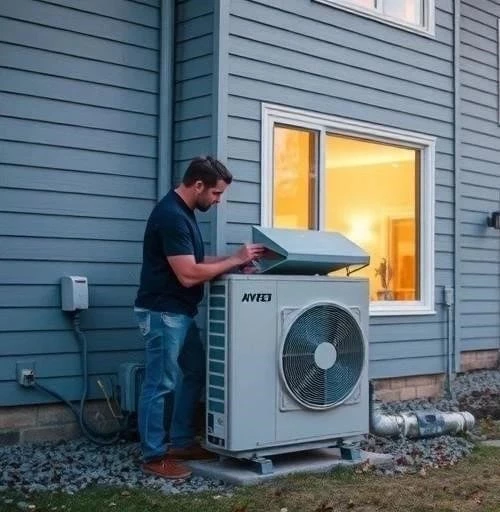
A heat pump for a home can provide efficient heating, but a large property places extra demands on its heating system. Regular heat pump maintenance helps deliver rapid room heating, maintain energy efficiency and create a comfortable indoor climate. Good planning also supports even room warming and helps control electricity consumption.
Why maintenance matters
Heating a large house depends on more than the unit’s rated heat pump capacity and heat output. Home insulation, heat loss reduction, room layout and the condition of the distribution system all affect results. An air-source heat pump and a geothermal heat pump have different operating conditions, but both need routine equipment inspection and technical maintenance. A neglected system may run longer, use more electricity or fail to reach the required supply temperature.
Seasonal preparation and inspection
Before heating startup, arrange seasonal preparation and heat pump diagnostics. A qualified technician can check the compressor, refrigerant circuit, electrical connections and heat exchanger. The technician should also inspect the circulation pump, expansion components and heat-transfer fluid, and confirm that safety controls work correctly. Outdoor units need clear airflow: remove leaves, snow and other obstructions without damaging the coil.
Filter cleaning is another simple but important task. Dirty filters restrict air circulation and can reduce heat output. Follow the manufacturer’s instructions for cleaning or replacement; do not open sealed refrigerant components yourself. If the unit makes unusual noises, leaks, cycles frequently or struggles to heat rooms, arrange professional diagnosis rather than repeatedly restarting it.
Balance the heating system
Correct heating system adjustment is essential in a large home; Hydraulic balancing helps distribute heat to distant rooms instead of letting nearby circuits take most of the flow. Underfloor heating usually operates at a lower supply temperature than radiator heating, so each circuit should be set for its design conditions. A buffer tank may reduce short cycling and help match heat production to changing demand.
Weather-compensated controls can adjust supply temperature as outdoor conditions change. Set the thermostat to a stable, practical schedule and avoid large temperature swings. A heat pump works most efficiently when it can maintain a steady indoor temperature rather than repeatedly recovering from deep setbacks. Check that sensors are correctly placed and that room controls do not conflict with the main controller.
Getting faster, even heat
Rapid room heating is not achieved by raising every setting to its maximum. First check insulation, windows, doors and ventilation, since reducing heat loss allows rooms to warm sooner. Keep radiators unobstructed and ensure underfloor circuits are open and properly balanced. If some rooms remain cold, ask a specialist to review flow rates, system settings and the unit’s capacity for the home’s actual heat demand.
Routine maintenance is prevention, not just a response to breakdowns. Keep service records, note changes in performance and arrange inspections at the intervals recommended by the manufacturer. Timely heat pump repair can prevent a minor fault from causing a prolonged outage. Proper care, sensible controls and a well-balanced system support reliable heating, lower running costs and a longer equipment service life.
4 Comments. Оставить новый
Clear, helpful guidance for homeowners preparing for the heating season. The points about clean filters and unobstructed outdoor units are simple checks that can make a real difference.
I like how this explains that a system’s performance depends on insulation and distribution, not just the heat pump itself. The seasonal inspection advice is practical and easy to follow.
A useful overview of the maintenance steps that can help a heat pump perform reliably in a larger home. The reminder to leave refrigerant work to qualified technicians is especially important.
A well-organized introduction to maintaining heat pumps in larger properties. It gives readers a good sense of what they can check themselves and when to call a professional.