
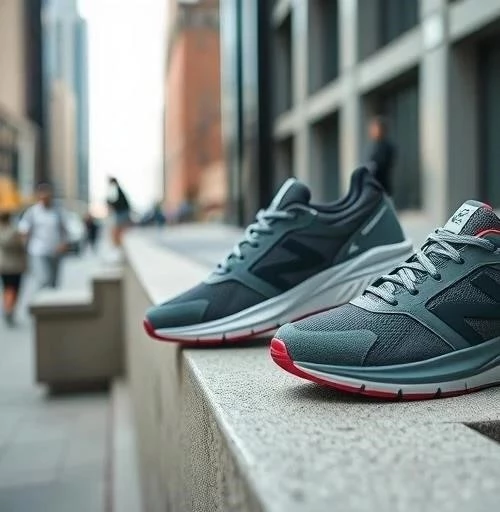
For teenagers, a city sneaker must do more than look current. It has to cope with school corridors, pavement, public transport and long days on foot, while still feeling comfortable and expressing personal style. Hoka’s urban sneakers are interesting because they bring technologies associated with running shoes into everyday settings. That can be a real advantage—but only when cushioning, fit and grip suit the wearer’s needs. Technology should support a teenager’s day, not simply serve as a marketing label.
Cushioning for long days on hard surfaces
One of Hoka’s most noticeable design features is its substantial midsole cushioning. Urban ground is often unforgiving: concrete and paving offer little natural shock absorption. A cushioned midsole can make repeated walking feel more comfortable, especially during a day that involves commuting between lessons, shops and activities. For teenagers who spend many hours on their feet, that comfort is a practical benefit rather than a luxury.
However, more cushioning is not automatically better for everyone. A thick sole may feel bulky, and some wearers prefer a closer connection to the ground. Teenagers should try shoes on and walk in them, rather than choosing by appearance or a claim about softness. The right pair should feel comfortable immediately, hold the foot securely and avoid pressure points. Cushioning cannot compensate for a poor fit.
Rocker geometry and natural movement
Many Hoka designs use a curved sole profile, often described as rocker geometry. Instead of relying only on a flat sole, the shape is intended to help the foot roll forward through a step. In city life, where walking involves frequent starts, stops and changes of direction, this can make movement feel smooth and less effortful for some people.
Still, the sensation is personal. A curved platform may feel natural to one teenager and unfamiliar to another. It is sensible to test the shoes on a level surface and, if possible, on stairs or a short walk. The purpose is not to change the way a teenager walks, but to find a design that feels stable and comfortable during ordinary activities.
Upper materials, fit and everyday wear
Urban sneakers commonly use engineered mesh or other lightweight upper materials. A breathable upper can help feet feel less confined during active days, while overlays may add structure around areas that need support. The balance matters: an upper that feels airy but allows the foot to slide around is not a good choice. Teenagers should check that the heel is held in place, the toes have room, and the material does not rub.
Fit deserves special attention because teenagers’ feet may still be growing. A shoe should not be bought several sizes too large just to extend its useful life. Excess movement can make walking uncomfortable and reduce control. It is better to measure both feet, try shoes on later in the day when feet may be slightly larger, and leave reasonable space at the toe without letting the heel slip.
Grip, durability and city practicality
The outsole is another important part of the technology. Rubber contact areas and patterned tread are intended to provide traction and resist wear, but real performance depends on the surface and conditions. Wet paving, polished floors and loose gravel can all feel different. No urban sneaker should be treated as slip-proof, so a teenager should still walk carefully in rain.
Durability also depends on how a shoe is used. A model designed primarily for running may not be the most practical choice for every school uniform, while an everyday-oriented Hoka option may better match casual city wear. Before buying, consider whether the sneaker needs to handle daily walking, sports, or both. One pair may not perform equally well in every role.
Choosing wisely
Hoka’s cushioning, rocker-shaped soles, breathable uppers and traction-focused outsoles can make urban sneakers appealing to teenagers who walk a lot. Yet technology is valuable only when it matches the wearer. Comfort, secure fit, suitable styling and the intended use should guide the decision more than a popular model name. Try the shoes with the socks normally worn, compare both feet, and walk around before deciding.
The strongest argument for Hoka city sneakers is practical: running-inspired design can bring comfort and a smooth ride to everyday journeys. The equally important counterpoint is that a technical feature is not a guarantee of a perfect shoe. A thoughtful fit check and honest assessment of daily needs are what turn design into a worthwhile choice.
8 Comments. Оставить новый
The explanation of rocker geometry is clear without treating it as a universal benefit. Some wearers may find the curved sole helps their stride, while others may need time to adjust. Encouraging a real-world try-on is sensible advice for a feature that depends so much on personal preference.
I appreciate that the article considers how teenagers actually use sneakers throughout the day, from commuting to walking between activities. Looking at durability and comfort in ordinary settings is more helpful than judging a shoe only by its appearance or running credentials.
The discussion is helpful because it separates possible benefits from guaranteed results. Cushioning and a rolling sole may make walking feel easier for some teenagers, but neither can fix an unsuitable fit. That is a reasonable takeaway for anyone comparing everyday sneakers.
I like the recommendation to walk around in a pair before deciding. A shoe can look appealing online but still create pressure or feel unstable in motion. The article rightly treats immediate comfort and secure fit as more meaningful than brand claims.
This is a measured introduction to Hoka shoes for city use. It explains why cushioning might be useful on pavement while acknowledging that a thicker sole can feel bulky. That balance helps readers think about trade-offs instead of assuming that more cushioning is always better.
The strongest point is that technology should serve the wearer rather than act as a marketing label. Teenagers need shoes that fit securely and work for their daily routines, so the article appropriately focuses on practical comfort instead of assuming that advanced design guarantees a good choice.
The article makes a useful distinction between cushioning and fit. A soft, substantial sole may help on hard city surfaces, but the reminder to try the shoes on is important because comfort is individual. That practical advice makes the discussion more balanced than a simple endorsement.
The article connects shoe design with the demands of a long school day, which makes the topic relevant to its intended audience. It also avoids presenting one design as right for everyone. A little more attention to grip and durability would make the practical guidance even more complete.