
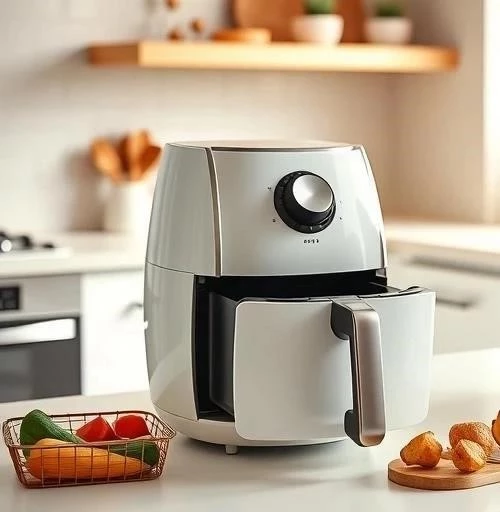
An air fryer is less a miniature deep-fryer than a countertop wind machine: it sends hot air racing around food until the outside turns crisp and the middle stays tender. The right one can make weeknight cooking feel like a small victory. The wrong one becomes an expensive, greasy-looking box that hogs the counter. Choose by how you actually cook—not by the biggest number on the carton.
Start with the people at your table
Capacity is useful only when it matches your portions. A compact basket suits one or two people, or a kitchen with very little storage. A medium model is often more comfortable for a small family. For larger households, frequent guests, or whole meals cooked at once, look for a roomy basket or an oven-style unit. Manufacturers describe capacity in litres, but litres can be slippery: two models with the same stated volume may have very different usable cooking areas.
Picture tonight’s dinner before you shop. Can the basket hold the amount of food you usually cook without piling it into a mound? Air needs room to circulate. A crowded basket is a traffic jam for heat, and the result may be patchy browning rather than a crisp finish. If possible, compare the basket’s shape and dimensions, not just its headline capacity.
Don’t let wattage do all the talking
Power affects how quickly an appliance heats and how well it maintains temperature, but a higher wattage does not automatically mean better cooking. Airflow, heating-element design, basket shape, and temperature control all contribute. Think of the appliance as an orchestra: a powerful element is only one musician, and good results depend on the whole arrangement.
Look for a useful temperature range and controls that are easy to understand. A clear dial or readable display is more valuable than a menu of mysterious icons. A timer with an alert helps prevent forgotten fries; a shake reminder can be handy for foods that benefit from turning. Preset programs are convenient, but they should be shortcuts, not a substitute for manual temperature and time settings.
Choose a shape that fits your cooking
Basket-style models are usually compact and straightforward. They work well for fries, vegetables, chicken pieces, and modest portions. Some have one large drawer; others split into two cooking zones, allowing different foods to cook at different settings. Dual zones are useful when you regularly prepare a main and a side, but they take up more space and can cost more.
Oven-style models often provide shelves, trays, or a rotating accessory. They can suit families and people who want to cook several layers or larger items. Their trade-off is a bigger footprint and sometimes more cleanup. Before buying, check whether accessories are included, whether the shelves are easy to remove, and whether the door gives you a clear view of the food.
Treat cleaning as a feature, not an afterthought
After the first week of excitement comes the real test: washing up. Removable parts with a smooth, non-stick surface are generally easier to clean than complicated assemblies with hidden corners. Check the manual to see which parts can go in a dishwasher; “dishwasher-safe” does not necessarily mean every accessory is. A crumb tray, accessible heating area, and easy-to-wipe exterior can make the difference between an appliance you use often and one you avoid.
Non-stick coatings need sensible care. Use soft sponges and utensils that will not scratch the surface, and follow the manufacturer’s cleaning instructions. A removable basket is convenient, but its handle should feel secure and the locking mechanism should not seem flimsy.
Check comfort, safety, and counter space
Measure the space before ordering. Leave room for ventilation as directed in the manual, and think about where the appliance will sit while hot. A compact-looking fryer can still be awkward beneath low cabinets or heavy to move in and out of storage. Consider the cord length, handle grip, control visibility, and whether the basket slides smoothly when full.
Look for stable feet, a sturdy handle, and clear safety instructions. Useful details may include automatic shut-off, overheat protection, and a cool-touch exterior, though no feature replaces careful use. The basket and its contents can become very hot. Check warranty terms and whether replacement baskets or accessories are available; a good purchase should be supportable after the novelty wears off.
Ignore the magic-food promises
An air fryer can brown food with little or no added oil, but it does not make every dish effortless or identical to deep-fried food. Results depend on the recipe, portion size, and how much food is loaded at once. A little oil can improve browning on some ingredients; too much may make food greasy. You may also need to shake or turn items midway through cooking. Treat the first few meals as experiments, and keep notes on settings that work in your kitchen.
A quick shopping checklist
- Capacity suits your usual portions, with space for air to circulate.
- The shape and cooking zones match the meals you make most.
- Temperature and timer controls are clear and adjustable.
- Removable parts are easy to wash and durable enough for frequent use.
- The appliance fits your counter, storage, budget, and electrical setup.
- Warranty, safety information, and replacement parts are easy to find.
The best choice is the one you’ll reach for
Before buying, name three meals you would genuinely cook in it. If the model can handle those portions, is simple to clean, and fits your kitchen, you are close to a good match. Spend extra only for features you will use: a second zone is valuable to a cook juggling dinner, while a screen full of presets may be decoration. Choose a practical little weather system, leave its hot-air runway clear, and let your first batch be something forgiving. A few well-browned potatoes are a better test than a complicated feast—and a delicious way to start.

6 Comments. Оставить новый
The orchestra comparison gives wattage a welcome reality check. A big number on a box may sing loudly, but airflow and design still have to keep the whole performance in tune.
The image of a crowded basket as a traffic jam for heat makes the advice instantly memorable. This is a practical guide with enough personality to keep the shopping details from feeling like homework.
A refreshingly grounded buying guide: it values readable controls and counter space as much as flashy features. The best appliance, it suggests, is the one that fits both your kitchen and your habits.
I like that the article asks readers to picture dinner before comparing appliance specs. It turns capacity from an abstract number into a real question: will tonight’s potatoes actually fit?
This feels like advice from someone who has watched a promising batch of fries emerge unevenly browned. The focus on usable basket shape is a small detail with a very crisp payoff.
The article makes choosing an air fryer feel less like deciphering a spaceship dashboard and more like planning an ordinary meal. Clear, vivid, and useful without pretending that one model suits everyone.