
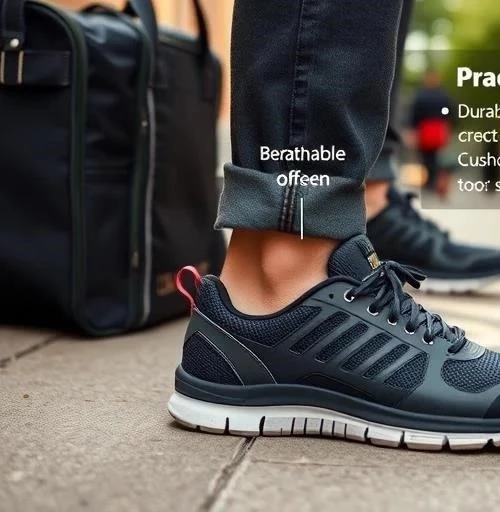
For a courier, sneakers are not just casual footwear. They are work equipment: a pair may spend hours on pavement, stairs, station platforms and wet streets, carrying the wearer through repeated stops and starts. At a budget of €100 or less, the goal is not to find every premium feature. It is to choose a comfortable, durable and suitably grippy shoe whose useful technologies match the route and the weather.
“Technology” in this price range usually means practical design choices rather than futuristic gadgets: cushioning foam, a supportive insole, a flexible but stable sole, breathable mesh, water-resistant panels or reflective details. These features can improve a working day, but names and marketing claims vary between brands. Check the construction, fit and return policy instead of buying on a technology label alone.
Cushioning for hours on your feet
Walking several kilometres on hard surfaces puts repeated impact through the feet and legs. A cushioned midsole can soften that sensation and make long shifts more comfortable. Many everyday running and walking shoes use foam midsoles made from EVA or similar lightweight materials. Some use denser or layered foam intended to balance softness with stability.
More cushioning is not automatically better. A very soft, tall midsole may feel pleasant at first but can feel unstable when stepping off a kerb, turning quickly or carrying a heavy bag. Couriers should look for a middle ground: enough cushioning to reduce harsh impact, with a platform that feels controlled underfoot. Try the shoes while standing and walking, not only while seated. Your heel should not wobble, and your toes should not be pushed forward on a slope.
Insoles also matter. A removable insole can be useful if you need to replace it, dry it separately or use an orthotic recommended for you. However, an extra insole takes up space. If the fit is already close, adding one may create pressure or numbness. Test the shoe with the socks and any inserts you plan to wear at work.
Grip and outsole design
Courier routes can include smooth shop floors, painted crossings, wet paving stones and dusty stairwells. The outsole is the part that meets these surfaces, so its rubber compound and tread pattern deserve close attention. A broad contact area and well-spaced grooves can help the sole flex and shed small amounts of dirt. A durable rubber outsole may resist wear better than soft foam exposed directly to the ground.
There is no single tread that is perfect for every city. Deep lugs may be useful on loose paths but can feel clumsy on smooth indoor floors. A nearly flat sole may be light and flexible yet offer less purchase on wet or uneven ground. Look for a pattern that covers the heel and forefoot, with defined edges and no unusually smooth patches. Product photographs are helpful, but customer reviews mentioning wet-weather use can provide additional context.
“Non-slip” should not be treated as a guarantee. Grip depends on the surface, water, oil, dirt, wear and the way a person walks. If your work involves kitchens or other regulated environments, check whether the employer requires footwear with a specific slip-resistance standard. Ordinary street sneakers may not meet that requirement even when their marketing describes the tread as grippy.
Fit, support and stability
A well-fitting shoe is one of the most valuable technologies a courier can buy. Feet often swell during a long day, so try shoes later in the day if possible. Leave a little room in front of the longest toe, while making sure the foot does not slide from side to side. The heel should feel secure without rubbing. If you have wide feet, compare models specifically offered in a wider fit rather than simply sizing up; a longer shoe can cause slipping and toe strain.
Support is not the same as a rigid arch. Some shoes have a shaped footbed or a firmer midsole intended to guide the foot, while others are neutral and flexible. The right option depends on your anatomy and comfort. A shoe that feels supportive in a shop may become uncomfortable after several hours, so use a return window sensibly and follow the retailer’s conditions. Persistent pain, numbness or recurring injuries are reasons to seek professional advice rather than relying on a product description.
For carrying parcels, stability can matter as much as softness. A reasonably wide sole base, secure lacing and a heel counter that holds its shape can help the shoe feel controlled. Avoid lacing so tightly that the top of the foot is compressed. Some models include extra lace eyelets to lock the heel in place; a simple runner’s loop can sometimes improve heel hold, provided it does not create pressure.
Breathability and moisture management
Breathable uppers are often made from mesh or knit textiles. They allow more air movement than thick, closed materials and can be comfortable in warm weather or during fast walking. The trade-off is that open mesh usually offers limited protection against rain, puddles and road spray. A quick-drying lining and removable insole can make shoes easier to air out between shifts, but they do not make a wet sneaker waterproof.
Water-resistant treatments and membranes can help in drizzle, yet they may reduce ventilation and can add warmth. Under €100, claims differ considerably: a water-repellent finish may resist light splashes, while a waterproof membrane is intended to block water more comprehensively. Neither claim means a shoe will stay dry if water enters over the collar. For wet routes, consider the local climate, the height of the upper and whether you can carry spare socks.
Socks are part of the system. Moisture-wicking synthetic or wool-blend socks may feel drier than cotton during a long shift, though comfort and skin sensitivity vary. Let shoes dry fully between days where possible. Rotating between two pairs can reduce the time each pair stays damp and may extend their useful life.
Upper materials, reinforcement and durability
Affordable courier shoes often combine textile uppers with synthetic overlays. Mesh keeps weight down, while reinforcements around the toe, sides and heel can help the upper retain its shape. Check likely wear points: the outer forefoot, the area beside the little toe, the heel lining and the place where the sole joins the upper. Visible stitching, clean bonding and a toe guard can be encouraging signs, but they are not a guarantee of long life.
Leather or synthetic-leather panels may be easier to wipe clean than open mesh, although they can feel warmer and less flexible. Reinforced toes are useful if your work regularly involves stairs, bikes or frequent contact with parcels, but a bulky toe cap can restrict movement. Choose a balance between protection and freedom rather than assuming that the heaviest shoe is the strongest.
Weight accumulates over thousands of steps. A lightweight shoe can reduce the feeling of effort, but an exceptionally light model may use less durable materials. At this budget, inspect the whole shoe rather than judging by weight alone. If the sole is already soft, thin or easily twisted in the middle, it may not suit a demanding daily route.
Visibility and practical details
Reflective strips or reflective logos can make a wearer more noticeable when illuminated by headlights. They are useful additions for early mornings and evenings, especially when a courier crosses roads or rides a bicycle. Reflective details do not create light and cannot replace high-visibility clothing, lights or safe road behaviour. Check where the reflectors are placed: details on the heel and sides may be more visible from several directions than a small mark on the tongue.
Other small features can improve daily use. A padded tongue may reduce lace pressure; a heel tab can make shoes easier to put on; and a gusseted tongue may limit the entry of dust and small splashes. These features are not essential, but they are worth comparing if two pairs fit equally well. Laces should hold a knot, and eyelets should not feel sharp or fragile.
A sensible feature mix for different routes
- Mostly indoor or dry urban routes: prioritise fit, breathable mesh, moderate cushioning and a flexible outsole.
- Wet pavements and frequent rain: look for a more protective upper, useful outsole grooves and quick-drying construction; understand the limits of water-resistance claims.
- Long shifts on concrete: prioritise comfortable cushioning, secure heel hold and a stable base rather than the softest foam available.
- Routes involving bikes or low light: consider reflective details, a secure fit and an outsole that feels stable when mounting or dismounting.
- Wide or sensitive feet: search for suitable widths, a roomy toe box and a removable insole; do not assume a fashionable narrow silhouette will stretch enough.
How to shop for a pair under €100
Set the budget for the complete purchase, not just the sticker price. Include delivery, possible insoles and any weather protection you actually need. A discounted previous-season model from a known seller may provide better value than a new pair selected only because it has a large promotional claim. On the other hand, a low price is not useful if the shoe fits badly or cannot be returned.
Retail listings are a starting point, not a substitute for inspection. Large marketplaces and shoe retailers often carry broad ranges, but stock, authenticity checks, delivery terms and return rules can differ by seller and country. Read the product page carefully and verify who is selling the item. Look for recent reviews that discuss sizing, outsole wear and comfort after extended use, rather than relying only on star ratings.
Examples of places to compare general sneaker ranges include Ozon, Lamoda, Street Beat, Wildberries, Sportmaster and Yandex Market. These catalogues show that everyday, sports and seasonal styles may all appear in search results; they do not guarantee that a particular model is suitable for courier work or costs under €100. Check the current price and specifications directly.
A quick try-on checklist
- Try both shoes with work socks and stand for several minutes.
- Walk briskly, turn, climb a step and stop suddenly. Notice slipping or pressure.
- Check toe room, width, heel hold and whether the tongue stays centred.
- Flex the forefoot. It should bend naturally near the toes, not collapse through the middle.
- Inspect the tread, seams, toe reinforcement and heel lining.
- Confirm the return period and keep the packaging until the fit is proven.
Care, replacement and value over time
Daily wear can flatten cushioning and smooth the tread long before the upper looks damaged. Clean off grit, air the shoes away from direct heat and remove insoles to dry when possible. Avoid putting footwear on a radiator: excessive heat can deform materials and weaken adhesives. If the tread becomes visibly worn, the heel tilts, the sole separates or comfort changes noticeably, it may be time to replace the pair.
Think in terms of cost per working day. A €90 sneaker that stays comfortable and intact for many months may be better value than a €45 pair that needs replacing quickly. Actual lifespan depends on mileage, body weight, route surfaces, weather, care and fit, so no price guarantees durability. Keeping a simple note of purchase date and wear can help you compare models based on your own experience.
The best courier sneaker under €100 is not necessarily the one with the longest feature list. Prioritise a secure fit, balanced cushioning, a stable platform and an outsole appropriate to the surfaces you encounter. Then decide whether breathability, rain protection, reflective details or extra reinforcement deserves the next share of your budget. Compare current listings, verify the seller and test the shoes carefully. A modest, well-chosen set of technologies can make everyday walking more comfortable without paying for features your route does not need.
5 Comments. Оставить новый
The explanation of removable insoles is a valuable detail, particularly for people who use orthotics. It makes the advice feel practical rather than focused only on product features.
Good advice for choosing affordable work shoes. The emphasis on finding a balance between cushioning and control is especially relevant for routes with frequent turns and kerbs.
A helpful guide that puts comfort ahead of marketing claims. Trying shoes while walking and checking for heel movement are simple tips that could prevent a poor purchase.
This clearly explains what shoe technology can realistically offer on a modest budget. The suggestions about fit, socks and return policies make the guidance easy to apply.
The practical focus on cushioning and stability is useful for anyone spending long hours on their feet. I especially appreciate the reminder that a soft shoe is not necessarily a stable shoe.