
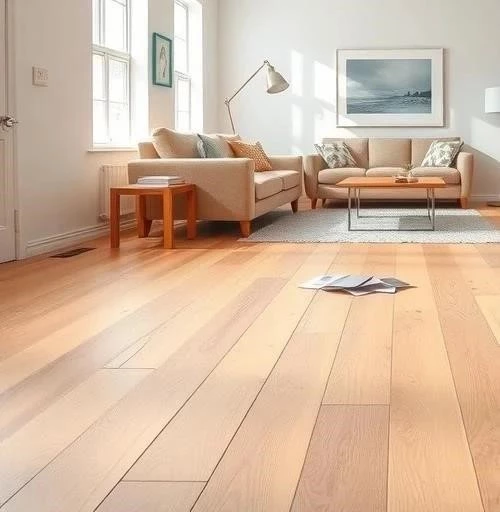
A living room is a stage for everyday life: sunlight moves across it‚ chairs scrape over it‚ and guests arrive with wet shoes. The right engineered wood flooring can make that stage feel warm for years—but choosing it takes more than picking a handsome sample.
Look beneath the surface
Engineered parquet is made from layers‚ not a single plank of solid timber. Its construction usually combines a real-wood veneer on top with stable supporting layers below. Ask about the thickness of the veneer: a thicker wear layer may allow more future refinishing‚ while a thin one is best treated as a finish to protect‚ not renew. The total board thickness also matters when matching thresholds‚ doors‚ and adjoining floors.
Species shapes both appearance and performance. Oak engineered flooring is a versatile choice‚ with visible grain and good everyday durability; other wood species vary in hardness‚ tone‚ and response to light. Compare the colour and texture of wood in daylight‚ not only under showroom lamps. Timber grading affects knots‚ contrast‚ and character: one grade may look calm and tailored‚ another like a small landscape captured in a plank.
Choose the format and finish
Plank dimensions influence the room’s rhythm. Wide‚ long boards can make a space feel open‚ while shorter or narrower pieces add movement. A single-strip board shows one broad face of timber; bevelled edges create a defined outline between boards and can emphasize the pattern. For a more dramatic design‚ herringbone installation turns the floor into a feature—but requires careful planning and can increase labour.
Do not confuse a parquet board with every other wood-look flooring product. Check the manufacturer’s specification for the surface layer‚ grading‚ dimensions‚ and connection type. A click-lock engineered board may suit a floating installation; glue-down installation can create a firm‚ quiet feel. The best option depends on the room‚ subfloor‚ and product instructions.
Plan the installation‚ not just the purchase
The subfloor is the unsung foundation of a successful floor. Preparation means checking that it is clean‚ dry‚ level‚ and stable. Installation on a screed may require moisture testing and an approved adhesive or moisture barrier. Installation over plywood calls for secure‚ suitable panels and the right fixing method. Underlay is not automatically needed: use it only when the flooring system allows it.
Ask about underfloor-heating compatibility before ordering. The board‚ installation method‚ and heating system must work together‚ with temperature changes controlled as the manufacturer advises. Engineered construction can offer better dimensional stability than solid wood‚ but it does not make a floor waterproof. Spills still need prompt attention.
Compare lifetime value
Durability depends on the species‚ wear layer‚ finish‚ and household habits. A protective coating—lacquer or oil—changes the look and the maintenance routine. Lacquer forms a surface film; oil often highlights natural grain and may need periodic care. Ask how to clean the floor and whether local repairs are practical. Good engineered-board care is gentle: use a soft brush‚ suitable cleaner‚ and little water.
Compare price per square metre alongside installation cost‚ trims‚ adhesive‚ subfloor work‚ and waste allowance. A low quote may exclude preparation or finishing details. Check the manufacturer’s warranty‚ care guidance‚ and expected service life‚ and order a little extra material for cuts or future repairs. A reliable engineered-flooring manufacturer should clearly state the board’s structure and installation limits.
Bring home samples and view them beside your furniture at different times of day. The best choice is not simply the most fashionable plank: it is the one whose timber‚ format‚ finish‚ and installation suit the room you actually live in.




3 Comments. Оставить новый
A practical, quietly elegant guide. I especially appreciate the distinction between a veneer meant for future refinishing and one that should simply be protected; that small detail could save a buyer from an expensive surprise years down the line.
This guide makes flooring feel less like a shopping decision and more like choosing the tempo of a room. The image of timber grading as “a small landscape captured in a plank” is especially vivid—and a useful reminder that natural variation is part of the design.
The article gives readers a helpful way to picture how boards shape a room’s rhythm, from broad, calm planks to the lively geometry of herringbone. Its strongest advice may be the least glamorous: check the specifications and the subfloor before falling for a sample.