
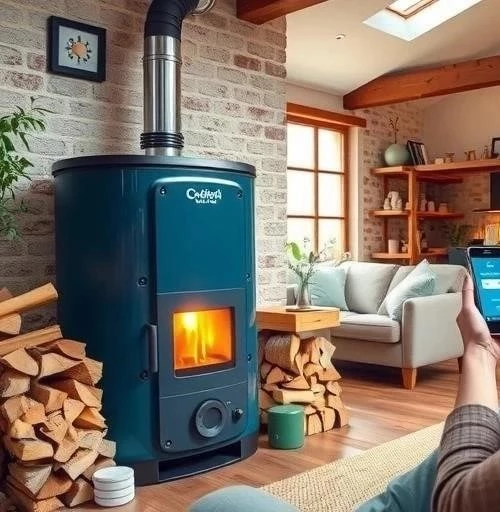
Wood heating can be economical and dependable, but it asks for regular attention: someone must load fuel, check the fire and keep the house warm. Remote heating control cannot replace these tasks, yet it can make them easier to plan. For a country house or other home with autonomous heating, automation is most useful when the boiler is not always within reach.
What automation can do
A solid-fuel boiler controller can regulate temperature, operate a circulation pump and, on compatible models, adjust air supply to the firebox. A temperature sensor supports temperature monitoring in rooms or pipes, while a Wi-Fi thermostat lets residents change settings locally. Internet-based boiler control or a GSM module for the boiler can send readings and alerts to a phone. Together, these features make a smart home setup practical rather than merely fashionable.
Remote monitoring of the boiler room helps owners see whether the heating system is operating normally before arriving at the property. An alarm can warn about an unexpected temperature drop, power failure or other condition detected by the installed equipment. This early notice can reduce the risk of frozen pipes and help arrange a timely visit. However, remote alerts are not a substitute for suitable safeguards or regular inspection.
Wood boilers and heat storage
With a wood-burning boiler, combustion does not stop instantly when the target temperature is reached. A controller can improve combustion control and coordinate the system, but it cannot make every load of wood burn identically. Wood moisture, log size, chimney draft and boiler design all affect fuel consumption. Claims of guaranteed savings should therefore be treated cautiously: automation may improve efficiency, but results depend on the whole installation and how it is used.
A heating system with a buffer tank, also called a thermal store, can absorb excess heat and release it later. This can make temperature control steadier and reduce the need to tend the fire as often. Proper sizing and setup matter; a buffer tank adds cost and space requirements, so it is not automatically the right choice for every home.
Benefits, limits and cost
The advantages of automation include comfort, clearer information about system performance and fewer unnecessary trips to the boiler room. Remote control is especially convenient for a country house used intermittently. The drawbacks are the installation cost, possible network or mobile-signal outages, and the need to configure and maintain additional equipment. A Wi-Fi thermostat alone may not control a boiler safely; compatibility with the boiler and its safety devices must be checked.
Before buying, ask an installer to assess the heating system, boiler, pump, sensors and any buffer tank. Compare the cost of installing the controls with the value of convenience and potential fuel savings, rather than assuming payback. Careful system setup, tested alerts and independent overheat protection are essential. In short, remote control is worthwhile when it solves a real access or monitoring problem; it is an optional convenience, not a replacement for sound design, safe operation or routine maintenance.



4 Comments. Оставить новый
The article usefully connects boiler control with the broader heating system, including circulation pumps and thermal storage. That context helps explain why automation is not simply a matter of installing a Wi-Fi thermostat. A more detailed comparison of different sensor and alert options could make the guidance even more actionable.
The explanation of solid-fuel boiler controls is practical and accessible. It also appropriately avoids promising guaranteed fuel savings, since wood quality, boiler design and chimney draft all influence performance. Readers would benefit from checking that any controller and sensors are compatible with their particular heating system.
The discussion of remote monitoring clearly shows why connectivity can be valuable at a country house: early warnings may give an owner time to arrange a visit before a problem becomes serious. The reminder that alerts are not a substitute for safeguards keeps the advice realistic rather than overstating the benefits of smart-home technology.
The article makes a useful distinction between what automation can do and what still requires regular human attention. Remote alerts and temperature monitoring can help owners respond sooner, but they do not replace inspections or reliable safety measures. That balanced framing is especially important for homes that are left unattended.