
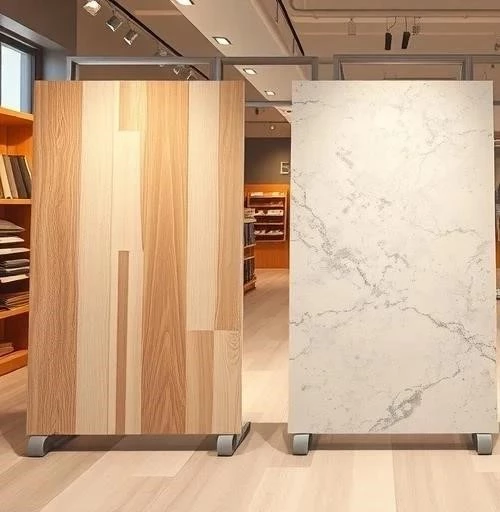
A shop floor is a silent employee: it carries carts, welcomes customers, and takes the daily punishment of grit, spills, and hurried feet. Quartz-vinyl tile can be a practical alternative to commercial linoleum, but it is not a magic material. The right choice depends on traffic, subfloor condition, installation, and the look your store needs.
Why retailers consider it
Quartz vinyl combines a decorative layer with a tough wear surface. Its durability and abrasion resistance help it cope with a busy store, while resistance to scratches can keep the display area looking presentable. The surface is water-resistant; many products are also waterproof, though seams and the subfloor still deserve attention. A slip-resistant finish can improve safety, but no floor is slip-proof, especially when wet.
Among the advantages of a quartz-vinyl floor are many designs, from wood and stone effects to bold patterns that guide shoppers through a space. It can feel quieter underfoot than some hard floors, offering useful sound insulation. Simple care is another attraction: regular sweeping and suitable damp mopping make floor cleaning manageable. Follow the manufacturer’s instructions rather than using abrasive tools or harsh chemicals.
Trade-offs before you buy
Strength is not immunity. Heavy shelving, sharp grit, dragging equipment, and concentrated floor loads may dent or mark the surface. Service life varies with product quality, wear-layer thickness, installation, and store footfall. A busy entrance may need extra mats and more frequent maintenance. Compare samples in the actual lighting; a glossy design may show scuffs more clearly than a textured one.
Quartz vinyl also has disadvantages. Low-cost PVC tile may wear quickly, and damaged sections can be conspicuous if replacement stock is unavailable. Repairability depends on the product: individual tiles may be replaceable, but glued pieces can take time to remove. Vinyl is not automatically an environmentally ideal choice; check emissions certificates, recycling options, and local disposal rules. For customer safety, request product documentation and use a qualified installer.
Installation and budget
Quartz-vinyl installation begins with subfloor preparation. The base must be clean, dry, level, and stable: unevenness can show through or stress joints. A click-lock connection can speed installation and may suit some projects, while the adhesive installation method can provide a firm, continuous result when the substrate and product call for it. Neither option makes careful fitting optional. Ask whether the quote includes preparation, trims, adhesive, and downtime.
Material cost is only one part of the calculation. Compare the price of installation, expected maintenance, replacement needs, and the cost of closing aisles during work. A shop floor covering should be selected for its real footfall, not just a showroom sample. Commercial linoleum may suit some budgets and specifications better, so compare warranties and technical data rather than relying on labels alone.
A retailer’s quick checklist
- Estimate store footfall, trolley use, and concentrated loads.
- Check wear-layer data, slip performance, emissions, and warranty.
- Choose a design that suits lighting and can disguise everyday marks.
- Get a written quote for subfloor preparation and installation.
In short, quartz-vinyl tile can make a resilient, attractive shop floor when the product matches the workload and installation is done well. Treat water resistance, durability, and easy cleaning as performance claims to verify—not promises without conditions.
Search terms
кварц-виниловая плитка; кварц-виниловый пол; ПВХ-плитка; виниловое покрытие; напольное покрытие для магазина; коммерческий линолеум; износостойкость; устойчивость к истиранию; влагостойкость; водонепроницаемость; нескользкая поверхность; прочность покрытия; срок службы; нагрузка на пол; проходимость магазина; устойчивость к царапинам; простой уход; уборка пола; монтаж кварц-винила; укладка плитки; замковое соединение; клеевой способ укладки; подготовка основания; ремонтопригодность; стоимость материала; цена укладки; экологичность; безопасность для покупателей; шумоизоляция; дизайн напольного покрытия; недостатки кварц-винила; преимущества кварц-винилового пола.
3 Comments. Оставить новый
The environmental question deserves the same attention as durability. A product that lasts longer may reduce replacement, but its materials, repair options, and eventual disposal matter too. That fuller life-cycle view would help retailers choose with both their customers and the future in mind.
The most useful reminder here is that a floor is a system, not just a surface. Even a durable tile can disappoint if the subfloor or installation is neglected. I’d love to see every flooring decision begin with what happens at the entrance on a rainy Monday.
A floor quietly shapes how a shop feels: softer acoustics may make browsing more pleasant, while a pattern can guide people without a single sign. The article makes a strong case for judging samples under real store lighting, where the floor has to live rather than merely look good.