
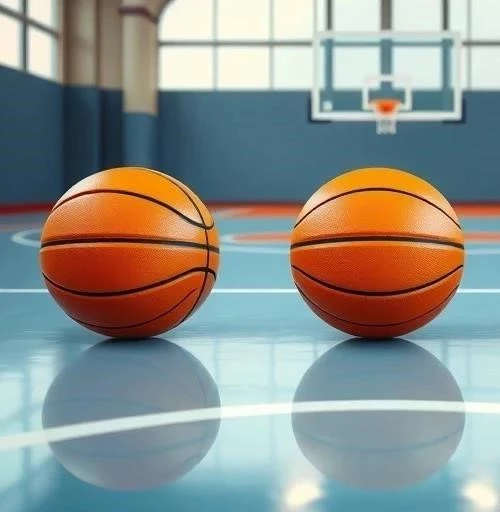
The right basketball should feel comfortable in your hands, suit the surface you play on, and match the rules of your league. A ball that is too large, slippery, or poorly suited to outdoor courts can make practice less enjoyable and less effective. Before buying, check its size, cover material, construction, grip, and intended use. There is no single best basketball for everyone: the best choice is the one that fits your game.
Choose the Correct Size
Basketball size affects shooting, catching, and ball control. Age and competition rules are useful guides, but players should also choose a ball they can handle confidently. When in doubt, check the regulations for your school, club, or league.
- Size 7: The standard men’s full-size ball, with a circumference of about 29.5 inches (75 cm). It is generally used in men’s adult competitions and by many older boys.
- Size 6: About 28.5 inches (72 cm). Commonly used in women’s competitions and often recommended for girls aged 12 and older, as well as boys aged roughly 12–14.
- Size 5: About 27.5 inches (70 cm). A popular choice for children around 9–11 years old, though age recommendations vary by organization.
- Size 3 and other mini sizes: Smaller, lighter balls for young children, skill games, or casual play. They are not substitutes for a regulation ball in competition.
These age ranges are only a starting point. A child should be able to hold the ball securely, pass it with control, and use a natural shooting motion. If a full-size ball forces a young player to push it awkwardly, a smaller size is likely more suitable.
Match the Ball to the Playing Surface
Indoor balls are designed for wooden or other smooth indoor courts. Higher-end models often use genuine leather, which can develop a softer, more responsive feel as it is broken in. Synthetic leather and composite covers are also popular: they may feel comfortable sooner and can offer reliable grip without a long break-in period. Indoor balls generally wear faster on rough pavement, so avoid using an expensive leather model outside.
Outdoor balls are usually made with durable rubber or hard-wearing composite materials. These covers are better able to withstand concrete, asphalt, dust, and frequent use, although their grip and feel may differ from those of a premium indoor ball. If you play mostly in a park or driveway, durability matters more than a soft, polished feel.
Indoor/outdoor balls offer a compromise for players who regularly switch between surfaces. They are convenient for recreational use, but no cover is ideal for every court. If you play often, consider keeping separate balls for indoor and outdoor sessions; this can improve performance and help your indoor ball last longer.
Look Beyond the Cover
Grip depends on the cover, the depth and spacing of the channels, and the shape of the panels. The ball should feel secure when your hands are dry, and the channels should help you locate your fingers for passing and shooting. A very textured surface can be helpful outdoors, but preferences differ. If possible, handle the ball before purchasing it rather than relying on pictures or product descriptions alone.
Construction also affects consistency. A well-made ball should be round, with panels aligned evenly and no obvious gaps, lumps, or loose seams. The inner bladder holds the air; quality construction helps the ball retain pressure and maintain a predictable bounce. Check the manufacturer’s recommended inflation range, usually printed near the valve or on the ball. Do not inflate it simply until it feels rock-hard.
Consider Your Budget and Use
For occasional play, a reasonably priced rubber or composite ball is usually sufficient. Regular players may benefit from a better-gripping composite model, while league athletes should prioritize the exact size, material, and approval required by their competition. Paying more can improve feel and consistency, but a premium ball is not automatically the best purchase if it will be used on abrasive outdoor courts. Compare the warranty, intended surface, and reviews of long-term durability as well as the price.
Test the Ball and Care for It
When you can, bounce the ball on the surface where you will use it. It should rebound evenly and feel predictable, without wobbling or slipping from your hands. Make a few passes and shots; comfort matters, especially during long practices. After buying, check the air pressure regularly with a gauge and inflate the ball according to the stated range. Wipe off dirt, store it away from extreme heat and moisture, and use it on the recommended surface. These simple habits help preserve grip, shape, and bounce.
Quick Buying Checklist
- Choose the size required by your age group or league.
- Pick indoor, outdoor, or indoor/outdoor construction to match your usual court.
- Check grip, panel quality, shape, and inflation guidance.
- Choose durability and comfort over appearance or brand alone.
In short: start with the right size, then choose a cover designed for your court. For most casual outdoor players, a durable rubber or composite ball is a practical choice; for regular indoor play, a quality composite or leather ball may offer a better feel. The best basketball is one you can control comfortably and use where it was designed to play.
9 Comments. Оставить новый
Good point that age ranges are only a starting point. Comfort and control matter just as much when choosing a ball for a child.
A helpful guide, especially the reminder to choose a ball that a young player can control comfortably rather than relying only on age recommendations.
I appreciate the clear breakdown of ball sizes. Checking league rules before buying is a practical tip that could save a lot of guesswork.
A straightforward, informative guide for anyone choosing their first basketball. The notes on how a ball should feel in a player’s hands are especially useful.
Clear and practical advice. The reminder that there isn’t one best ball for everyone is a great way to approach a purchase.
This makes the differences between common basketball sizes easy to understand. I’ll use the league-rule reminder when shopping for my team.
A sensible guide that focuses on the factors that actually affect play: size, grip, surface, and intended use.
I found the material overview helpful. Explaining that some covers need breaking in while others feel ready sooner gives buyers useful context.
The advice about matching a ball to the playing surface is useful. It’s easy to overlook how much court conditions affect grip and durability.