
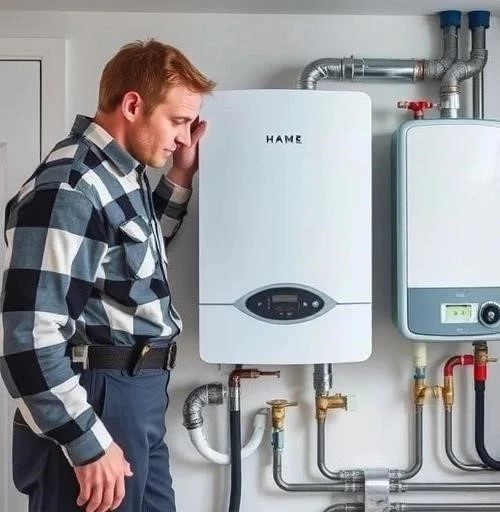
A gas boiler can provide efficient everyday heating, while a backup heat source maintains comfort during a fault, fuel interruption, or unusually high demand. A well-designed combined heating system can also reduce heating costs by choosing the most economical source for current conditions. The right solution depends on the building, local energy prices, and the needs of the household.
Choosing the backup source
Options include a solid-fuel boiler, electric boiler, or heat pump. A backup boiler may serve the whole house, or supplementary heating may cover only essential rooms. Compare equipment purchase and installation cost with operating costs: a low-cost unit may use more fuel, while a heat pump can be efficient where outdoor conditions and the building’s heating system are suitable. Fuel consumption and expected gas savings should be assessed over a full season, not from rated output alone.
Designing the system
The connection diagram must show each heating circuit, isolation valves, pumps, sensors, and controls. Correct hydraulic piping prevents unwanted circulation and supports balanced heat-load distribution. A buffer tank can reduce frequent starts and store heat from a solid-fuel boiler. An indirect water heater may provide domestic hot water without compromising space heating. The design should account for the boiler’s minimum flow, pressure limits, and the heat output of every source.
Controls and installation
Boiler controls can manage automatic switching between the gas boiler and backup equipment. Weather-compensated control adjusts water temperature to outdoor conditions, helping energy efficiency and comfort. The installer should define clear operating priorities: for example, use the heat pump when efficient and switch to gas in colder weather. Manual override and fault alerts are useful, but the system must remain safe if power or communication fails.
Boiler installation includes checking the chimney or flue, ventilation, gas supply, electrical connections, and clearances. Safety requirements and local codes apply to every heat source. A qualified contractor should prepare the connection diagram, install protective devices, and perform commissioning, including leak tests and verification of controls. Never connect or modify gas equipment without an authorized professional.
Costs and long-term value
Ask for an itemized estimate covering equipment, hydraulic piping, controls, chimney work, and commissioning. The total installation cost depends on the existing heating system and the complexity of the backup circuit. Compare projected fuel use, maintenance, and electricity prices to estimate operating costs. For heating a private house, proper sizing and routine servicing often matter more than adding unnecessary equipment. A carefully balanced system offers dependable backup heating, avoids waste, and can deliver lasting savings without sacrificing safety or comfort.
2 Comments. Оставить новый
The article clearly outlines key considerations for combining a gas boiler with a backup heat source, including equipment choice, system design, and controls. Its emphasis on assessing seasonal costs and matching the system to the building is useful. The discussion would benefit from a reminder that installation and safety requirements should be verified by qualified professionals.
This overview explains how hydraulic design, control priorities, and backup options affect the performance of a combined heating system. It appropriately notes that efficiency depends on local conditions rather than equipment ratings alone. More detail on maintenance requirements could help readers compare the long-term demands of different systems.