
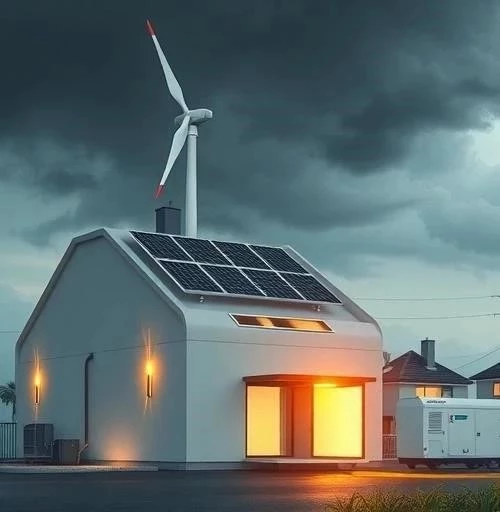
As extreme weather‚ aging grids and rising demand make power supply less predictable‚ hybrid energy systems are moving from niche solutions to practical infrastructure. Their value lies not in any single technology‚ but in combining complementary sources so that a weakness in one does not become a failure for the whole site.
From backup to a coordinated microgrid
A modern microgrid can combine renewable energy sources‚ solar panels‚ a wind turbine and‚ where necessary‚ a diesel generator. An inverter connects these resources to local circuits‚ while battery banks and other energy storage hold surplus electricity for later. This distributed generation can provide autonomous power supply during power outages and reduce dependence on a distant utility.
That does not mean renewables alone can guarantee service everywhere. Solar and wind output vary with weather and time of day; batteries have finite capacity‚ and fuel generators require maintenance and delivery. A sound design therefore matches equipment to actual demand‚ local conditions and the consequences of interruption. Critical medical‚ communications and safety loads need priority‚ while less urgent uses can be curtailed.
Why control matters
An energy management system forecasts generation and demand‚ selects the best available source and directs load balancing. Smart load management can shift flexible tasks to sunny or windy periods‚ preserve reserve capacity for emergencies and avoid running a generator unnecessarily. In a wider smart grid‚ connected microgrids can also exchange power and support the network‚ provided that protection‚ communication and operating rules are carefully designed.
These controls make integration of energy sources more effective than simply installing equipment side by side. They help maintain stable voltage and frequency‚ coordinate uninterruptible power for essential devices‚ and signal when stored energy should be conserved. Regular testing remains essential: automation cannot compensate for undersized batteries‚ failed switches or an empty fuel tank.
Economics and resilience
Although the initial investment can be substantial‚ a properly sized system may deliver reduced electricity costs by using on-site generation and avoiding expensive peak consumption. Energy efficiency strengthens the case: insulation‚ efficient equipment and demand response reduce the capacity required. The result can be greater energy independence and power supply reliability‚ not a promise of total isolation from the grid.
The future is therefore hybrid‚ but not one-size-fits-all. Communities and businesses should compare lifecycle costs‚ emissions‚ maintenance skills and outage risks before choosing a design. With transparent controls‚ adequate reserve capacity and a realistic backup plan‚ hybrid systems can turn unstable supply into manageable risk while supporting a cleaner‚ more resilient grid.


9 Comments. Оставить новый
The article makes a strong case for treating a microgrid as a coordinated system rather than a collection of equipment. Its emphasis on matching capacity to local conditions and prioritizing critical loads is especially useful, since neither renewables nor batteries can guarantee uninterrupted power on their own.
A thoughtful introduction to microgrids and hybrid energy systems. Its strongest point is that reliable service depends on the relationship between generation, storage, controls, and maintenance; installing components without a plan would not deliver the same benefits.
The discussion of smart load management offers a useful reminder that resilience can come from changing when power is used, not only from adding more generation. The article also correctly highlights that coordination and protection are necessary when microgrids interact with a wider network.
The section on energy management systems clearly explains why controls matter as much as the hardware. Forecasting demand and shifting flexible tasks can help conserve stored energy, though the article rightly notes that the system still needs careful design and regular testing.
The article is most persuasive when it connects resilience to practical decisions, such as deciding which loads deserve priority during an outage. That approach makes the discussion relevant to real facilities rather than focusing only on technology.
This is a clear overview of how distributed generation, storage, and load management can work together. I would have welcomed a concrete example of how a site might size these components, but the explanation of the main trade-offs is sound.
The article explains the benefits of local power without implying that autonomy is effortless. Its attention to reserve capacity, essential devices, and regular testing gives readers a more grounded understanding of what resilient energy planning requires.
The piece appropriately qualifies the promise of hybrid systems: solar and wind output fluctuate, batteries are limited, and generators need upkeep. That realism strengthens its argument for designing around actual demand and the consequences of interruption.
I appreciate the balanced discussion of renewable energy and backup generators. The article avoids presenting any single source as a complete solution and explains why maintenance, fuel access, and variable weather all need to be part of system planning.