
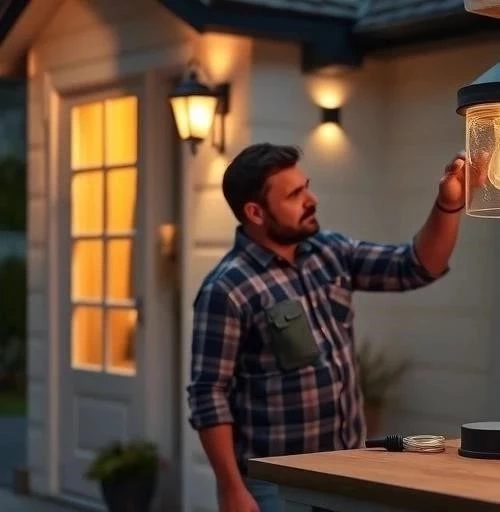
Lighting for a country house must cope with changing weather‚ dust‚ long periods of use and possible voltage fluctuations. Thoughtful selection and regular care help extend the service life of luminaires‚ preserve safe operation and reduce replacement costs. The same principles apply to outdoor lighting‚ cottage lighting and fixtures used indoors.
Choose fixtures for their location
Match each fixture to its environment. For exposed areas‚ check protection against moisture and dust and choose an appropriate IP rating. Sealed luminaires are useful where rain‚ spray or airborne dirt may reach the light. For site lighting‚ facade lighting and garden lights‚ select products intended for outdoor use rather than relying on appearance alone. A suitable design reduces the risk of corrosion of the housing and damage to electrical parts.
Consider heat as well as weather. Use fixtures with overheating protection‚ and do not cover vents or place lamps near materials that can be damaged by warmth. Follow the manufacturer’s instructions for compatible lamp types and maximum wattage.
Install and power them correctly
Correct installation is essential for durability of lighting fixtures. Mount each unit securely‚ seal cable entries as directed‚ and ensure that outdoor connections are protected. Electrical wiring should be suitable for the load and the conditions in which it is installed. If its condition or capacity is uncertain‚ ask a qualified electrician to inspect it.
Voltage fluctuations can shorten the life of lamps and electronic drivers. If these are common in the area‚ an electrician can assess whether a voltage stabilizer or other protective device is appropriate. Avoid improvised connections and switch off the power before any maintenance;
Use lamps efficiently
LED bulbs and LED luminaires generally use less electricity and produce less heat than many older options. Energy-saving lamps may also reduce consumption‚ but compatibility‚ operating temperature and switching frequency matter. Choose products suited to the fixture and expected use. Do not leave lights on unnecessarily: lighting automation and motion sensors can limit operating hours in entrances‚ paths and utility areas.
Inspect and clean on a schedule
Lighting maintenance begins with a preventive inspection at least once or twice a year‚ and after severe weather where practical. Look for loose fittings‚ damaged seals‚ flickering‚ unusual heat‚ moisture inside the fixture and corrosion of the housing. Arrange repairs promptly rather than continuing to operate a damaged unit.
Care of luminaires should include cleaning shades and lenses after switching the power off and allowing hot parts to cool. Use a soft cloth and a cleaner suitable for the material; avoid abrasive tools and direct water unless the product instructions permit it. Cleaning shades restores light output and helps reveal cracks or worn seals.
Replace parts safely
Lamp replacement should follow the fixture instructions. Use the correct type and rating‚ and never handle a lamp while it is hot or connected to power. If an LED unit has an integrated light source‚ replacement may require a qualified technician or a new fixture. Keep purchase details and observe the manufacturer’s warranty; unauthorized changes can affect coverage.
Careful selection‚ correct installation and routine checks support reliable operation of luminaires throughout the cottage and garden. A simple maintenance record can help track faults‚ cleaning and replacements before minor issues become larger problems.
3 Comments. Оставить новый
The article clearly explains why outdoor fixtures should be selected according to their exposure to moisture, dust and heat. Its emphasis on checking product specifications makes the advice practical.
The discussion connects energy-efficient lighting with durability and operating conditions. The article offers a helpful overview, while reminding readers to follow manufacturers’ instructions.
The section on installation and electrical protection highlights important factors that can affect both safety and fixture lifespan. Recommending a qualified electrician when wiring is uncertain is a useful precaution.