
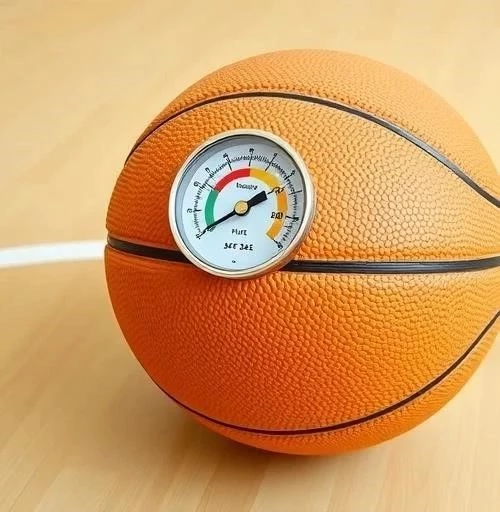
A basketball should feel lively, not rock-hard: inflated enough to rebound predictably, but not so much that it becomes painfully stiff or skitters away at every touch․ The right pressure depends on the ball, so the first rule is simple: check the pressure range printed near its valve or in the manufacturer’s instructions․ For many full-size basketballs, a useful reference is about 7․5–8․5 psi (roughly 0․52–0․59 bar), but the ball’s own label takes priority․
Why the pressure matters
Air pressure changes how the ball behaves․ Underinflation makes it feel sluggish: dribbles sit low, passes lose pace, and the ball may seem heavy when you shoot․ Overinflation creates the opposite problem․ The ball rebounds sharply, feels harsh on the hands, and can be harder to control․ Excess pressure may also strain seams or damage the bladder, especially if the ball is left in a hot car․
Think of the ball as a small spring․ Too soft, and the spring barely pushes back; too hard, and it snaps back before your hands can guide it․ The sweet spot gives a steady bounce and a comfortable grip․
Use the bounce test—and a gauge
A pressure gauge is the most reliable way to check inflation․ A practical court-side test is to hold the ball at shoulder height and let it fall straight onto a hard floor․ It should bounce back to around waist height, though the exact result varies with the ball, surface, and release height․ Some official specifications use a more controlled test: a ball dropped from 1․8 metres should rebound to roughly 1․2–1․4 metres․ That test is useful as a reference, not a substitute for the pressure range printed on your ball․
The bounce test quickly reveals a ball that is obviously too soft or too firm․ It cannot tell you an exact psi, and a soft gym floor can make a properly inflated ball seem underinflated․ For training or competition, use a gauge rather than guessing by feel․
Inflate it safely, step by step
- Find the recommended pressure on the ball․ Do not assume every basketball uses the same setting: size, construction, and intended use can differ․
- Use a hand pump with a basketball needle and a pressure gauge․ If your pump has no gauge, add air gradually and check with a separate gauge․
- Moisten the needle with water or a little valve lubricant․ Insert it straight into the valve; forcing in a dry or angled needle can damage the valve or bladder․
- Pump in short bursts, checking the pressure between them․ Stop at the recommended range instead of trying to make the ball feel “extra bouncy․”
- Remove the needle straight out, then bounce-test the ball on a suitable floor․ If it is still outside the target range, adjust by a small amount․
Avoid using a high-powered air compressor unless you have a precise regulator and gauge․ It can add air far faster than expected․ Never push a pin or improvised object into the valve, and do not yank the needle sideways․
Conditions change the feel
Temperature affects the air inside the ball․ A ball taken from a cold garage into a warm gym may feel firmer after it warms up; one used outdoors in cold weather may feel less lively․ Let it adjust to the place where you will play, then check it․ If you move between very different temperatures, a small change in feel does not automatically mean the ball has a leak․
Also consider the playing surface․ Indoor and outdoor balls may have different covers and bounce characteristics․ A rough outdoor court, a sprung gym floor, and a polished hardwood court will not return the ball in exactly the same way․ Compare it on the surface where it will actually be used․
Quick checks before tip-off
- Too soft: the ball dents noticeably under firm thumb pressure, dribbles low, or feels slow off the floor․
- Too firm: it feels unusually hard, rebounds sharply, or is uncomfortable to catch and dribble․
- Just right: it holds its shape, feels secure in your hands, and gives a consistent bounce without a harsh, hollow slap․
The thumb test is only a rough clue; people have different hand strength, so it should not replace a gauge․ Check the ball occasionally, especially before a game, after long storage, or if it has been exposed to major temperature changes․ A ball that repeatedly loses pressure may have a damaged valve or bladder and need repair or replacement․
The simple answer
Inflate your basketball to the range specified by its manufacturer—often around 7․5–8․5 psi for a full-size ball—then confirm that it rebounds consistently on the court where you play․ Add air slowly, measure instead of guessing, and stop when the ball feels controlled․ The goal is not the loudest bounce in the gym․ It is a dependable one: predictable under your palm, clean off the floor, and ready to follow the play․