
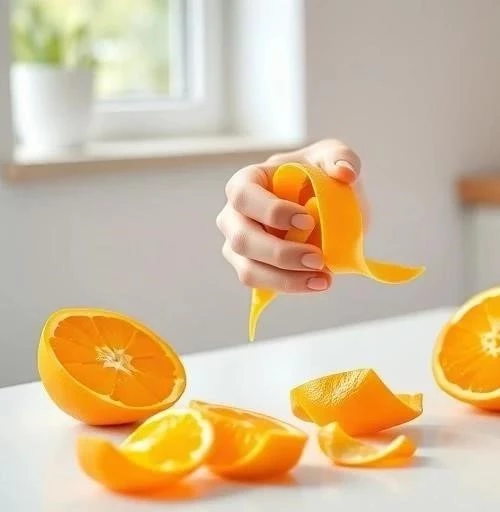
Peeling an orange can be quick and tidy once you know a few simple tricks. The best method depends on how firm the fruit is‚ how much time you have‚ and whether you want neat segments or simply a fast snack. Start with a clean orange and a clean work surface. Rinse the fruit under cool running water and dry it with a towel‚ especially if you plan to touch the flesh while peeling.
The easy hand-peeling method
- Soften the peel. Roll the orange gently on the counter beneath your palm for about 10 seconds. Use light pressure: the aim is to loosen the peel‚ not squash the fruit.
- Find a starting point. Look for the small dimple at the top or bottom. Press your thumb into the peel there‚ rather than into the juicy flesh.
- Lift a small flap. Work your thumb under the skin and open a small section. If the peel feels tight‚ use a thumbnail or the rounded edge of a teaspoon to get underneath it.
- Peel in sections. Pull the skin away in broad pieces‚ moving around the fruit. Try to keep your thumb between the peel and the flesh so you do not pierce the segments.
- Remove loose pith. Pick off only the thick‚ stringy white parts you do not want. A little pith is harmless and can be left on.
This method works especially well when the orange is ripe but still firm. If your nails are short or you want to avoid sticky fingers‚ use a teaspoon to start the opening‚ then continue with your fingers.
For a neat‚ quick peel
When you want the orange to stay whole‚ use a small‚ sharp paring knife. Place the fruit on a stable cutting board and slice a thin cap from the top and bottom‚ just deep enough to expose the flesh. Stand the orange on one cut end. Following its curve‚ cut strips of peel from top to bottom. Keep the blade close to the skin and remove as little flesh as possible. Turn the orange as you go‚ then trim any remaining white pith if desired.
This approach is useful for salads‚ desserts‚ or recipes that call for clean pieces of orange. Take your time and keep your fingertips clear of the blade. If you only need segments‚ cut away the peel and pith‚ then slice between the thin membranes to release each segment.
Make peeling even easier
- Choose the right fruit. A ripe orange usually smells fragrant and feels heavy for its size. A very hard peel can be harder to remove‚ while an over-soft fruit may split and leak.
- Use a spoon carefully. Slide the rounded bowl just under the peel and move it around the orange to loosen the skin. This can help when the peel clings tightly.
- Try the “spiral” cut. With a knife‚ cut a shallow line around the orange from top to bottom‚ without cutting into the flesh. Lift the peel from the line and pull it away in sections.
- Protect your clothes. Peel over a plate or sink‚ and point the opening away from your face. Citrus juice can squirt when a segment is accidentally pierced.
What to avoid
Do not squeeze the orange while trying to remove the peel; pressure can crush the segments and make a mess. Avoid cutting deeply into the fruit when scoring the skin. Heating an orange in a microwave is not necessary and may make it hot or unevenly softened‚ so use gentle rolling or a spoon instead. If a method feels awkward‚ switch to a knife on a board rather than forcing your thumb under a stubborn peel.
Save the peel
Orange peel does not have to go straight into the bin. After washing the fruit‚ finely grate the colourful outer zest for baking‚ dressings‚ or tea. The white layer beneath it can taste bitter‚ so grate lightly. You can also dry clean peel for potpourri or compost it. Store a peeled orange in a covered container in the refrigerator and enjoy it soon for the best texture and flavour.
In short: wash and dry the orange‚ roll it gently‚ start at a dimple‚ and peel in sections. For a tidy presentation‚ use a knife and remove the skin in strips. A little practice makes either method fast‚ easy‚ and much less messy.



4 Comments. Оставить новый
The tips are clear and practical, especially the reminder to use light pressure when rolling the orange. I appreciate having both a quick hand-peeling method and a neater option for recipes.
A helpful guide for anyone who struggles with peeling oranges. The teaspoon suggestion is a simple touch that could make the process easier without damaging the fruit.
I like how the article explains when each method is useful. The instructions are easy to follow, and the advice to remove only unwanted pith is reassuring.
This is a useful, well-organized kitchen tip. The stable cutting board reminder makes the knife method feel more approachable, and the hand-peeling steps are nicely broken down.