
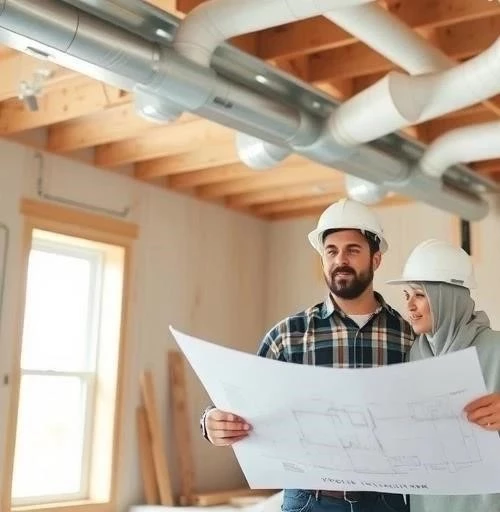
Ventilation costs are easiest to control before construction begins. A ventilation system affects comfort, safety, and energy use, so savings should come from good planning—not from removing essential capacity. Include ventilation during construction in the overall construction project and coordinate it with other engineering utilities.
Start at the design stage
Early ventilation design helps prevent costly changes later. Set out a clear technical specification: room uses, occupancy, required air exchange, noise limits, and operating schedules. A calculation of the ventilation system should follow applicable codes and requirements, including building codes. Align the design with construction stages so ducts, ventilation shafts, and service access are planned before walls and ceilings are closed.
Choose an efficient, practical solution
Compare supply ventilation and exhaust ventilation as parts of one coordinated system. Correctly sized ducts and sensible routes can reduce pressure losses and avoid oversized fans. Equipment selection should reflect actual demand, climate, and maintenance needs; the most expensive model is not automatically the most suitable. Consider heat recovery where it is technically and economically justified: it can limit heat losses and support energy efficiency and energy saving.
Compare costs before procurement
Prepare a ventilation estimate while options are still open. Check equipment procurement, delivery, installation cost, commissioning, and expected operating costs—not only the purchase price. Obtain comparable specifications from suppliers and verify that the selected ventilation equipment meets the design. This makes it easier to manage the construction budget, optimize costs, and reduce expenses without compromising required airflow or safety.
Coordinate installation and operation
Installation of ventilation is more efficient when coordinated with electrical, structural, and finishing work. Confirm openings and routes on site before ordering components; late clashes can cause rework. Automation of ventilation can adjust operation to occupancy or schedules, but controls should remain understandable and maintainable. Allow for commissioning and balancing, then provide access for inspection and maintenance of ventilation.
The best time to reduce costs is during planning, specification, and procurement, before irreversible work starts. Keep required performance, access, and reliability as fixed criteria; compare alternatives within those limits. A well-coordinated design may require careful initial planning, yet it helps protect indoor climate, avoid construction delays, and control long-term expenditure.

1 Comment. Оставить новый
The article provides a clear overview of how early planning, coordinated design, and lifecycle cost comparisons can help manage ventilation expenses while maintaining safety and performance.