
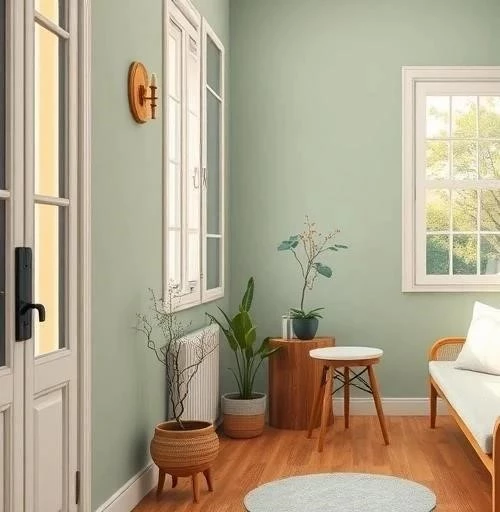
A loggia can be a balcony, a reading nook, a tiny greenhouse—or simply the place where the morning finally slows down. When money is limited, its most powerful design tool may not be expensive furniture but color. The psychology of color in interiors helps turn a bare, compact space into somewhere that feels intentional, even before the renovation is complete.
Choose a feeling, not a fashion
Trends arrive with a short shelf life; your daily mood stays. Before choosing a color palette for the loggia, ask what you want to feel there: awake, calm, focused, or wrapped in comfort? Warm colors such as muted terracotta and soft ochre can feel welcoming. Cool shades—sage, misty blue, pale gray—often suggest quiet. Neither group is automatically right: the effect of color on mood depends on light, proportions, and personal associations.
That is why rejecting trends can be a smart design decision, not a lack of imagination. Current color solutions are useful inspiration, but your own style should lead. A harmonious combination of shades might be one calm wall color, a natural wood tone, and a small, surprising accent: a mustard cushion, a blue planter, or a painted shelf. Color accents cost little and make the space feel like yours.
Make a small loggia feel generous
For visual expansion of space, try light shades on the largest surfaces: warm white, pale sand, or a barely tinted green. They reflect natural light and soften the edges of a compact space. But “light” need not mean blank. A slightly deeper color on the end wall can add depth, while repeating one accent in two or three places creates a deliberate rhythm. Test paint on a small patch first; daylight can change a color’s personality from morning to evening.
Loggia decor works best when it respects the room’s real job. A folding table, a bench with storage, and a slim lamp can create a functional interior without crowding the floor. Choose practical materials suited to temperature changes and sunlight: washable paint, durable floor covering, and textiles that are easy to clean. The wall color and finish should make everyday care simpler, not add another chore.
Renovate thoughtfully, spend lightly
A budget loggia renovation does not require replacing everything. Clean and repaint existing furniture, use leftover tiles for a small tabletop, or make planters from sturdy containers. These choices create an inexpensive interior and economical design without pretending that every object must look new. Even a loggia finish can be modest: refresh the walls, improve the lighting, and let a few carefully chosen details do the storytelling.
For ideas for a small loggia, begin with what you already own. A favorite mug, a framed print, or a plant can suggest the palette. Build a cozy loggia around those clues, rather than buying a matching set. The result is an interior without major expense: practical, personal, and welcoming. When color serves your habits instead of a trend forecast, limited funds become a creative boundary—and the space feels genuinely yours.
2 Comments. Оставить новый
I love the idea that a color palette can be a tiny weather system for the home: ochre brings its own sunset, while sage seems to open a quiet window. The reminder to test paint through the day is especially useful—colors have secret lives after the sun moves.
This makes the loggia feel less like leftover square footage and more like a pocket-sized ritual. Repeating one accent color in a few places is a lovely design trick: a small visual refrain that gives the space rhythm without asking the budget to sing loudly.