
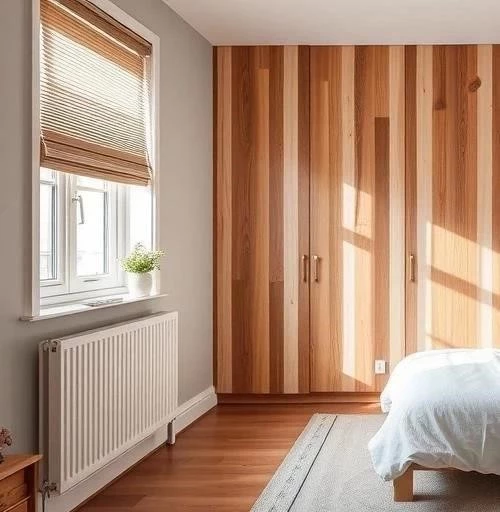
Natural timber can turn a child’s room into a little woodland observatory: warm, tactile and calm. In a contemporary interior, however, wooden panels and wall battens are sometimes asked to conceal every pipe, cable and ventilation duct. That is where a beautiful idea can become a costly mistake. The goal is not to make engineering disappear at any price, but to hide it intelligently.
Designing a wall that cannot be opened
A seamless surface may look elegant on day one, yet hidden communications still need access. Before planning the renovation, map wiring, sockets and switches, plumbing and ventilation channels. Leave a discreet inspection hatch at valves and junctions; make it large enough for an adult hand and a tool. Hidden installation should mean tidy, not unreachable. A cable duct can keep wires orderly while allowing future replacement.
A common interior-design error is fixing battens directly over an existing outlet or placing a bed in front of the only service panel. Children grow, furniture moves, and a forgotten connection may need repair. Plan access alongside the furniture layout, not after the joinery is built.
Treating timber as if it never moves
Wood is a living material, even after installation. If its moisture content is wrong, seasonal humidity and temperature changes can cause shrinkage, swelling, gaps or panel distortion. Allow for movement with suitable fixing methods and expansion gaps; never clamp boards tightly together. Ask the supplier about moisture content and acclimatise the timber in the room before fitting it.
Wood treatment matters just as much. Choose child-safe, low-emission finishes and verify that the protective coating is suitable for indoor use. Paints and varnishes should be fully cured before the room is occupied. “Natural” does not automatically mean harmless: splinters, sharp edges, dust and poorly selected coatings still pose risks.
Forgetting what sits behind the pretty surface
Concealed wiring must be installed by a qualified professional, with routes documented and compatible with local codes. Keep electrical connections accessible, protect cables from screws, and never bury a junction box behind a fixed panel. Fire safety is not a decorative detail. Use appropriate materials around heat sources, keep ventilation paths clear, and do not let timber conceal a hazard that should remain visible.
Also consider comfort. A carefully designed cavity can improve sound insulation and thermal insulation, but an unplanned hollow may amplify noise or trap moisture. Coordinate the timber layer with ventilation, wall construction and the room’s heating system.
Choosing practical beauty
Pair wood with modern, durable materials: washable paint, rounded trim and robust flooring. This balance keeps the room contemporary and makes daily care easier. Select responsibly sourced, eco-friendly materials, sand exposed edges smooth, and secure panels firmly so curious hands cannot pull them loose. Child safety should shape every detail, from spacing between battens to reachable switches.
The best finish is not the one that hides the most. It is the one that makes the room feel inviting while preserving function, service access and easy maintenance. With thoughtful planning, timber can frame the room like a quiet forest canopy—warm above, safe below, and ready to adapt as its small resident grows.

5 Comments. Оставить новый
This makes timber feel less like decoration and more like a material with its own calendar. The seasonal movement point is easy to overlook, but it could be the difference between a wall that ages gracefully and one that starts telling on the installer.
The strongest idea here is that a beautiful wall should not become a locked door for future repairs. I especially appreciate the reminder to plan service access alongside furniture—children’s rooms change faster than most renovation plans.
The article’s most child-friendly feature may be its respect for change: growing children, rearranged furniture and repairs that arrive without warning. Good design leaves room for all three.
A useful, grounded read that resists the “hide everything” instinct. The quietest design choice may be a well-placed access hatch—proof that practical details can protect both the room’s appearance and its future.
I like how this article gives “natural” materials a reality check. Timber can bring warmth, but safety still depends on finishes, edges, ventilation and the things tucked behind the boards.