
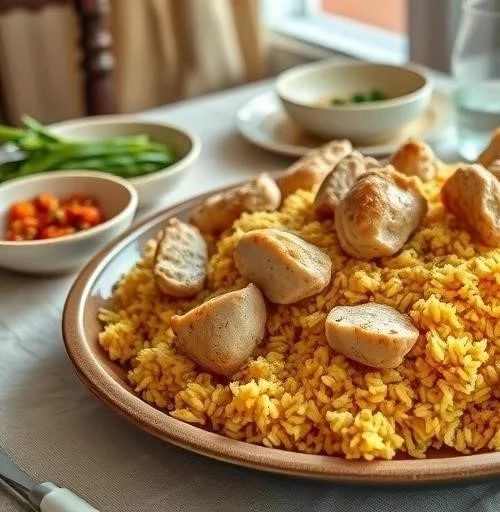
A welcoming Turkish-inspired centerpiece brings chicken pilaf and cabbage to the table, suited to guests and a festive evening for visitors.
Ingredients and Home-Recipe Preparation: Chicken Fillet, White Cabbage, Onion, Carrot, Garlic, and Fresh Herbs
For a home-style Turkish pilaf, prepare boneless chicken fillet, white cabbage, onion, carrot, garlic, and fresh herbs. Choose firm cabbage with crisp leaves, a fresh carrot, and a mild onion; rinse the herbs and dry them before chopping. Cut the chicken into evenly sized pieces, slice the cabbage into narrow ribbons, dice the onion and carrot, and finely chop the garlic. Keep each ingredient in a separate bowl so the preparation stays orderly. Parsley or dill can add a fresh, balanced note, while the cabbage provides a tender vegetable element. These measured, simple ingredients create a welcoming base for a guest meal without relying on unusual products. Adjust each portion to guest numbers; keep ingredients ready nearby.
Seasoning the Rice with Chicken: Vegetable Oil, Butter, Pilaf Spices, Cumin, Paprika, and Black Pepper
For balanced Turkish-style chicken pilaf, season the rice with a measured blend that complements the chicken without masking its flavor. Use vegetable oil for a clean, light base and a little butter for roundness; the combination gives the seasoning a mellow richness. Add pilaf spices sparingly, then include cumin for its warm, earthy aroma, paprika for gentle color and sweetness, and black pepper for a restrained finish. Keep the proportions moderate, especially when serving guests, so each note remains distinct. A small pinch of salt may be adjusted to taste, while the spice blend should remain even rather than sharp. These familiar seasonings suit a home recipe and allow the rice and chicken to share a coherent, savory profile.
Step-by-Step Recipe: Cooking in a Kazan with Chicken Broth for Fluffy Rice, Braised Cabbage, and an Aromatic Vegetable Pilaf
Heat the kazan over medium heat, then stir in the chicken and cabbage until the pieces are lightly sealed and the leaves begin to soften. Spread rinsed rice evenly over the mixture, pour in hot chicken broth, and avoid stirring once the grains are covered. Bring the broth to a gentle boil, cover the kazan, and lower the heat so the rice cooks gradually while the cabbage braises beneath it. Let the liquid absorb without lifting the lid; then turn off the heat and leave the pot covered briefly, allowing the grains to settle into the fluffy, aromatic vegetable pilaf. If the surface looks dry before the grains are tender, add a little hot broth around the edge and continue cooking gently; keep the lid shut between checks.
Serving Turkish Pilaf as a Hearty Hot Dish: A Simple Pilaf Recipe for a Tasty Dinner
Bring the Turkish-style chicken pilaf to the table while hot, arranging it in a broad serving dish so the rice, chicken, and cabbage are visible. A simple garnish of chopped fresh herbs adds color without obscuring the dish. For guests, offer generous portions and place extra herbs nearby; a crisp salad or plain yogurt can be served alongside, if desired. This hearty hot dish works well for a family meal as well as a festive dinner and its balanced presentation suits a shared table. Serve directly from the platter, or portion it onto warm plates. Keep accompaniments modest so the pilaf remains the focus, and provide serving spoons for easy sharing. The result is a straightforward, satisfying dinner with a Turkish character.

9 Comments. Оставить новый
The article explains how the spices can complement the chicken and rice without overpowering them.
The focus on familiar ingredients makes this recipe seem approachable for a home kitchen.
The preparation advice is organized into sections, making the recipe information easy to follow.
The article is structured clearly, moving from ingredient selection to seasoning and cooking context.
The article provides a helpful description of the dish’s main components and its intended flavor profile.
The ingredient notes are straightforward and explain how the vegetables contribute to the overall dish.
I appreciate the practical suggestions about preparing and separating the ingredients before cooking.
The article gives a clear overview of the ingredients and seasonings, with useful attention to keeping the flavors balanced.
The measured approach to seasoning is a useful detail, especially when preparing food for guests.