
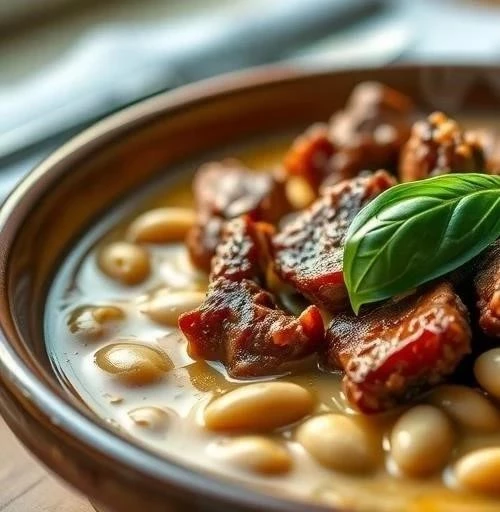
This tender beef with vegetables brings together slow-cooked meat, sweet tomatoes and crisp green beans in a fragrant sauce. It is a simple recipe, but its success depends on two choices: browning the beef before braising and adding the beans late enough to keep their color and bite. The result is a hearty dish suited to a relaxed home dinner.
Ingredients
- 700 g beef chuck or stewing beef, cut into bite-size pieces
- 300 g green beans, trimmed and halved
- 1 large onion, finely chopped, and 3 garlic cloves, minced
- 400 g ripe tomatoes, chopped, or canned tomatoes
- 2 tablespoons olive oil and 150 ml beef stock
- 1 teaspoon paprika, black pepper, and salt
- 1 teaspoon dried oregano, plus a pinch of chili if desired
- A handful of fresh herbs and fresh basil leaves
Method
- Pat the beef dry and season it with salt, pepper and paprika. Heat the olive oil in a heavy skillet or Dutch oven. Brown the pieces in batches rather than crowding the pan; this develops a savory crust and prevents the meat from steaming. Transfer the beef to a plate.
- Add the onion to the same pan and cook for 4–5 minutes, stirring to lift the browned bits. Stir in the garlic and oregano for 30 seconds. Add the tomatoes and stock, then return the beef and any juices to the pan.
- Bring the mixture to a gentle simmer, cover, and cook over low heat for 75–100 minutes. Check occasionally and add a splash of water if the sauce becomes too thick. This slow braising of the meat breaks down connective tissue, giving you tender meat without drying it out.
- When the beef is nearly soft, stir in the green beans. Cover and cook for another 10–15 minutes, until they are tender but not mushy. Taste the tomato sauce and adjust the salt, pepper or chili. Finish with torn basil and other fresh herbs just before serving.
Why this combination works
Beef has a deep, savory flavor, while tomatoes bring acidity and a gentle sweetness that balance its richness. Green beans provide freshness and texture, so the pan becomes meat with vegetables rather than a heavy stew. Olive oil carries the spices and aromatic herbs through the sauce; garlic and onion build a rounded base without overpowering the basil. Adding fresh basil at the end preserves its vivid aroma, whereas cooking it for a long time would make its flavor dull.
For the best braised beef, keep the heat low: a hard boil tightens the fibers and can make the meat tough. Choose a cut made for slow cooking, and allow enough time for it to become genuinely tender. If the sauce is too thin, uncover the pan for the final few minutes; if it is too concentrated, loosen it with stock. These small adjustments make pan cooking reliable, even for a beginner.
Serving
Serve this hot dish with crusty bread, polenta or rice to catch the sauce. It can also be paired with potatoes as a vegetable side dish. The combination of meat with beans is satisfying on its own, but a crisp green salad makes the meal feel lighter. Inspired by Italian cuisine, this flexible supper is excellent freshly cooked and often tastes even better the next day, after the tomato sauce has absorbed the herbs.


9 Comments. Оставить новый
Fresh basil at the end should add a nice contrast to the slow-cooked sauce. I also like that chili is optional, so the dish can be adjusted to different tastes.
This seems well suited to a Dutch oven and a relaxed evening at home. The low, gentle simmer should make the beef tender while giving the flavors time to come together.
The note about adding a splash of water if the sauce thickens too much is practical. It gives cooks a simple way to keep the braise from drying out during the long cooking time.
Browning the beef in batches is a useful detail. It takes a little longer, but it helps build a richer base for the tomato sauce and avoids steaming the meat.
I appreciate that the recipe gives a range for the braising time rather than treating every cut of beef as identical. Checking tenderness is a more reliable guide than following the clock alone.
Using the same pan for the onion after browning the beef is a good way to make use of the flavorful bits left behind. The method is straightforward without skipping that important step.
The balance of rich beef, bright tomatoes and fresh green beans sounds appealing. I would start with the suggested seasoning and adjust the salt after the sauce has reduced.
The timing for adding the green beans makes sense. Keeping them out of the pot until the beef is nearly tender should help preserve some color and texture.
The instructions explain why the sequence matters, especially the initial browning and late addition of the beans. Those details make the recipe easier to adapt while keeping its intended texture.