
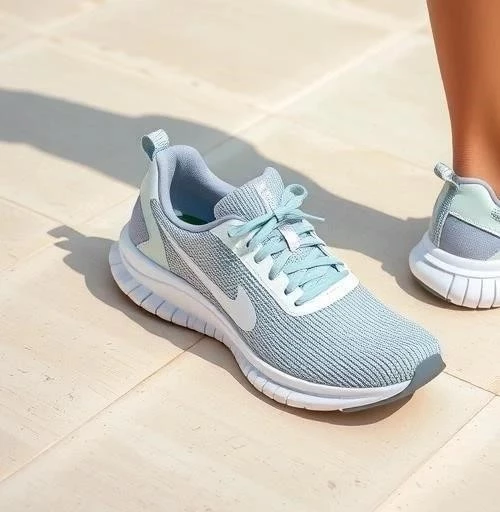
Summer running has a way of making every detail feel louder. The sun turns pavement into a griddle, a familiar route becomes a warm-weather expedition, and a shoe that seemed perfectly comfortable in spring can suddenly feel like a crowded train carriage. For runners with narrow feet, the challenge is especially familiar: plenty of shoes feel broad through the middle, let the heel wander, or offer so much room at the toes that the whole foot seems to drift.
ASICS makes shoes for many kinds of running, but it does not label one universal model “the narrow-foot summer shoe.” Fit depends on the model, the version, the width offered in your market, and the shape of your own foot. This guide looks at the ASICS families that may be worth trying, explains what to look for in warm weather, and offers a practical fitting method. Think of it as a shortlist for testing—not a guarantee that every shoe bearing the same name will fit every narrow foot.
First, what does “narrow” mean in a running shoe?
A narrow foot is not simply a small foot. It may have a slim heel, a low-volume midfoot, narrow forefoot, or some combination of the three. One runner may need a snug heel but appreciate generous room for the toes; another may feel secure in the heel and still swim sideways in the forefoot. That distinction matters because a shoe can be narrow in one area and roomy in another.
ASICS uses different lasts and upper designs across its range, so one model’s fit should not be treated as a forecast for another. Width options also vary by country, shoe, gendered sizing, and season. Some models or markets may offer a narrow width—often marked differently in women’s and men’s ranges—while others may be sold only in a standard width. Check the exact product listing and try the particular version you intend to buy.
What matters most in a summer shoe
- Breathable upper: Engineered mesh can help heat and moisture escape. Mesh density and overlays differ, though, and a light-looking upper is not automatically the coolest one.
- Secure hold: A snug heel and midfoot help prevent sliding when feet are damp. The lacing should secure the shoe without crushing the top of the foot.
- Useful toe room: Narrow feet still need space for natural toe movement, especially as feet warm up or swell during a run. Secure does not mean squeezed.
- Purpose-matched cushioning: A plush daily trainer can be comfortable for easy miles, while a lighter, firmer shoe may feel more responsive for quicker sessions. Cushioning does not fix a poor fit.
- Weather expectations: Mesh can feel airy, but it will not keep rain out. A waterproof upper may hold more warmth, so it is rarely the obvious choice for hot, dry conditions.
ASICS models to put on your try-on list
GEL-KAYANO: structured comfort for steady miles
The GEL-KAYANO is a stability-oriented daily trainer designed to provide a supported ride. For a narrow-footed runner, the potentially useful qualities are the structured upper and the feeling of being held through the midfoot—not a promise that the shoe itself is narrow. A secure lacing system may help fine-tune the fit, and the supportive construction can appeal to runners who want a more guided sensation for routine training.
Try it if you want a cushioned shoe for regular runs and prefer a stable, substantial feel. Pay close attention to the heel: if it lifts despite sensible lacing, the model may not match your foot. Also check the forefoot rather than assuming that a secure midfoot means the entire shoe will fit closely. The plushness and structure that make this family appealing to some runners can feel like more shoe than others want in summer.
GT-2000: a lighter-feeling stability option
The GT-2000 is another ASICS stability-focused trainer, generally positioned as a more streamlined everyday option than the brand’s most substantial support models. It is worth trying if you want guidance for daily running without immediately choosing a maximal-feeling shoe. The upper’s hold and the shape around your heel may work well for some narrower feet, but versions can differ, so use the fit of the actual pair as your evidence.
During a try-on, jog a few steps and make a few gentle turns. Notice whether your foot moves inside the shoe, not just whether the shoe feels comfortable while standing still. If the arch area feels intrusive or the shoe pushes your foot toward one side, do not assume you need to “break it in.” A supportive shoe should feel appropriate from the start, not like a puzzle you must solve with your feet.
GEL-CUMULUS: the neutral daily-training candidate
The GEL-CUMULUS is a neutral cushioning family for runners who want an everyday training shoe without seeking a pronounced stability system. It can make sense for a narrow-footed runner whose stride does not call for extra guidance but who still wants cushioning for routine miles. Look for a version whose mesh upper holds the midfoot comfortably and whose heel counter stays in place without rubbing.
Do not confuse “neutral” with “loose,” or “cushioned” with “summer-specific.” Check the actual volume inside the shoe. If you find the standard fit roomy, first see whether the same model is available in a narrower width in your market. If it is not, another ASICS model may match your foot better than trying to force a broad fit into submission.
NOVABLAST: lively cushioning, with a fit check required
The NOVABLAST is known as a bouncy, energetic option in the ASICS lineup, making it tempting for runners who want a lively daily shoe. But bounce and narrow-foot compatibility are separate questions. The upper and platform should be tested for how securely they contain your foot, especially if you run on bends, uneven paths, or at faster paces. A shoe can feel delightful underfoot yet still allow unwanted movement across the top or sides.
Try it for the kind of running you actually plan to do. If your foot feels as though it is floating over the platform, or you need to overtighten the laces to stay in place, consider a different model. The right amount of toe room is welcome; lateral sliding is not.
MAGIC SPEED: for faster sessions, not every summer mile
The MAGIC SPEED family is aimed at quicker training and racing rather than serving as a universal daily trainer. Its lighter, performance-oriented character may interest narrow-footed runners who value a close, race-like fit. But “fast shoe” does not automatically mean “narrow shoe,” and a snug upper must still leave the toes comfortable. Test it at the pace and distance you expect to run, rather than judging it only during a brief walk around a shop.
For hot-weather training, consider whether this is a specialist tool or whether you want one versatile shoe. A more performance-focused ride may feel less forgiving on easy recovery days. If you are new to plated or firmer performance shoes, introduce them gradually and follow the guidance for the specific model you are considering.
GEL-NIMBUS: plush, but check the volume
The GEL-NIMBUS is a highly cushioned neutral family that appeals to runners looking for a soft, protective feel. A narrow-footed runner may enjoy it if the heel and midfoot lock down well, but the overall amount of shoe can feel generous or cumbersome to some. This is a classic case where reputation cannot replace a fitting: try it with your usual running socks and check whether the upper wraps your foot without pressure.
If you run in very hot conditions, compare its upper and feel with a lighter daily trainer. The most cushioned option is not automatically the most comfortable when temperatures rise; comfort depends on fit, pace, distance, and personal preference.
Quick comparison
- For guided everyday miles: Try GEL-KAYANO or GT-2000, then compare heel hold and how natural the support feels.
- For neutral daily running: Try GEL-CUMULUS and assess whether its upper secures your midfoot.
- For a lively ride: Try NOVABLAST, but watch for side-to-side movement.
- For faster workouts: Consider MAGIC SPEED if its performance fit is comfortable at your intended pace.
- For maximum cushioning: Try GEL-NIMBUS, while checking whether the shoe’s volume feels controlled rather than spacious.
This is a starting map, not a ranking. ASICS updates its shoes over time, and a new version may change materials, geometry, or fit. Check the current model-year description and do not assume that last year’s comfortable pair guarantees the same experience in the latest release.
A five-minute fitting routine for narrow feet
- Shop later in the day if possible. Feet can change size during the day and expand while running. Trying shoes when your feet are warm gives a more realistic sense of long-run comfort.
- Wear your running socks. A thin everyday sock and a technical running sock can change the feel of the upper and heel.
- Check length and toe movement. Leave comfortable space in front of the longest toe. You should be able to move your toes without the forefoot feeling pinched.
- Secure the heel gently. Walk and jog. The heel should feel held, not clamped. If you use a runner’s-loop lacing pattern, try it, but do not use lacing to conceal a fundamentally poor fit.
- Notice the midfoot. Look for firm, even contact rather than pressure points or empty space that lets the foot drift.
- Test movement. Jog, turn, and—if the shop allows—use a treadmill. Ask yourself whether your foot stays centered when your pace changes.
- Compare widths where available. A dedicated narrow-width version may be a better solution than buying a shorter shoe or cranking the laces down.
Lacing tricks—and their limits
A runner’s loop, sometimes called a heel-lock lacing pattern, can reduce heel lift for some people. It is worth experimenting with if the shoe otherwise fits well. You can also adjust tension in different sections of the laces: secure the midfoot while leaving the forefoot comfortable. The goal is an even, supportive hold, not a decorative knot pulled tight enough to numb your feet.
Lacing is a small adjustment, not a substitute for the right last. If the sides of the shoe press painfully, your toes feel trapped, or your foot still slides after sensible adjustments, try another model or width. Persistent rubbing can turn a promising summer shoe into a blister-making machine.
Common mistakes to avoid
- Buying too short to solve width. A cramped toe box is not a safe trade for a closer midfoot fit.
- Choosing by cushioning alone. A soft landing cannot compensate for heel slip or an upper that does not hold your foot.
- Assuming every ASICS model fits alike. Different families—and different generations—can feel noticeably different.
- Expecting mesh to prevent overheating. Breathable materials help, but temperature, humidity, pace, socks, and fit all matter.
- Keeping a shoe that causes pain in the hope it will stretch. Performance footwear should feel suitable during the try-on, with room for natural movement.
So, which ASICS should a narrow-footed runner try first?
For an all-purpose shortlist, start with the GT-2000 and GEL-CUMULUS: one offers a stability-oriented option, the other a neutral daily-training direction. Add the GEL-KAYANO if you like a more substantial guided feel. Try the NOVABLAST if you want a livelier ride, and the MAGIC SPEED if your search is specifically for faster sessions. Consider the GEL-NIMBUS if plush cushioning is your priority and its volume suits your foot.
The best choice is not the most famous model or the one with the most dramatic foam. It is the shoe that holds your heel and midfoot without squeezing your toes, feels breathable enough for your conditions, and remains comfortable at the pace you intend to run. If a narrow-width version is available, compare it directly with the standard width. If it is not, trust the fit test more than the product description.
Bottom line: ASICS offers several families worth exploring for narrow feet, but none should be treated as a guaranteed match. Try shoes late in the day, use your running socks, test them in motion, and choose secure comfort over marketing promises. Summer miles are far more enjoyable when your shoe feels like a light, steady companion—not a boat your foot has to steer.
4 Comments. Оставить новый
A practical guide with a refreshing reminder that “narrow” is not one single foot shape. I’d bring these questions to a fitting and let my own toes deliver the final review.
The summer angle makes this especially useful: warmth can turn a merely close fit into a cramped one. Trying shoes later in the day feels like a wonderfully unglamorous bit of running wisdom.
The best advice here is to treat a shoe name as a clue, not a promise. Feet have their own geography, and a snug heel with a roomy toe box can be exactly the right map.
I like that this guide resists crowning one magic model. Fit is less like choosing a brand and more like finding the right keyhole—small differences in the shape can change everything.