
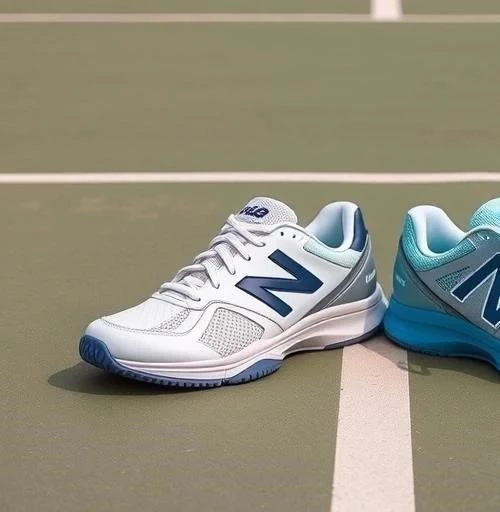
There is no single New Balance tennis shoe that is best for every player. The right choice depends on court surface, foot shape, playing style, training frequency, and preferred balance between cushioning and stability. New Balance offers court shoes with different priorities, so comparing a few key features is more useful than choosing by appearance or brand alone.
For many players, the main options to investigate are models in the 996, 796, and 806 families. Their specifications and availability can vary by season and market, so check the details of the exact version before buying. A shoe designed for tennis should not be confused with a running or general-purpose trainer: tennis involves repeated stops, lateral movement, and quick changes of direction that place different demands on footwear.
What matters most in a tennis shoe?
Fit and foot shape
A secure fit is essential. The heel should feel held in place, while the midfoot should not slide during a side-step. There should generally be some room in front of the toes, but not so much that the foot moves inside the shoe. A shoe that feels comfortable while standing may still rub or shift during play, so, when possible, try it with tennis socks and move laterally in it.
New Balance is often considered by shoppers looking for different width options, but widths are not available in every model, color, or region. Check the product listing rather than assuming that a particular style comes in a wide fit. If one foot is larger, use it to judge the size. A snug fit should not mean numbness, pinching, or pressure on the toes.
Surface and outsole
Hard courts are abrasive, so frequent players may value a durable outsole and a stable base. Clay courts call for a tread pattern that can grip while allowing controlled slides and that is less likely to become clogged with clay. Some shoes are labeled for multiple surfaces, while others are intended for a particular court type. The manufacturer’s surface guidance is worth checking before purchase.
Outsole wear depends on a player’s movement, body weight, court conditions, and practice volume as well as the rubber compound. No shoe can be assumed to last a fixed number of months. Players who train often should inspect the tread and replace shoes when the outsole, cushioning, or support is substantially worn.
Cushioning, support, and weight
Cushioning can make repeated movement feel more comfortable, particularly during long sessions on a hard court. However, a very soft sensation is not automatically better for tennis. Some players prefer a firmer, more connected feel that makes it easier to sense the court; others want more impact absorption. Stability matters too: the shoe should resist excessive movement when the player pushes off or changes direction.
Lightweight shoes can feel quick, but they may offer a different level of structure or durability from heavier options. A supportive shoe may feel reassuring to one player and restrictive to another. These qualities are trade-offs, not a simple ranking from best to worst.
Comparing common New Balance court-shoe families
New Balance 996
The 996 family is commonly associated with a balance of responsiveness, support, and relatively light movement. It may suit players who cover the court actively and do not want a particularly bulky shoe. The precise construction changes between generations, so compare the version you are considering for its outsole, cushioning, fit, and stated surface use. A player who needs substantial extra room or maximum cushioning should try it on rather than relying on the model name.
New Balance 796
The 796 family is generally positioned as a lighter court option. That can appeal to recreational players or those who prioritize a less substantial feel. A lighter design may involve compromises in cushioning, structure, or long-term wear compared with a more protective shoe. Whether those differences matter depends on how often and how forcefully the player moves. Check the current product description and reviews for the specific edition.
New Balance 806
The 806 family is commonly associated with a more supportive, stability-focused design. It can be worth considering for players who prefer a structured feel or want a shoe intended for frequent court movement. That does not mean it will suit every foot or prevent injuries. Its fit and weight should be tested, and the shoe should feel stable without causing pressure or restricting natural movement.
These descriptions are broad comparisons, not guarantees about every release. Materials, fit, outsole details, and model positioning can change. When choosing between two pairs, the specifications for the exact version are more reliable than assumptions based on a family name.
Which option may suit which player?
- For a lighter, responsive feel: start by trying a 996 or 796 version, then check whether it provides enough support for your movement.
- For a more structured feel: compare the 806 with other supportive court shoes, paying close attention to fit and flexibility.
- For wide feet: search specifically for the required width in the exact model and try it on if possible. Do not compensate for a narrow fit simply by buying a much longer size.
- For frequent hard-court play: prioritize outsole durability, lateral stability, and a comfortable fit over the lowest weight alone.
- For occasional recreational play: a comfortable, properly fitting court shoe may be more important than premium materials or the newest release.
How to choose and test a pair
- Identify the court surface and how often you play.
- Decide whether fit, cushioning, stability, low weight, or durability is your main priority.
- Check the model’s surface recommendation, width options, return policy, and details for the exact generation.
- Try both shoes later in the day if possible, when feet may be slightly larger. Wear the socks you use for tennis.
- Walk, bend, and make controlled side-steps. Check for heel slip, toe pressure, and unwanted movement inside the shoe.
Online reviews can help identify recurring comments about sizing or wear, but individual experiences differ. A review from someone with a different foot shape, playing style, or court surface may not predict how the shoe will feel for you. If a shoe causes pain, persistent rubbing, or instability, stop using it and reassess the fit.
The better New Balance tennis shoe is the one that fits securely and matches the player’s court, movement, and comfort preferences. The 996 may appeal to players seeking a responsive all-round feel, the 796 to those who value lightness, and the 806 to those looking for a more structured option. These are starting points rather than definitive rankings. Compare the current versions, try them on when possible, and choose by fit and on-court function—not by the model name alone.