
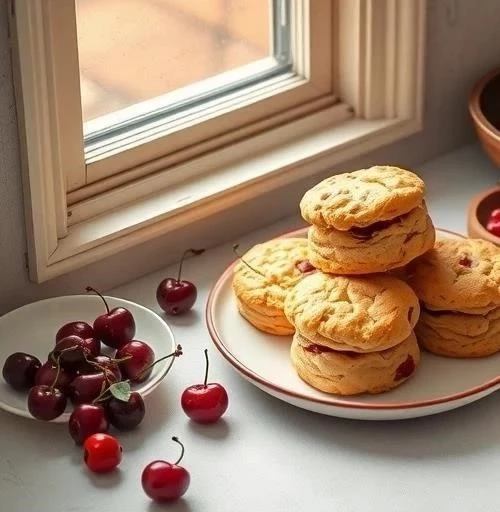
Cherry korzhiki are tender, lightly sweet biscuits that welcome simple swaps. The best korzhiki with cherries still need a dough that holds its shape and fruit that is not too wet. This guide explains how to adapt a korzhiki recipe to your pantry or dietary needs while keeping the familiar flavor of homemade baking.
Fruit: fresh, frozen, dried, or preserved
Fresh cherries should be pitted and patted dry. Use frozen cherries straight from the freezer or thaw and drain them well; excess juice can make the dough sticky. Chop dried cherries and soak them briefly if they are very firm. Cherry jam works too: add small spoonfuls, reduce the sugar in the dough, and avoid mixing in too much syrup.
Fats and sweeteners
Butter gives the richest taste. You can replace it with the same amount of margarine; choose a firm baking variety. For a lighter swap, use neutral vegetable oil, but start with about three-quarters of the butter amount because oil is entirely fat and makes dough softer. If you are wondering what can replace butter in baking, thick plant yogurt or apple purée can replace part of it, though the biscuits will be less crisp.
White sugar can be partly replaced by honey, but reduce other liquid slightly and expect a darker, softer result. A baking-friendly sugar substitute can be used according to its package conversion. For how to replace sugar, remember that sweeteners do not always provide the same moisture or browning, so test a small batch first.
Flour, leavening, and binders
Wheat flour is the most reliable base. Replace up to one-third with whole-wheat flour for a heartier texture, or with oat flour for a softer, slightly crumbly biscuit. For gluten-free flour, use a baking blend containing a binder and follow its package guidance. If asking how to replace flour, avoid swapping all the flour for a single alternative without adjusting moisture.
Baking powder can be replaced with baking soda only when the dough also contains an acidic ingredient; use less soda. Eggs add structure and moisture. For egg replacement, use one tablespoon ground flaxseed mixed with three tablespoons water per egg, then let it thicken. The result may be denser, but it suits a vegan baking approach.
Dairy-free and practical adjustments
Sour cream, kefir, and yogurt can usually replace one another in equal amounts. Milk is thinner, so add it gradually. For a fasting-friendly recipe, choose plant yogurt, oil or vegan margarine, and a suitable egg substitute. Chill soft dough before shaping, and bake a test biscuit to check spread and sweetness.
These substitutions cover the main ingredients for korzhiki and make cherry baking flexible without losing its homemade character.
Search terms: коржики с вишней, рецепт коржиков, замена ингредиентов, альтернативные продукты, свежая вишня, замороженная вишня, сушёная вишня, вишнёвое варенье, сливочное масло, маргарин, растительное масло, сахар, мёд, сахарозаменитель, пшеничная мука, цельнозерновая мука, овсяная мука, безглютеновая мука, разрыхлитель, сода, яйца, замена яиц, сметана, кефир, йогурт, молоко, постный рецепт, веганская выпечка, чем заменить масло в выпечке, чем заменить сахар, чем заменить муку, ингредиенты для коржиков, домашняя выпечка, выпечка с вишней.

9 Comments. Оставить новый
A thoughtful, practical article. I would love to see a follow-up with tested quantities for a few of these swaps, but this is a great starting point.
Helpful overview of ingredient swaps without making them sound identical. The note that oil can soften the dough is good to keep in mind.
I found the distinction between butter, margarine, and oil particularly helpful. Small details like that make recipe adjustments less of a guessing game.
The suggestions for fresh, frozen, and dried cherries make this guide especially practical. I often bake with frozen fruit, so the draining advice is useful.
I like that the article encourages testing a small batch when changing sweeteners. That seems like a sensible way to avoid surprises.
This is easy to follow and does a nice job explaining how substitutions can affect texture, not just flavor.
The gluten-free flour guidance is clear and realistic. Using a blend with a binder sounds much safer than substituting a single flour.
A useful guide for adapting a familiar bake to whatever is in the pantry. The cherry jam suggestion is interesting, especially with the reminder to watch the extra syrup.
I appreciate how clearly this explains the effect of juicy cherries on the dough. Patting the fruit dry is a simple tip that can save a batch.