
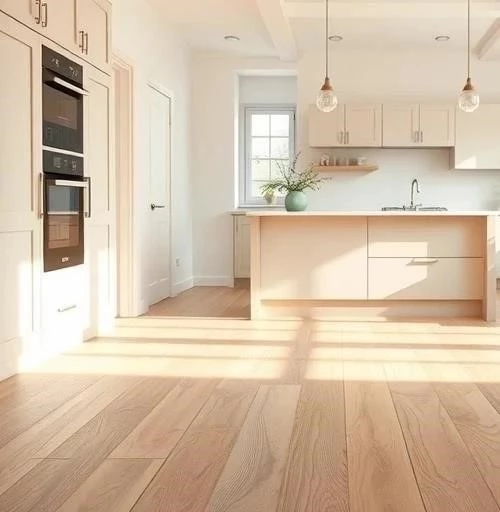
Choosing a kitchen floor means balancing appearance, comfort and practicality. Parquet flooring brings the warmth of real wood to a room often dominated by hard surfaces, but kitchens expose floors to spills, grit, frequent cleaning and changing temperatures. It can be a successful choice if you select a suitable product, install it correctly and respond promptly to moisture.
Construction and wood selection
Most parquet boards have a multi-layer construction: a real-wood veneer on top, bonded to stable supporting layers. The thickness of this wear layer affects how often the floor may be refinished. The wood species matters too. Oak parquet flooring is a popular option because oak is relatively hard, has a distinctive grain and is widely available in several finishes. Ask the supplier about the veneer thickness and the product’s intended use.
Engineered wood flooring is generally more dimensionally stable than solid wood, although it is not waterproof. Its layered structure helps limit movement, but prolonged standing water can still damage the wood or seams. Water resistance varies by product, finish and joint design; do not assume that a “kitchen suitable” label means spills can be left unattended.
Finish, durability and everyday use
A protective lacquer forms a surface film that can make cleaning easier and help resist stains. An oil finish penetrates the wood and gives a more natural look, but may need periodic maintenance. Neither finish makes the floor immune to scratches. Abrasive grit, dropped cookware and chair legs can mark the surface, so use entrance mats and felt pads, and wipe spills as soon as possible.
Wear resistance depends on the finish, wood species, veneer and household traffic. For better stain resistance, follow the maker’s cleaning advice and avoid harsh chemicals. Use a well-wrung cloth for damp cleaning rather than a soaking mop; standing water and steam cleaners may harm the floor. Proper parquet care protects its appearance, but every real-wood surface will develop signs of use over time.
Installation and kitchen conditions
Correct installation starts with a clean, dry, level subfloor. Preparation of the base is essential: unevenness can stress joints and cause movement or noise. A click-lock connection may make installation faster, but the subfloor, expansion gaps and manufacturer’s instructions still matter. Professional installation is worth considering, especially where the kitchen connects to other rooms or has complex cabinetry.
Temperature changes and humidity can make wood expand or contract. Keep indoor conditions reasonably stable and check whether the chosen board is approved for underfloor heating. If it is, follow limits for surface temperature and heating rates. A warm floor can be comfortable, but unsuitable heating or sudden temperature changes may lead to gaps or distortion.
Pros, cons and alternatives
The main advantages are natural character, a warm feel underfoot and the possibility of refreshing some products by sanding. The drawbacks include sensitivity to excess water, the risk of dents and scratches, and a higher material cost than many laminate floors. In a comparison with laminate, parquet offers genuine wood on the surface, while laminate often provides greater resistance to everyday spills for less money; quality and warranties vary in both categories.
Before buying, compare total costs, including underlay, installation and maintenance. Read customer reviews for comments about cleaning, joints and wear, but check the exact product and household conditions behind each review. The floor’s service life depends on construction, care and use, so no single lifespan applies to every kitchen.
Verdict
Parquet flooring can work well in a kitchen when you choose a durable, properly finished board and accept that wood needs attentive care. It is not the lowest-maintenance option, but for homeowners who value natural materials, the appearance may justify the extra precautions. Protect it from standing water, clean gently and follow the manufacturer’s guidance.



2 Comments. Оставить новый
This article offers clear, sensible guidance for homeowners considering parquet. I appreciate that it balances the appeal of real wood with realistic maintenance expectations and specific ways to reduce everyday wear.
A helpful overview of the trade-offs involved in choosing parquet for a kitchen. The distinction between engineered wood and waterproof flooring is especially useful, as is the practical advice on finishes and spill cleanup.