
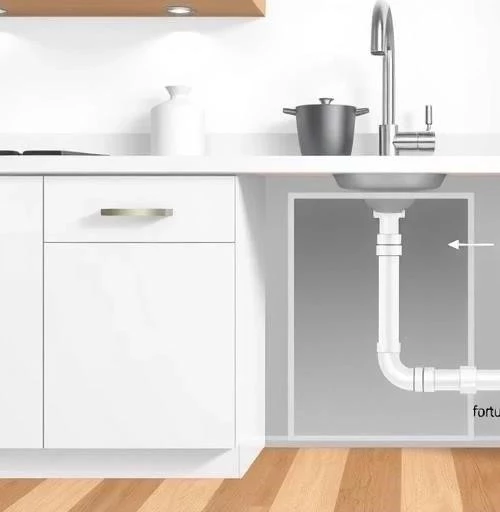
Reliable kitchen drainage is not merely a matter of connecting a sink to a pipe. A sound sewer layout must remove wastewater quickly, prevent leaks and keep sewer gases out of the home. Following current pipe-routing standards at the design stage is more dependable—and usually cheaper—than correcting recurring kitchen clogs later.
Plan the route before installation
Begin by locating the sewer stack and measuring the distance to it. A shorter, straighter route has fewer places for grease and food debris to collect. The sewer outlet should remain accessible, and bends should be limited. The installation of sewer pipes must also allow access to an inspection opening for checking and pipe cleaning.
Use the applicable edition of SP 30.13330 and local requirements. The older SNiP sewerage rules are useful historical references, but they should not replace current regulations. For typical kitchen branches, a 50 mm sewer pipe diameter is common; a larger line may be needed where several fixtures join. Select the sewer pipe slope for the pipe size and local code: too little slope encourages deposits, while an excessive slope can let water run ahead of solids.
Connect fixtures correctly
A sink connection should include a sink trap with a water seal. This simple barrier provides essential odor protection. Connect the dishwasher connection to the designated trap spigot, secure its hose as instructed by the appliance maker, and arrange the appliance drain so dirty water cannot flow back into the machine. A backwater valve may be appropriate where reverse flow is a genuine risk, but it must remain accessible for maintenance.
Where cooking produces substantial grease, consider a grease trap sized for the actual load. It captures fats before they harden in the branch, but only if it is cleaned regularly. Good wastewater removal therefore depends on both correct design and routine care.
Materials, ventilation and maintenance
PVC pipes and polypropylene pipes are both used for indoor sewer distribution. Choose compatible fittings, support pipes to prevent sagging, and ensure joint sealing follows the manufacturer’s instructions. Keep the sewer stack ventilation unobstructed: proper venting stabilizes pressure and protects fixture water seals from being siphoned dry.
Provide a sewer inspection point near changes in direction or where the branch joins the stack. This makes sewer maintenance and pipe cleaning easier. Never ignore slow drainage, gurgling or persistent odors; these may signal kitchen clogs or a damaged seal. Avoid harsh chemical mixtures, which can harm pipes and create dangerous fumes. Plumbing safety means wearing gloves and eye protection, using suitable tools, and calling a qualified plumber for concealed leaks or uncertain connections.
In short, a carefully planned kitchen sewer layout, accessible fittings and regular cleaning are more effective than emergency repairs. Correct installation protects the home, the fixtures and the people who use them.
5 Comments. Оставить новый
The discussion of pipe slope is useful because it explains why simply making a pipe steeper is not always better. Referring readers to current local requirements also helps prevent the technical guidance from being mistaken for a universal specification.
The article makes a convincing case that good kitchen drainage begins with planning rather than reacting to clogs. Its emphasis on a short, accessible pipe route is practical because it can reduce both maintenance difficulties and the places where debris accumulates.
The section on traps and dishwasher connections clearly links installation details to odor prevention and backflow risks. I especially appreciate the reminder that any backwater valve should remain accessible, since safety features are less effective when they cannot be inspected or maintained.
This is a balanced overview of drainage design and ongoing care. The explanation of grease traps is particularly helpful: it recognizes their value while making clear that regular cleaning is necessary for them to work.
The article is well organized, moving from route planning to fixture connections and maintenance. Its practical points are easy to follow, though readers undertaking installation would still need to confirm exact dimensions and code requirements for their own location.