
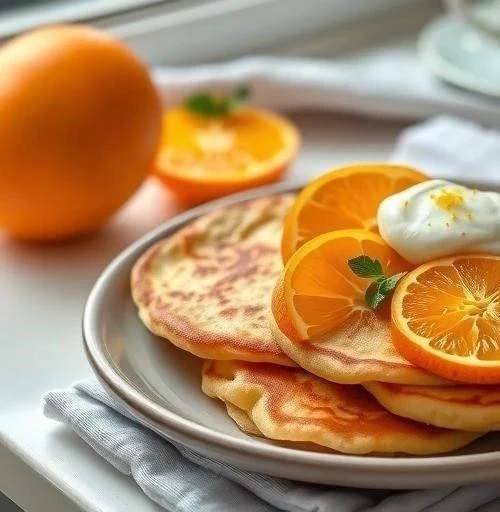
Some mornings begin with an alarm; better ones begin with the smell of warm cheese pancakes and orange zest. Syrniki are tender Russian-style cottage-cheese fritters, crisp at the edges and soft in the middle. Add fresh orange and the familiar breakfast becomes a bright, fragrant treat—like opening a tiny window onto a sunny orchard, even if the day outside is grey.
What makes a good syrnik?
The secret is cottage cheese that is pleasantly rich but not watery. If it is very wet, the mixture asks for extra flour, and the pancakes can turn heavy. A little draining and a light hand keep the inside delicate. Orange plays two parts: zest perfumes the batter, while a spoonful of juice gives it a gentle citrus lift. The result should taste of cheese first, with orange arriving like a cheerful second note.

Ingredients
Makes about 10–12 small syrniki, enough for 3–4 people.
- 500 g (about 2 cups) cottage cheese or farmer’s cheese
- 1 large egg
- 3 tablespoons sugar, or less to taste
- 1 teaspoon finely grated orange zest
- 1 tablespoon orange juice
- ½ teaspoon vanilla extract, optional
- 4–5 tablespoons all-purpose flour, plus extra for shaping
- A pinch of salt
- 2 tablespoons neutral oil or butter, for frying
- To serve: yogurt or sour cream, honey, berries, and a little extra zest

Make the morning magic
- Prepare the cheese. If the cottage cheese looks loose, place it in a fine sieve for 10–15 minutes. Press it gently, not aggressively: you want to remove excess liquid, not squeeze out its softness. For a smoother texture, mash it with a fork or push it through a sieve. A few tiny curds are welcome; they give each pancake its own little landscape.
- Build the orange aroma. In a bowl, beat the egg with the sugar, salt, orange zest, juice, and vanilla. Rub the zest into the sugar with your fingertips first if you have a moment. The sugar will become fragrant as it catches the citrus oils—an instant, edible alarm clock.
- Bring it together. Add the cottage cheese and mix until combined; Fold in 4 tablespoons of flour. The mixture should be soft and slightly sticky, but hold its shape when scooped. If it feels too loose, add the remaining flour a little at a time. Avoid adding a handful all at once: too much flour is the quickest route to dense syrniki.
- Shape the pancakes. Dust your hands and work surface with flour. Scoop a generous tablespoon of mixture, roll it gently, then flatten it into a thick little disc. Turn each disc in a light veil of flour and tap away the excess. Perfectly identical rounds are not required; handmade edges look especially inviting.
- Fry slowly. Warm a thin film of oil or butter in a skillet over medium-low heat. Cook the syrniki in batches, leaving room between them, for about 3–4 minutes per side. They should develop a golden crust without darkening before the centres warm through. If they brown too quickly, lower the heat. A patient pan makes a tender middle.
- Let them rest. Move the cooked pancakes to a plate for a minute while you finish the rest. This brief pause helps the centres settle, and gives you time to put the kettle on or call sleepy people to the table.
Serve like it’s a small celebration
Stack the syrniki while warm and add a spoonful of thick yogurt or sour cream. Drizzle with honey, scatter over berries, and finish with fresh orange zest. For a playful contrast, add a few toasted almonds or pistachios: their crunch makes the soft cheese feel even silkier. A little orange marmalade works beautifully too, though the pancakes are already gently sweet.
Small twists, big breakfast energy
For a deeper citrus fragrance, add a pinch of cardamom or cinnamon. For a less sweet breakfast, reduce the sugar and serve with sliced banana or plain yogurt; You can replace up to a tablespoon of flour with semolina for a slightly more substantial texture, but let the mixture stand for five minutes so it can absorb moisture. If the batter becomes sticky while shaping, dust your palms rather than adding lots more flour to the bowl.
Leftovers keep in the refrigerator for up to two days. Reheat them in a dry skillet over low heat, turning once, so their edges regain a little crispness. They can also be frozen after cooling; warm them straight from frozen in a covered skillet on low, then uncover briefly to revive the crust.
A bright start, made by hand
These orange syrniki are not meant to be rushed or perfectly uniform. They are meant to be warm, softly tangy, and fragrant enough to make the kitchen feel awake before anyone else is. Put the first one on a plate, watch the steam carry its citrus scent into the room, and let breakfast take its time. That is the whole recipe’s quiet trick: a few simple ingredients, transformed into a morning worth remembering.

6 Comments. Оставить новый
These would be delightful with a spoonful of tart berry compote. The orange seems to set the stage, while the berries could arrive like a vivid little plot twist.
The idea of rubbing orange zest into sugar is a tiny bit of kitchen alchemy. I can almost smell the citrus waking up before the pan even gets warm.
The advice to drain the cheese gently is wonderfully practical. It treats texture like something to preserve, not a problem to flatten—and that is a lovely way to think about cooking.
Orange and cottage cheese make an unexpectedly charming pair: one brings sunshine, the other brings comfort. This recipe feels like a grey morning being gently talked into becoming a good one.
A breakfast recipe that makes room for fragrance, softness, and crisp edges deserves a place in the weekend ritual. The description alone has me reaching for a grater and an orange.
I love that these syrniki are allowed to keep a few little curds. Perfectly uniform breakfasts can feel like factory products; these sound like each one might have its own delicious personality.