
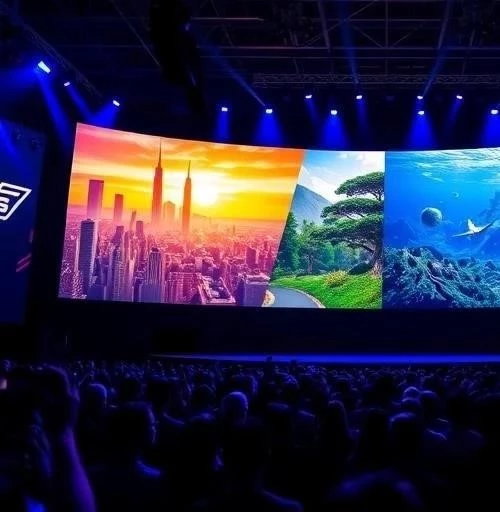
A note on the date: “PlayStation Showcase” can refer to several different events. The material supplied with this question contains dictionary entries, not gaming news, so it cannot verify a 2026 presentation or its announcements. To avoid inventing future reveals, this article looks back at the PlayStation Showcase held on May 24, 2023—a major Sony presentation whose trailers ranged from superhero spectacle to quiet, sword-shaped melancholy.
A stage built for surprises
The 2023 Showcase lasted a little over an hour and presented more than 30 games and projects, including titles for PlayStation 5 and PlayStation VR2. It was not a neat parade of Sony exclusives. Instead, it felt like a crowded window into several possible futures for the console: big cinematic adventures, multiplayer experiments, returning cult favorites, and smaller games with art styles that lingered after their trailers ended.
Some announcements arrived with the satisfying certainty of a familiar name. Others were little more than a logo, a mood, and a promise. That contrast gave the show its peculiar rhythm: one moment, New York was swinging into view; the next, a nameless figure was walking across a vast blue landscape, leaving the audience to imagine the rest.
Marvel’s Spider-Man 2 took center stage
The most substantial look at an upcoming first-party game belonged to Marvel’s Spider-Man 2. Insomniac Games showed an extended gameplay sequence starring Peter Parker, who was wearing the black symbiote suit, before shifting the action to Miles Morales. The trailer made the sequel’s central contrast immediately readable: Peter’s new powers were brutal and forceful, while Miles brought his own speed, agility, and electric attacks to the fight.
In one sequence, Peter pursued Kraven the Hunter’s men through a waterfront environment and burst into a fight with the kind of aggressive momentum the symbiote implies. The suit’s tendrils grabbed enemies, pulled them close, and turned the familiar rhythm of web-slinging combat into something more savage. Later, the presentation switched to Miles, who chased down the Lizard through the city. The change of hero was more than a character showcase; it hinted that players would be able to experience New York through two distinct Spider-Men.
The trailer also teased a larger map, including areas beyond Manhattan, and showed how fast travel could work through a rapid transition across the city. It ended with the Lizard fleeing toward the East River, leaving the heroes in pursuit. No single clip could explain how the full game would unfold, but the showcase made its promise plain: bigger city, two playable heroes, and a Peter Parker who might be losing control of the power he has gained.
Two new multiplayer bets: Concord and Fairgame$
Sony also introduced two new live-service projects, each with a different flavor of mystery. Concord, from Firewalk Studios, appeared in a short cinematic trailer set aboard a spaceship. A crew of colorful characters gathered, shared food, and prepared for a job. The footage offered no proper gameplay and kept its exact premise under wraps, but it established a science-fiction setting with a lived-in, ensemble feel.
The reveal described Concord as a team-based multiplayer first-person shooter for PS5 and PC. The studio emphasized characters, worlds, and the idea of a growing science-fiction universe. That was an intriguing pitch, though the trailer left the central practical question unanswered: what would make a match of Concord feel unmistakably like Concord? The answer would have to wait for a fuller demonstration.
Fairgame$, from Haven Studios, was announced with a stylish cinematic focused on a high-stakes robbery. Its premise put players in the role of modern-day thieves targeting the ultra-rich. Rather than presenting a traditional hero’s journey, the trailer framed the fantasy around breaking into places where ordinary people are not supposed to go—and getting away with the prize.
As with Concord, Fairgame$ arrived as a promise rather than a complete explanation. Its teaser established attitude and theme, not the details of its missions or moment-to-moment play. The pair of reveals showed Sony investing in multiplayer worlds, but also highlighted the risk of announcing a game before audiences can see the thing that makes it fun. A striking logo can open a door; gameplay has to invite people inside.
Metal Gear returned, with a familiar shadow
One of the evening’s biggest nostalgia jolts was the reveal of Metal Gear Solid Delta: Snake Eater. The remake revisits Metal Gear Solid 3: Snake Eater, the 2004 stealth classic set in a jungle during the Cold War. Its announcement trailer emphasized the natural world: insects, reptiles, birds, and other creatures moving through dense vegetation before the title appeared.
The reveal was brief, but the name carried enormous weight. Snake Eater is remembered for its survival mechanics, camouflage, eccentric characters, and the emotional story of Naked Snake and his mentor, The Boss. “Delta” suggested a new version of the original rather than a wholly different chapter, while the trailer’s striking imagery hinted at a visual transformation built for modern hardware.
The announcement also raised a question familiar to any remake: how much should be preserved, and how much should be rebuilt? The showcase did not answer it. It simply placed a beloved game back in the spotlight and let its legacy do the talking.
New worlds in a few unforgettable images
Some of the most memorable moments came from games that did not need a long explanation. Phantom Blade Zero appeared as a fast, dramatic action game, mixing swordplay with a shadowy martial-arts atmosphere. Its protagonist moved through enemies with sharp, fluid attacks, while the trailer’s moody environments suggested a world drawn from Chinese wuxia stories and dark fantasy. It looked like a game with speed in its muscles and mystery in its bones.
Sword of the Sea, from the creator of Abzû and The Pathless, offered a very different kind of movement. A lone traveler skimmed across dunes and strange landscapes on a sword that functioned like a board, carving bright tracks through the sand. The trailer was light on plot and heavy on sensation: sliding, leaping, flowing forward. It made travel itself look like the main attraction.
Neva, from the team behind Gris, introduced a young woman and a wolf-like companion in a world under threat. Its hand-painted imagery was beautiful without feeling gentle; dark, creeping forms pressed in at the edges of the screen. The relationship between the two figures appeared to be the emotional core, suggesting a story about companionship, courage, and growing together in a damaged world.
Then there was The Talos Principle 2, a philosophical puzzle adventure set in a world of intelligent machines and monumental environments. Its trailer promised intricate spaces to explore, puzzles to solve, and the series’ familiar interest in consciousness and meaning. The contrast between quiet mechanical figures and enormous ruins made the setting feel like a question in physical form: what does a civilization inherit when its creators are gone?
These trailers showed how broad the Showcase could be. One game sold speed; another, solitude. One offered a close bond between characters; another invited players to think about intelligence and existence. None needed to compete for the same kind of attention.
Returning favorites and recognizable names
Several third-party games also made an appearance. Dragon’s Dogma 2 received a new trailer full of monsters, magic, and large-scale fantasy combat. Its imposing creatures and party-based battles recalled the original game’s unusual blend of open exploration and action, while the footage suggested a richer world waiting beyond the next mountain pass.
Alan Wake 2 appeared in a gameplay-focused presentation, bringing its eerie, investigative atmosphere to the stage. The trailer leaned into darkness and danger, reinforcing that this sequel would be a survival-horror experience rather than simply another supernatural thriller. Lights, shadows, and the fragile sense of safety between encounters remained central to its identity.
Assassin’s Creed Mirage offered a glimpse of a more focused adventure in Baghdad. Its presentation emphasized stealth, parkour, and the series’ historical setting, while looking back toward the compact city-based structure associated with earlier entries. For fans who missed slipping across rooftops and disappearing into a crowd, the trailer suggested a return to familiar pleasures.
There were also appearances from projects such as Helldivers 2, which turned the original’s top-down cooperative shooter into a third-person action game, and Gran Turismo 7, which highlighted virtual-reality racing on PSVR2. These were reminders that the console’s future was not only about epic solo campaigns. It also included shared chaos, competitive driving, and the social rituals of playing alongside other people.
PlayStation VR2 got its own spotlight
Virtual reality was not treated as an afterthought. The presentation included a range of PSVR2 games, from larger licensed adventures to smaller projects built around distinctive mechanics. Resident Evil 4 was shown as a VR experience, promising a new way to inhabit Leon Kennedy’s tense fight for survival. Arizona Sunshine 2 brought zombie action and a canine companion into the headset, while Synapse paired gunplay with telekinetic powers in a striking monochrome world.
The VR segment mattered because a headset is only as compelling as the experiences that make people want to wear it. A familiar game viewed from inside can feel newly immediate, but original mechanics are important too. The showcased titles pointed in both directions: recognizable worlds adapted for immersion, and visual ideas that seemed designed specifically for the strange intimacy of virtual reality.
Hardware stepped into the picture
Sony also teased hardware. The company revealed Project Q, a handheld device designed to stream games from a PS5 over Wi-Fi. It had a screen between two halves of a DualSense-style controller, making it look like a controller that had opened up to make room for a display. The pitch was not that it would replace the PS5 or run games independently; it would let players access compatible console games remotely.
The presentation also announced PlayStation-branded wireless earbuds. Details were limited, but their appearance suggested Sony wanted to build a broader ecosystem around the console—not just a box connected to a television, but a collection of ways to play and listen. Project Q, later released as PlayStation Portal, became the more immediately discussed device because it raised a practical question for everyday players: how useful is remote play when the living room screen is already occupied?
What the Showcase said about PlayStation
The 2023 event was a collage rather than a single argument. Its clearest blockbuster was Spider-Man 2, a polished demonstration of character, combat, and scale. Its boldest legacy play was Metal Gear Solid Delta: Snake Eater. Its most intriguing new names—Concord and Fairgame$—were still largely silhouettes. And its smaller, visually distinctive games made a strong case for experiences that do not need a familiar franchise to command attention.
The presentation also revealed a tension in Sony’s strategy. The company was backing traditional cinematic adventures while placing significant emphasis on multiplayer and live-service projects. Those approaches ask for different kinds of loyalty: one may invite players to follow a carefully shaped story to its end; another hopes they will return week after week. Showing both side by side made the breadth of the plan visible, but it could not guarantee that every experiment would find its audience.
That is part of what made the Showcase compelling. It did not answer every question, and some trailers were more mood than information. Instead, it scattered invitations across the screen; Come back to a jungle you remember. Chase a monster through New York. Join a crew in deep space. Ride a blade over a desert. Put on a headset and step closer to the danger.
The short version
The May 2023 PlayStation Showcase featured Marvel’s Spider-Man 2 gameplay, the remake Metal Gear Solid Delta: Snake Eater, new multiplayer projects Concord and Fairgame$, striking new games such as Phantom Blade Zero, Sword of the Sea, and Neva, plus trailers for Dragon’s Dogma 2, Alan Wake 2, and more. It gave PSVR2 several games of its own and teased Project Q, a remote-play handheld that would later become PlayStation Portal.
In other words, the show offered a little of everything: blockbuster confidence, revived legends, uncertain new bets, and the occasional beautifully strange image that refused to explain itself. Its most lasting impression was not one announcement, but the sense of a console library stretching in several directions at once.

1 Comment. Оставить новый
The strongest idea here is that a showcase can feel less like a list of games than a window cracked open onto several possible futures. I especially like the contrast between Peter’s symbiote-fueled brutality and Miles’s distinct style: even a brief gameplay segment can tell a story about character through motion. The article’s careful May 2023 framing also keeps its feet on the ground instead of dressing speculation up as news.