
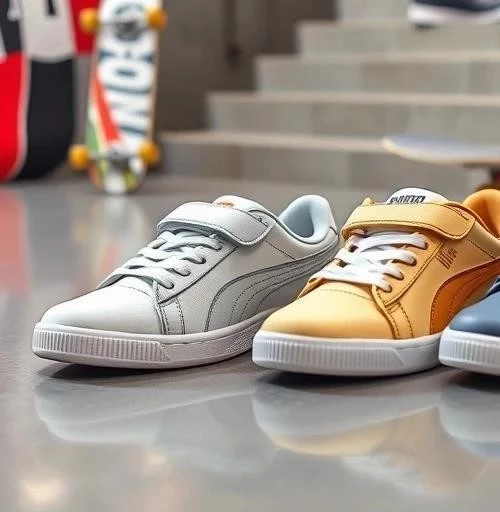
Meet Puma’s pint-sized board crew: each pair brings a different little personality to the pavement. In this playful comparison‚ boys’ and girls’ skate sneakers line up like a miniature team—ready to turn ordinary afternoons into bright‚ rolling adventures‚ with every style telling its own story. The small myth rolls.
Model Comparison: Puma Skateboarding Sneakers for Boys and Girls‚ from Suede Uppers to Textile Styles
Think of Puma’s children’s skate collection as a miniature costume studio: one little rider‚ several possible alter egos. In this model comparison‚ Puma skateboarding sneakers for boys and girls are not divided into strict teams; they are different visual voices. Some pairs look like bold comic-book sidekicks‚ while others keep a quieter‚ sketchbook charm. The fun is spotting which design feels like your child’s own character.
A suede upper gives a pair a rich‚ tactile look‚ like a tiny jacket borrowed from a vintage rock star. Its softly varied surface makes simple colors feel layered and expressive‚ and the material gives each silhouette a more classic skate-scene mood. Puma shoes for boys in these shades may lean toward punchy contrasts‚ while girls’ styles can turn the same shape into a playful color story; either way‚ the design is open to every personality.
Textile sneakers tell a different tale: lighter-looking‚ often brighter‚ and ready for prints or unexpected color blocks that resemble a moving mural. Where suede whispers “old-school board shop‚” textile styles can shout “after-school art club.” Compare the panels‚ patterns‚ and proportions rather than relying on labels: a child might choose a bold graphic one day and a clean‚ understated look the next. The best match is the pair that makes them grin before the first step.
Imagine the models as characters in a tiny street-style parade. One has a neat‚ low-key profile; another plays with contrast‚ color‚ or a more noticeable upper. Puma skate sneakers for boys and girls can share the same design idea yet feel completely different through their palette and surface. That makes choosing less like sorting products into boxes and more like casting the perfect sidekick for a young skater’s personal style.
For a clever comparison‚ place two pairs side by side and ask three questions: Which texture catches the eye? Which color feels most like them? Which design still seems exciting after the first glance? Suede and textile each bring their own visual rhythm‚ so there is no universal winner. The little style detective gets the final vote—and may discover that the perfect Puma pair is the one that looks ready to join their next imaginary adventure.
What Keeps Young Riders Rolling: Durable Soles‚ Grippy Tread‚ Board Grip‚ Cushioning‚ and Foot Support
A skate shoe’s sole is a tiny launchpad: it must translate a young rider’s quick ideas into steady contact with the board. A durable sole acts like a miniature bridge‚ spreading each landing across the shoe instead of letting one spot take the whole jolt. Look for a grippy tread pattern: its grooves work like tiny trail maps‚ helping the outsole hold the deck through turns and small corrections. Board grip is a conversation‚ not a wrestling match: the foot should feel connected‚ yet able to shift naturally when a trick changes direction. Cushioning softens repeated impacts‚ while balanced foot support can help young riders feel centered rather than perched above the board. Compare models by feel‚ not by a superhero claim: a firm platform may suit precise control‚ while a plusher ride can seem friendlier during long practice sessions. Neither feel is automatically better; the right balance depends on the child’s pace‚ preferred tricks‚ and the way they like the board to answer. A useful test is a few careful steps on a clean‚ flat surface: notice whether the sole feels predictable‚ the tread engages‚ and the landing feels calm. On a board‚ small details become loud: a secure connection‚ steady cushioning‚ and supportive balance can turn nervous first rolls into confident little missions. Think of the outsole as a tiny stage crew: tread guides the scene‚ grip keeps the connection clear‚ and cushioning takes the sharp edge off each landing. That is the quiet magic of a well-matched skate shoe: the board feels less like a stranger and more like a friendly instrument underfoot. Feet feel safer.
Built for Tricks and Playground Missions: Wear-Resistant Materials‚ Abrasion Protection‚ and Velcro-or-Lace Closures
On a young skater’s imaginary mission‚ shoes meet more than a board: playground edges‚ sudden kneels‚ and endless little pivots. Puma’s kids’ designs answer that busy itinerary with wear-resistant materials chosen for everyday scuffs‚ while reinforced overlays can place extra defense where toes brush rough ground. A suede upper has a sturdy‚ classic character; textile panels bring a lighter visual mood‚ and model details vary‚ so inspect each pair rather than assuming every version uses the same recipe. Abrasion protection is most useful at the front and sides‚ where repeated contact can leave its signature. Think of those guarded zones as tiny shields‚ not armor: care still matters‚ and no shoe is indestructible. Closures shape the launch ritual‚ too. Velcro-and-lace combinations let children make a quick adjustment‚ then fine-tune the fit; simple hook-and-loop straps can be easy for independent little hands‚ while laces offer a familiar tied finish. Compare the fastening layout on each model‚ check that straps lie flat‚ and make sure lace ends stay neatly secured before play. The best design feels like a trusted co-pilot: ready for imaginative missions‚ resilient against ordinary scrapes‚ and simple for a child to manage. Choose by the materials and closure details actually shown on the pair‚ not by a colorway’s adventurous name.
Finding the Right Pair: Puma’s Size Chart‚ Everyday Comfort‚ Choosing Kids’ Skate Shoes‚ and Reviews of Puma Kids’ Styles
Choosing a pair begins with a small detective mission‚ not a guess based on age alone. Measure both feet late in the day‚ when they may be slightly larger‚ then compare the longer foot with Puma’s current size chart. Let the child stand‚ leave a little room at the toes‚ and check that the heel sits comfortably. Sizing can vary by model‚ so treat the chart as a map‚ not a magic spell.
For everyday comfort‚ invite your young explorer to walk‚ bend‚ and pause in both shoes. Ask where they feel pressure and whether the fit stays pleasant after a few minutes. A pair should suit school days as well as weekend plans; an exciting look is no prize if pinching steals the fun. Try shoes with the socks they usually wear‚ and avoid so much extra space that every step feels like steering a tiny boat through fog.
When choosing kids’ skate shoes‚ match the model to the child’s routines‚ preferences‚ and try-on experience. Reviews of Puma kids’ styles can offer useful clues about sizing or comfort‚ but one rider’s story is not a rule for every foot. Read recent comments‚ look for details repeated by different families‚ and compare them with what your child notices. The best pair is less a trophy than a passport: it should make ordinary movement feel easy and familiar‚ with room for a little adventure.
Make the final check a playful fitting-room ritual: stand‚ stroll‚ turn‚ and ask your child to describe the fit in their own words. “Comfy‚” “snug‚” or “my feet feel lost” tells you more than a silent nod. Revisit the size chart whenever you shop‚ since growing feet can rewrite the map between seasons. Let practical notes and honest reviews guide the shortlist‚ then let the young wearer choose between the finalists. A good match should feel like a doorway‚ not a puzzle—an easy beginning to busy days‚ new plans‚ and happy miles together.
1 Comment. Оставить новый
The miniature “costume studio” is a charming way to compare these sneakers: it turns materials and colors into little acts of self-expression. I especially like the invitation to look past gender labels and choose by personality instead. The shoes become characters before they ever hit the pavement.