
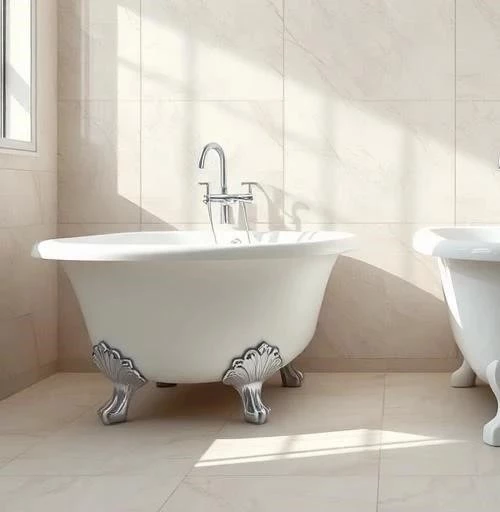
Replacing a cast-iron bathtub with an acrylic model can make a bathroom feel more modern, but it is not automatically an upgrade. The right choice depends on the condition of the existing tub, the way the household uses it, the budget, and the bathroom itself. In most cases, a sound cast-iron tub is worth keeping; replacement makes more sense when it is damaged, uncomfortable, or poorly suited to planned renovations.
Why keep the cast-iron tub?
Cast iron is exceptionally durable. Its heavy body resists flexing, and a well-maintained enamel surface can last for decades. Small chips may be repairable, while a tired or discoloured finish can sometimes be renewed professionally. If the tub is structurally sound and its dimensions work, refinishing may cost less and cause less disruption than removing it.
Its weight also helps it feel solid underfoot. Unlike a poorly supported lightweight tub, cast iron does not readily flex when someone steps in or shifts position. It retains heat well, too: the metal warms up and can help the bath stay comfortable. This is not magic insulation, and the water will still cool, but many users appreciate the stable, substantial feel.
There are important drawbacks. Cast iron is extremely heavy, so delivery and installation can be difficult, especially in an upper-floor bathroom or a building with narrow stairs. Moving one may require extra labour and careful checks of access and floor structure; The enamel can chip if struck hard, and older tubs may have worn patches, rust around damaged areas, or a shape that no longer suits the room. Keeping an unsuitable tub simply because it is durable is not always sensible.
What acrylic offers
Acrylic tubs are much lighter, making them easier to carry and install. They come in many shapes and sizes, including models with ergonomic contours, wider rims, and built-in seating. For a renovation involving a new layout, a lighter tub can simplify the work and reduce handling challenges. Acrylic also feels warmer to the touch than bare metal and is generally less likely to chip in the way enamel can.
However, acrylic is not indestructible. The surface can scratch, and lower-quality tubs may flex or feel flimsy if the frame and base are not properly supported. Deep scratches and cracks can be harder to disguise than minor surface wear. Quality varies, so compare the thickness and construction, inspect the support system, and follow the manufacturer’s installation instructions. A low purchase price is no bargain if the tub creaks, moves, or needs repair soon.
Heat retention is sometimes presented as a decisive reason to switch. Acrylic itself does not feel as cold as cast iron, but the difference in how long bathwater stays warm depends on the model, installation, room temperature, and water volume. It should be treated as a comfort advantage, not a guarantee of dramatically longer baths.
Compare the full cost, not just the tub
The purchase price is only part of the decision. Replacing a heavy tub can involve demolition, plumbing changes, disposal, repairs to flooring or walls, waterproofing, and new finishes. A lighter acrylic unit may reduce installation difficulty, but it does not eliminate the cost of making good the bathroom. By contrast, refinishing an existing tub avoids much of that work, though the finish may eventually need attention and the tub’s shape will remain unchanged.
Before deciding, ask for itemised estimates for both replacement and restoration. Check whether the quoted work includes removing and disposing of the old tub, fitting the drain and overflow, supporting the new unit, sealing the edges, and repairing surrounding surfaces. Also consider how long the bathroom will be out of use. The cheapest option on paper may not be the best value if it overlooks necessary plumbing or finishing work.
When replacement is the better choice
- The tub is cracked, badly rusted, leaking, or beyond reliable repair. Cosmetic refinishing cannot fix structural damage.
- The current size or shape is uncomfortable. A new design may improve access, bathing, or the use of limited space.
- You are already renovating the room. If walls, plumbing, and flooring are being changed, replacing the tub may be more practical than preserving an unsuitable fixture.
- Weight or access is a concern. A lighter acrylic model may be easier to install, although the installer should still assess the route and floor.
In these situations, choose a reputable acrylic tub with a sturdy frame and proper base support. Have a qualified installer check that the floor is level, the waste connections fit, and the unit is secured according to the manufacturer’s requirements. Good installation matters as much as the material.
When keeping it is wiser
If the cast-iron tub has no structural problems, fits the household, and has a finish that can be restored, replacement may offer little practical benefit. A professional assessment can establish whether refinishing is suitable and what result to expect; If the surface is already in good condition, simple maintenance may be all that is needed. Keeping the tub also avoids unnecessary demolition and material waste.
Do not replace a cast-iron bathtub with acrylic solely because acrylic is newer or lighter. Keep the existing tub if it is sound, comfortable, and repairable; its durability and solid feel are substantial advantages. Replace it when damage, access, comfort, or a larger renovation makes the change worthwhile. The best decision is the one that solves a real problem at a reasonable total cost—not simply the one that puts a different material in the bathroom.




4 Comments. Оставить новый
The article makes a sensible case for basing the decision on condition, comfort, layout, and budget. Its comparison would be even more helpful with a brief note about the disruption involved in removing an old tub and the possibility that surrounding plumbing or finishes may also need work. These details can affect the overall cost as much as the tub itself.
I appreciate the clarification that cast iron retains heat but does not keep bathwater warm indefinitely. That distinction makes the explanation more credible. The article could also remind readers to compare acrylic models by construction and support, because a lightweight tub’s stability can depend greatly on how it is installed.
The discussion of weight and access is practical. A cast-iron tub might be durable, but getting it through narrow stairs or installing it on an upper floor can add significant labour and logistical challenges. Those factors should be assessed before deciding to keep or replace the tub.
The article gives a balanced comparison rather than treating acrylic as an automatic improvement. Its point that a sound cast-iron tub may be worth refinishing is especially useful, since replacement involves more than the price of a new fixture. I would also consider the cost of removing and disposing of such a heavy tub when comparing options.