
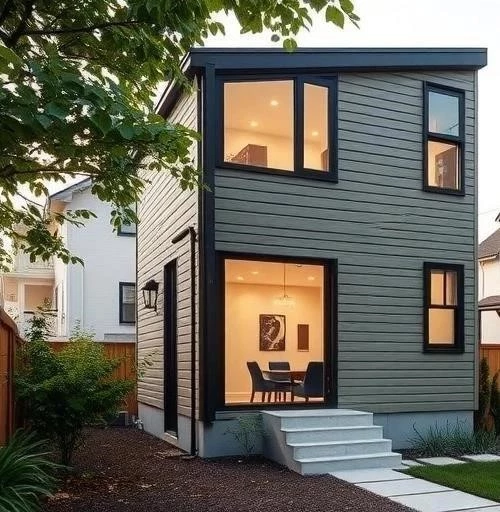
On a small plot‚ a window is more than a hole for daylight: it can borrow a garden‚ frame the sky‚ and make a modest home feel surprisingly generous. The newest ideas in modern home architecture treat glazing as a tool for shaping space—not simply a finishing touch. The challenge is to open the house to its surroundings without inviting glare‚ heat loss‚ or unwanted attention.
Think in views‚ not square metres
Careful window placement on the plot can create a sense of depth even when the garden is only a few steps wide. Before choosing a frame‚ trace the sun’s path‚ note neighbouring windows‚ and identify the view you want to keep. A low sill can connect a kitchen to flowers; a high‚ narrow opening can bring in sky while protecting privacy from neighbours. The best windows overlooking the garden make the landscape feel like an extra room.
Large windows in a small house work especially well when their proportions echo the room. One broad opening may feel calmer than a wall crowded with little panes. Panoramic windows can visually extend a living area‚ while corner glazing pulls light around a room and softens the boundary between indoors and out. Keep furniture low near the glass‚ and the view becomes part of the interior design.
Choose glass for comfort‚ not just drama
More daylight is welcome; excessive summer heat is not. Energy-efficient glazing helps retain warmth in winter‚ and carefully selected solar-control glazing can reduce overheating on exposed elevations. Smart glazing units—including options that adjust their tint—offer another way to respond to changing sun. Pair them with exterior shading‚ such as a slim awning or climbing plants‚ rather than expecting glass alone to solve every climate problem.
Daylight should feel generous‚ not dazzling. Plan for natural lighting that reaches deep into the home‚ and consider how it changes throughout the day. A roof window can brighten a central hallway; a shaded opening can keep a desk comfortable. Good energy savings come from the whole design: suitable glazing‚ airtight installation‚ thoughtful orientation‚ and enough insulation around the frame.
Frames that give a small home room to move
Compact window systems preserve usable wall and floor space. Sliding windows are especially practical beside patios or narrow paths because their sashes do not swing into furniture or outdoor circulation. For a slender‚ minimalist window design‚ choose frame profiles that complement the architecture rather than compete with the view.
Aluminium windows allow slim frames and broad panes; plastic windows are often valued for straightforward maintenance and thermal performance; wooden windows bring warmth and a natural finish. There is no universal winner. Match the material to local weather‚ upkeep preferences‚ budget‚ and the character of the house.
Make openness feel safe and quiet
On a compact lot‚ comfort includes what you do not hear and what you do not have to worry about. Quality window sound insulation can soften traffic and neighbourhood noise‚ while safety glass is a sensible choice for large panes‚ doors‚ and low-level glazing. Layered curtains‚ planting‚ and thoughtful sightlines add privacy without turning the home into a closed box.
The most compelling trend is not simply bigger glass. It is purposeful glazing: openings placed for a particular view‚ light controlled for each season‚ and frames selected to support everyday life. Start with one question—what would you like to see when you look up? On a small plot‚ a well-designed window can make the answer feel much larger than the garden itself.



8 Comments. Оставить новый
I like how this treats a window as a way of composing a view, not merely fitting glass into a wall. The reminder to follow the sun before choosing a frame is practical—and could save a room from becoming a beautiful little greenhouse.
The phrase “extra room” captures the magic of a well-placed garden window. I also like that the advice gives privacy a place beside openness—good architecture should let you enjoy the view without feeling on display.
I enjoyed the suggestion that one broad opening may feel calmer than a wall of small panes. It’s a subtle design point, but it shows how proportion can change the mood of a room as much as its brightness.
A thoughtful blend of atmosphere and building science. The section on shading is particularly useful: glass can welcome the sun, but it should not be left alone to negotiate with summer.
This turns window planning into a kind of quiet storytelling: frame the flower bed, invite a ribbon of sky, or let light travel toward the centre of the house. Useful advice, with room for imagination.
The idea of borrowing a garden is lovely. Even a narrow strip of green can feel expansive when the sill, furniture, and sightline are considered together. This makes small-home design feel less like compromise and more like clever choreography.
A refreshing reminder that bigger glass is not automatically better. I especially appreciated the distinction between inviting daylight and inviting glare; comfort deserves as much attention as the dramatic photograph.
This article makes me want to map the sunlight in my home with a pencil and a cup of tea. Its best insight is that a window can be designed around the life of a room, whether that means a kitchen garden view or a quiet patch of sky.