
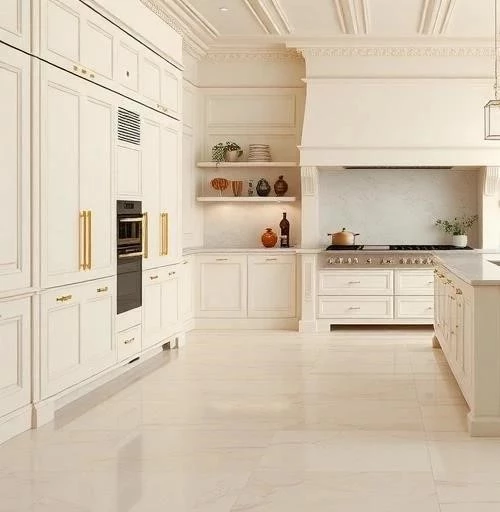
Quartz-vinyl flooring for the kitchen combines an elegant appearance with the practical performance a busy room needs. It can bring a premium kitchen interior to life without demanding the delicate care of natural stone or wood. Choose the finish, format and color to support the room’s architecture and create a polished, welcoming space.
Choose a finish that suits the style
Marble-look quartz vinyl adds refined veining and a luxurious marble texture. It works especially well in a bright kitchen with paneled cabinetry, decorative panels and brass accents. For a softer, more organic effect, natural stone-look quartz vinyl introduces subtle variation in natural tones. Parquet-look quartz vinyl offers the warmth of wood imitation while keeping the floor visually calm and easy to coordinate.
SPC tile is a rigid-core option within the wider range of vinyl flooring. A waterproof finish is useful around sinks and dishwashers, while durable quartz vinyl is designed to withstand everyday foot traffic. These qualities make it a practical kitchen finish for households that want style without excessive upkeep.
Build a balanced neoclassical interior
Neoclassical kitchen design draws on symmetry, restrained ornament and quality materials. A modern classic interior does not need to reproduce a formal period room: pair a simple floor pattern with paneled cabinetry, discreet molding and carefully chosen lighting. In a classic-style kitchen finish, a marble-effect floor can echo the backsplash, while a parquet pattern can soften painted cabinets and stone worktops.
Consider the color palette of neoclassicism: warm white, cream, greige, muted gray and natural wood shades. A light kitchen can feel more spacious when floor and furniture share a harmonious relationship in color or undertone. Avoid matching every surface exactly; subtle contrast gives the room depth. Brass details, decorative panels and restrained molding can complete the premium effect without overwhelming the space.
Plan the whole room, not just the floor
Successful material combinations depend on how the floor relates to the backsplash and kitchen wall finish. Use the floor to define dining or cooking zones in an open-plan layout, then repeat one tone or texture elsewhere for visual continuity. If the floor has pronounced veining, keep wall finishes quieter. If it is plain, a textured backsplash or framed wall panels can add interest.
Before installation, check the manufacturer’s guidance for subfloor preparation, expansion gaps and compatible cleaning products. Careful quartz-vinyl installation helps the surface look seamless and perform as intended. With thoughtful detailing and a balanced mix of materials, quartz vinyl makes a neoclassical kitchen both graceful and genuinely practical.
9 Comments. Оставить новый
The comparisons between marble-look, stone-look and parquet-look finishes make it easier to picture different options in a neoclassical kitchen.
I like the reminder that subtle contrast adds depth. The advice helps avoid a kitchen that feels too coordinated or visually flat.
A helpful overview of how to balance a stylish kitchen floor with practical everyday needs. I especially liked the advice to coordinate undertones rather than match every surface exactly.
I appreciate the emphasis on restrained details. The suggestions for pairing flooring with cabinetry and lighting feel useful without making the design sound overly complicated.
This gives a useful starting point for choosing a floor that suits both the style of the room and the demands of a busy kitchen.
A clear and practical guide. It’s good to see durability and water resistance considered alongside appearance when choosing a kitchen floor.
The explanation of SPC tile as a rigid-core vinyl option is helpful, especially for readers comparing practical flooring choices.
The color palette ideas are a strong part of this article. Warm whites, greige and natural wood tones can create a classic look that still feels welcoming.
A polished, easy-to-follow article with design ideas that feel achievable. The examples make it easier to imagine how different floor patterns can complement classic cabinetry.